Enviro News Asia, Cambodia — Cambodia is scaling up integrated rice–fish farming systems through strengthened local governance to improve food security, rural livelihoods, and ecosystem resilience across the country.
Rice–fish systems combine crop and aquatic production in a single landscape, allowing farmers to produce both rice and fish simultaneously. This approach enhances nutrition and income while maintaining ecological balance, making it a key component of Cambodia’s food system.
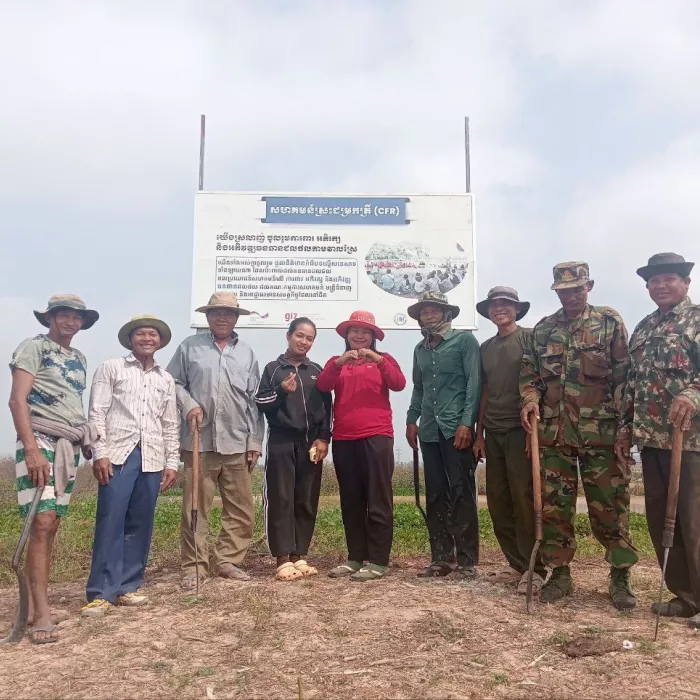
One example is the Boeng Ream Community Fish Refuge located in the Tonle Sap floodplains. The refuge serves as a dry-season water reservoir and breeding sanctuary for fish, enabling stocks to regenerate and disperse into surrounding rice fields and wetlands. It also functions as a migration corridor that supports biodiversity and provides water for agriculture, livestock, and household use.
Efforts to improve water channels and reduce chemical inputs in farming have strengthened water quality and fish mobility in the area. These measures help sustain ecosystems while supporting local livelihoods amid increasing climate and water management challenges.
The Cambodian government has reinforced these initiatives through decentralized natural resource management policies. A key regulation on district administration has enabled stronger local coordination, while joint actions by relevant ministries have encouraged integrated management of water, agriculture, and fisheries.
To support implementation, research partners including WorldFish and International Water Management Institute worked with national institutions to establish Technical Working Groups (TWGs). These groups bring together government agencies, local authorities, and community organizations to coordinate planning, resolve resource conflicts, and manage aquatic ecosystems more effectively.
The TWGs collaborate with community-based groups such as fisheries organizations, farmer water user communities, and cooperatives to develop integrated management plans. Their work extends across district boundaries, promoting cross-sector collaboration and reducing fragmentation in resource governance.
The government further strengthened this structure by establishing District Working Groups on Food Security and Nutrition under the Council for Agricultural and Rural Development. These platforms integrate local initiatives into national strategies, linking district-level actions with broader food security and climate resilience goals.
Recent activities in Boeng Ream demonstrate the impact of this approach. Local authorities and community members released broodstock fish into the refuge, rehabilitated surrounding ecosystems, and improved environmental management practices. These actions aim to restore fish populations, enhance habitat quality, and support fisheries-dependent households.
Through coordinated planning and implementation, Cambodia is demonstrating how local governance and community participation can drive sustainable food production systems, balancing conservation and agricultural needs while strengthening resilience to environmental change. (*)