

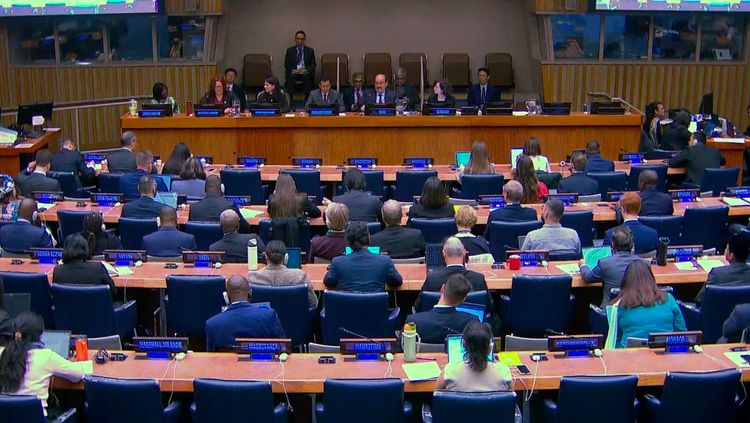
Enviro News Asia, New York — Indonesia’s Minister of Forestry, Raja Juli Antoni, reaffirmed the government’s commitment to rehabilitating 12 million hectares of degraded land during the 21st Session of the United Nations Forum on Forests (UNFF21) at the United Nations Headquarters in New York on Monday (11/5).
The commitment reflects the environmental vision of President Prabowo Subianto, who previously highlighted land restoration as a key pillar of Indonesia’s climate mitigation strategy during the 80th United Nations General Assembly last September.
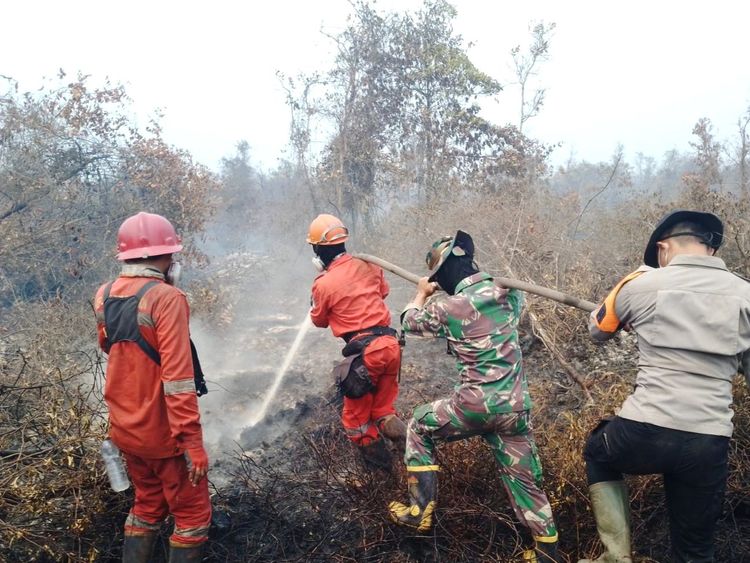
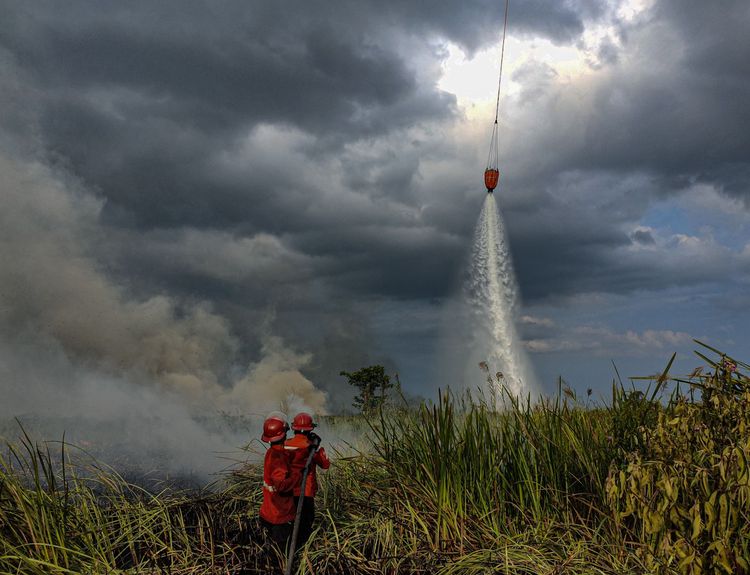
Speaking before delegates at the UN forum, Raja Juli Antoni explained that Indonesia’s large-scale rehabilitation program would be integrated with forest carbon projects to ensure sustainable financing and long-term environmental benefits.
According to the Minister, Indonesia has established a stronger regulatory framework to support high-integrity carbon market development through Presidential Regulation No. 110 of 2025 and Forestry Ministerial Regulation No. 6 of 2026. The regulations are designed to strengthen transparency, accountability, and credibility in the forestry carbon sector.
“We will accelerate the rehabilitation of 12 million hectares of degraded land through high-integrity carbon financing schemes. With Presidential Regulation 110/2025 and Ministerial Regulation 6/2026, we are ensuring that every restoration activity generates measurable carbon economic value while delivering direct benefits for environmental sustainability and community welfare,” Raja Juli Antoni stated.
The Indonesian government is also seeking broader international collaboration and green investment partnerships to support land restoration and sustainable forest management programs. The Minister emphasized that integrating rehabilitation initiatives with carbon markets would help create long-term financial sustainability for forest protection efforts.
Director General of Watershed Management and Forest Rehabilitation, Dyah Murtiningsih, said accelerating forest and land restoration is essential to restoring watershed functions, reducing hydrometeorological disaster risks, and improving environmental quality.
“Through carbon financing policies and multi-stakeholder collaboration, rehabilitation and restoration efforts can be implemented more extensively, measurably, and sustainably so that both ecological and economic benefits can be directly felt by communities,” Dyah Murtiningsih said.
Indonesia’s delegation at UNFF21 also included the country’s Permanent Representative to the United Nations in New York, the Director General of Sustainable Forest Management, and senior forestry officials involved in watershed and rehabilitation programs. (*)