

Enviro News Asia, Jakarta — Indonesia recorded 189 high-confidence fire hotspots on Nov. 2, 2026, an increase of 89 from the previous day, prompting the government to continue and expand integrated weather modification operations to strengthen efforts to control forest and land fires.
Data from the Forestry Ministry’s SiPongi monitoring system, based on NASA Terra/Aqua, SNPP and NOAA-20 satellite observations at 9 p.m. local time, showed the national increase. However, hotspots across six priority provinces for fire control declined from 34 to 31.
Central Kalimantan recorded 19 hotspots, followed by Jambi with nine and South Kalimantan with three. South Sumatra, West Kalimantan and Riau reported no high-confidence hotspots.
The Forestry Ministry said satellite hotspot data must be assessed alongside conditions on the ground. Hotspots indicate surface temperature anomalies and cannot be directly equated with the number of fires or the total area burned. Authorities must verify the indications through patrols and field inspections.
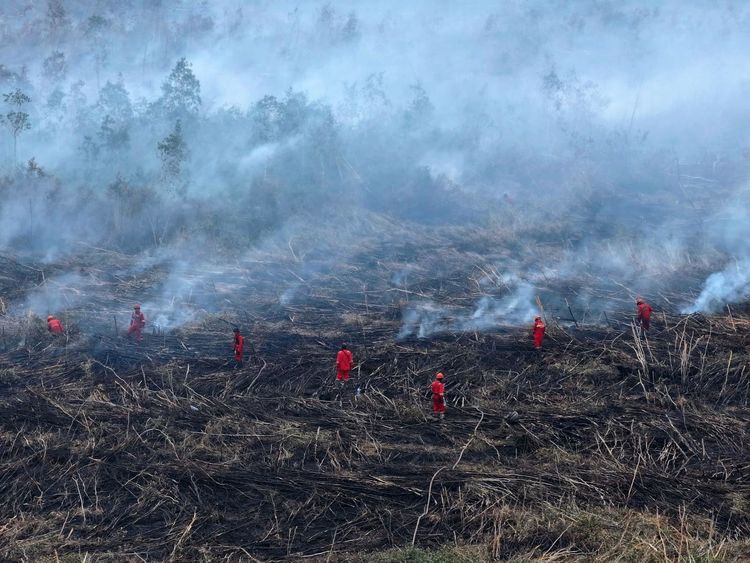
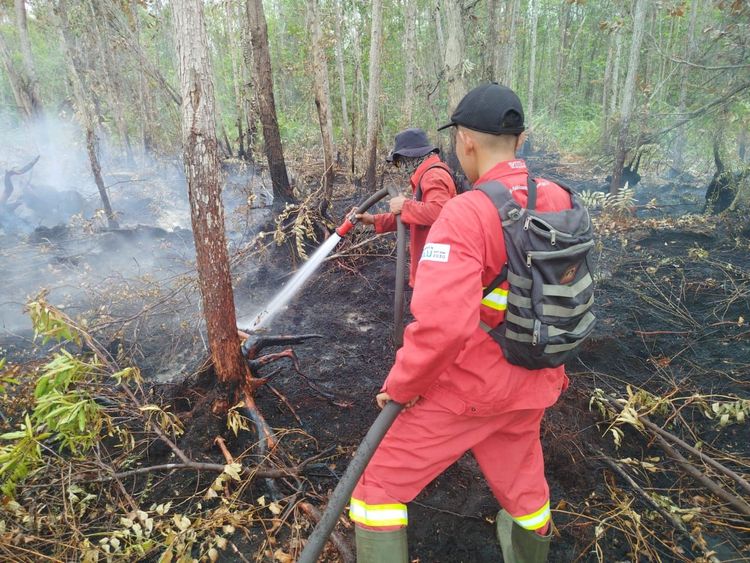
Reports from the ministry’s Forest Fire Control Command Post on Nov. 2 showed that suppression efforts were continuing, particularly in Central Kalimantan. In Tanjung Taruna, Pulang Pisau, crews continued to encounter significant smoke from peatland areas. Fires and smoke also persisted in Jabiren and several locations in Palangka Raya.
Other areas reported progress. Fires in Pematang Kambat, Seruyan, and Pasir Panjang, West Kotawaringin, had been extinguished. In Pasir Putih, East Kotawaringin, teams continued suppressing fires along containment lines and cooling areas where smoke remained.
In Jambi, crews extinguished a fire in Terusan Village, Batang Hari. Heavy rain fell for about 30 minutes during the operation, helping support suppression efforts.
The government is also strengthening its response through integrated weather modification operations, which have been underway since Oct. 18. An evaluation meeting found positive results, describing the initiative as the largest integrated weather modification operation conducted for forest and land fire control.
Reported improvements included better visibility, lower PM2.5 pollutant concentrations, fewer hotspots, and more widespread rainfall in several areas, particularly Central Kalimantan and South Sumatra. All airports that had previously experienced disruptions due to poor visibility had also resumed operations.
Weather modification activities during October included operations by the National Disaster Mitigation Agency (BNPB) in Central and South Kalimantan, the Forestry Ministry in South Sumatra, and operations in Central Kalimantan and South Papua. Crews used sodium chloride (NaCl) and dry ice for cloud seeding, depending on atmospheric conditions and operational requirements.
The government has decided to continue the operations through BNPB, the Forestry Ministry and other relevant agencies. The number of aircraft and supporting equipment will be adjusted to developments on the ground and the needs of each region.
Following instructions from the BNPB chief, the next operations will be directed to Southeast Sulawesi, North Maluku and South Papua. South Papua remains under a forest and land fire emergency response status until Nov. 28, 2026, making additional aerial operations part of the government’s response.
The Forestry Ministry emphasized that weather modification complements rather than replaces ground operations. Manggala Agni fire crews, together with BNPB, the Indonesian Military, the National Police, the Meteorology, Climatology and Geophysics Agency (BMKG), regional disaster agencies, local governments, community fire groups, businesses and volunteers, continue to conduct patrols, field inspections, direct suppression, peatland rewetting, searches for residual embers and cooling operations.
The ministry said the rise in national hotspots demonstrated how quickly fire conditions could change. It stressed that success should not be measured solely by increases or decreases in satellite detections, but by whether fires and embers are fully extinguished, new outbreaks are prevented, environmental quality improves, communities are protected, and forests and biodiversity are preserved. (*)