
Enviro News Asia, Jakarta — Indonesia is refining its conservation strategy for the critically endangered Javan rhinoceros through a phased programme at the Javan Rhino Study and Conservation Area (JRSCA) in Ujung Kulon, aiming to reduce inbreeding risks, improve genetic diversity and strengthen the species’ long-term survival.
The Ministry of Forestry is implementing the programme through Operation Merah Putih, while maintaining Ujung Kulon National Park as the species’ primary natural habitat.
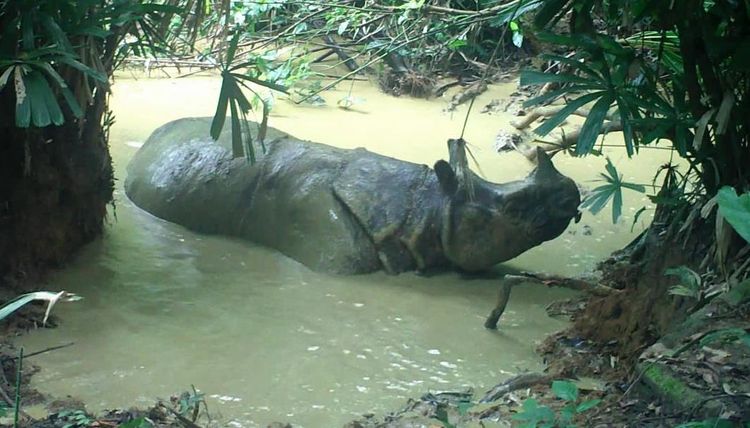
The initial phase focuses on population mapping, habitat carrying capacity and genetic assessments. Camera-trap surveys in 2026 recorded a population ranging from 74 to 99 rhinos, with the best estimate at 91. The ministry’s own estimate puts the population at between 87 and 100.
Although the population remains stable and breeding continues, the figures are approaching the estimated carrying capacity of the Ujung Kulon peninsula, which ranges from 70 to 100 animals. The population also faces inbreeding depression, with 55 percent of females recorded as non-productive.
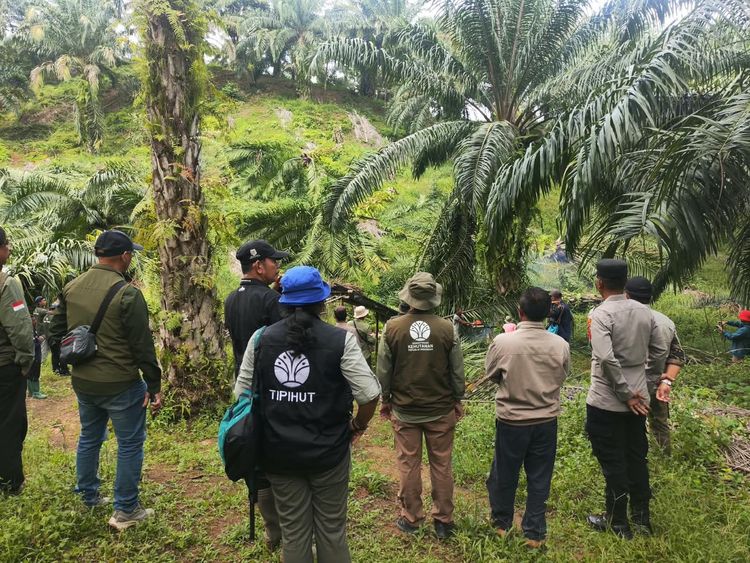
The spread of langkap palms (Arenga obtusifolia) has also reduced available space for rhinos in parts of the peninsula. Meanwhile, camera traps cannot provide information about the animals’ internal health conditions.
Ujung Kulon National Park head Ardi Andono said managed conservation at JRSCA was needed to complement protection in the peninsula. The JRSCA area is largely free of langkap, offering an additional setting for monitoring and managing the animals.
He said direct health assessments require capturing individual rhinos, as camera-trap observations alone cannot establish whether an animal is suffering from disease or other medical conditions.
Preparation for Operation Merah Putih began in August and September 2025, with the national park authority adopting procedures based on international conservation standards. These included DNA checks on potential translocation candidates, standard operating procedures based on International Union for Conservation of Nature (IUCN) guidelines, coordination exercises using tactical floor games, and risk and ethics assessments.
The technical preparations also involved capture simulations, veterinary anaesthesia and medical-care exercises, and evacuation drills with the Indonesian Navy Marine Corps using a K-61 amphibious artillery transport vehicle. The vehicle was selected to transport rhinos across land and water while minimising the time they spend inside transport enclosures.
The first transfer involved Musofa, the dominant male rhino, between Nov. 3 and 5, 2025. The team waited for sea waves to fall below 0.5 metres before moving him to a care paddock at JRSCA, where he arrived in stable condition.
Musofa died on Nov. 7, 2025, despite emergency veterinary treatment. A post-mortem examination conducted by the pathology division of IPB University’s Faculty of Veterinary Medicine on Nov. 8 found that he had suffered from chronic underlying conditions that predated his capture.
The examination found that Musofa was more than 45 years old, had severe wear on three premolar teeth, a heavy parasite infestation, chronic malnutrition and severe hypoproteinaemia. It found no tissue or organ damage attributable to the transfer process or standing anaesthesia.
His remains are being preserved at IPB University as research material to help scientists study diseases and parasites affecting Javan rhinos.
Ardi said Musofa’s case demonstrated that internal translocation within Ujung Kulon was technically possible, but also exposed the need for stricter candidate selection and health screening before any transfer.
Following consultations with experts from IPB University, the University of Indonesia, conservation practitioners and ministry officials, the national park authority has revised its field procedures.
Under the new selection criteria, potential candidates must be older than six and younger than 25, with their ages verified through camera-trap records dating back to when they were calves. Priority will be given to females carrying Haplotype 2 lineages, which have a reported inbreeding level of 6.5 percent, and males carrying either Haplotype 1 or 2.
The capture strategy will also shift to a herding method that guides rhinos into a large wooden enclosure, known as a boma, built within their natural habitat. Veterinarians will then examine the animals’ health and stress levels, provide treatment if necessary and oversee quarantine to help them adapt to keepers and human presence before any transfer to JRSCA.
If an animal is found to be unhealthy or excessively stressed during the examination, it will be released back into the wild rather than risk its life through relocation.
The managed breeding programme at JRSCA aims to produce at least two calves within 10 years. The offspring are intended to be released into Ujung Kulon’s wild habitat to help improve genetic diversity.
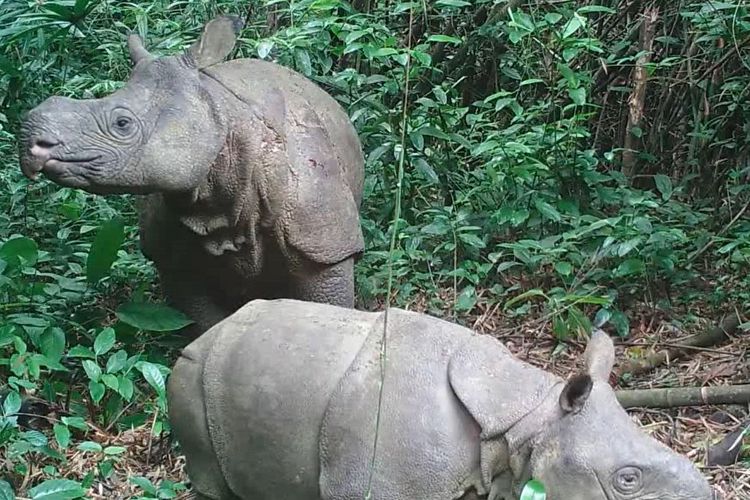
At the same time, natural breeding in the national park has continued. Two births were recorded in 2026: a calf born to mother Arum in the Cigenter Block on Jan. 29, and a fifth calf born to mother Desy on Oct. 10. The latter was estimated to be one to two months old when recorded.
Mahfudz, acting director general of Natural Resources and Ecosystem Conservation at the Ministry of Forestry, said the births demonstrated the continued reproductive capacity of the Ujung Kulon ecosystem. He reaffirmed the government’s commitment to strengthening protection and improving habitat management through JRSCA.
Long-term measures include forest rehabilitation, ecosystem restoration, additional camera traps and forest rangers, and stronger law enforcement. The ministry cited prison sentences of 11 to 12 years handed down to seven rhino hunters in 2024 and 2025 as evidence of enforcement efforts.
The government is also working with IPB University to establish a biobank to preserve Javan rhino genetic material and sperm for long-term conservation research.
Forestry Minister Raja Juli Antoni reaffirmed that Ujung Kulon National Park would remain the primary home of the Javan rhinoceros. He said any future conservation decisions, including proposals for a second habitat to reduce disaster risks, would be based on scientific assessments and expert recommendations.
The minister said the government would not make decisions on conservation strategies without advice from scientists. (*)