Enviro News Asia, Jakarta — Indonesia’s Environment Minister Moh Jumhur Hidayat has urged the government to remove part of a designated mining area in the waters surrounding Ujung Kulon National Park in Banten, warning that mining-related activities could threaten the habitat of the critically endangered Javan rhinoceros.
Jumhur said he had asked Energy and Mineral Resources Minister to review Ministerial Decree No. 65.K/MB.01/MEM.B/2026, which establishes the Mining Business Area (WUP). He reiterated the request on Thursday during a World Tree Day commemoration in Angke Kapuk, West Jakarta.
The proposed review aims to prevent activities, including preliminary surveys, from disturbing the ecosystem surrounding the national park before any mining operations begin.
“Natural resource utilisation must not come at the expense of ecosystem integrity and the survival of species that are part of the nation’s biodiversity and the world’s heritage,” Jumhur said.
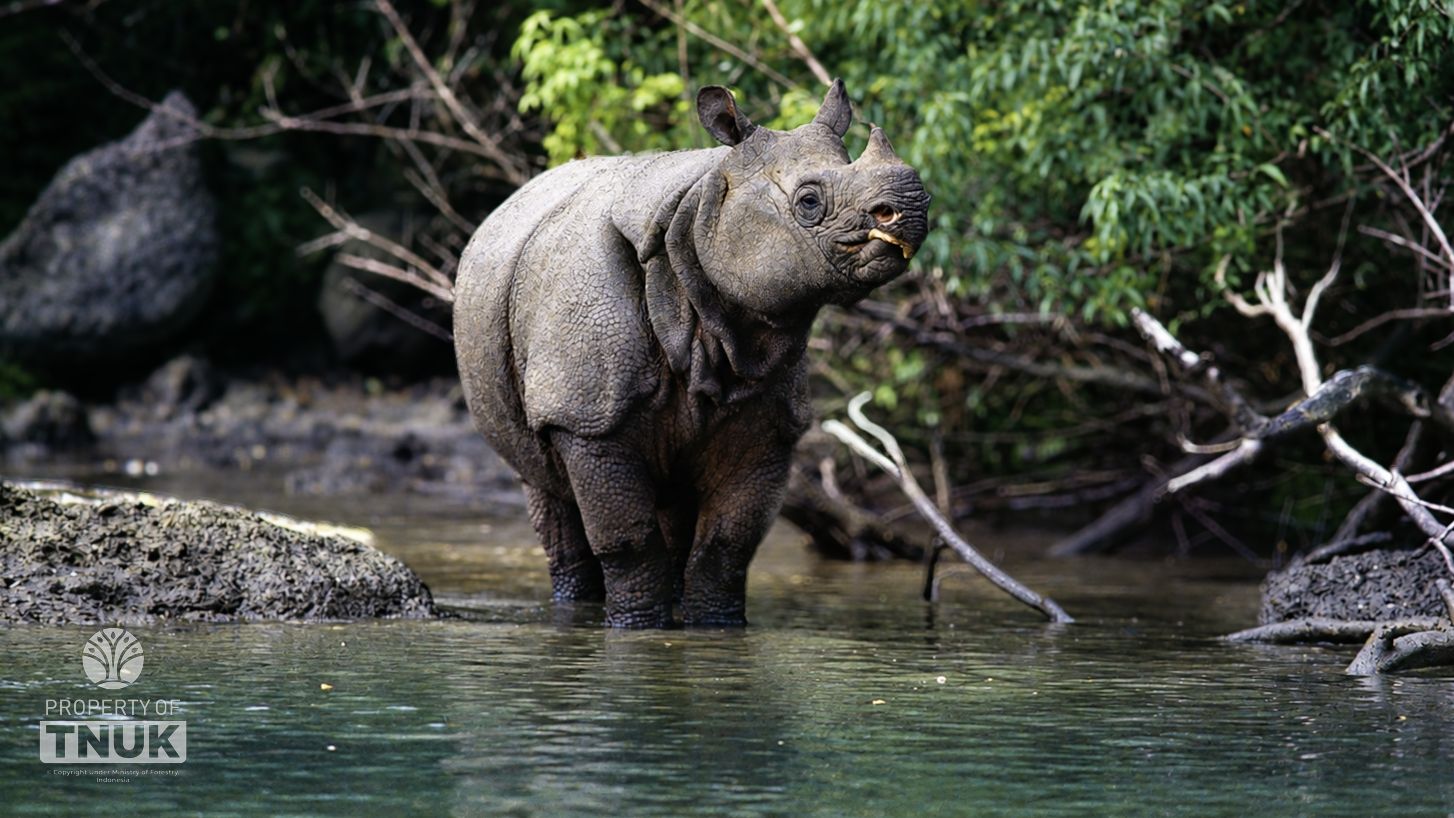
Ujung Kulon National Park is the last remaining natural habitat of the Javan rhinoceros (Rhinoceros sondaicus), a species classified as Critically Endangered. Fewer than 50 individuals remain in the wild, all confined to a single location.
The species has highly specific habitat requirements and behavioural patterns. Its survival depends not only on protecting the national park’s terrestrial environment but also on maintaining ecological connections with surrounding coastal and marine areas.
Mining activities could place additional pressure on these ecosystems through noise, vibration, sedimentation, pollution, changes in water quality and increased human activity.
Although no mining operations are currently taking place in the designated area, and no direct measurements of potential impacts on Javan rhinoceroses have been conducted, the Environment Ministry and Environmental Control Agency (KLH/BPLH) said the risks must be assessed before any activities proceed.
Given the area’s high conservation value and the species’ extremely small population, the ministry believes a precautionary approach is necessary from the earliest stage of planning.
In a letter to the Energy and Mineral Resources Ministry, Jumhur requested a review of the decree and the removal of the disputed section of the WUP if scientific verification finds that it conflicts with environmental protection regulations or poses unacceptable ecological risks to the conservation area.
KLH/BPLH has also proposed an integrated spatial and ecological assessment involving relevant ministries and agencies. The assessment would compare the WUP coordinates with the boundaries of Ujung Kulon National Park, marine conservation areas, the Environmental Protection and Management Plan (RPPLH), and existing land and marine spatial plans.
The ministry has called on relevant institutions to suspend further steps concerning resource utilisation in the disputed area while the review is under way, in accordance with their respective authorities. It has also offered to provide supporting data, scientific assessments and technical recommendations.
Jumhur said the ministry would not issue environmental approval for mining activities in the area, even if a company secured a mining permit.
“Even if PT ANTAM obtains a mining permit for those waters in Ujung Kulon, I will not issue the environmental approval,” he said.
KLH/BPLH stressed that a Mining Business Area designation is part of the government’s mining spatial planning framework and does not automatically grant permission to conduct exploration or exploitation.
Any proposed mining operation must comply with several regulatory requirements, including spatial planning provisions, sectoral approvals and environmental clearance.
Activities on land require Spatial Utilisation Activity Conformity (KKPR), while marine activities must obtain Marine Spatial Utilisation Activity Conformity (KKPRL) from the Ministry of Marine Affairs and Fisheries. Activities involving forest areas also require relevant sectoral approval from the Ministry of Forestry.
Article 38(1) of Law No. 41/1999 on Forestry, as amended, restricts the use of forest areas for non-forestry development to production and protection forests. Government Regulation No. 23/2021 reinforces the restriction, meaning mining permits cannot be granted for areas within conservation forests.
Marine conservation areas are also subject to restrictions. Article 111(5) of Government Regulation No. 21/2021 on Spatial Planning limits the granting of KKPRL for open-pit mining, with specific exceptions provided under Article 111(6).
Environmental approval is another mandatory requirement under Government Regulation No. 22/2021 before a business permit can be issued. An environmental impact assessment (AMDAL) can begin only after the relevant sectoral spatial approval has been obtained.
The assessment examines environmental carrying capacity, hydrological conditions, water quality, biodiversity, protected wildlife habitats, coastal and marine ecosystems, potential sedimentation and impacts on surrounding communities.
The ministry emphasised that environmental approval cannot be used to legitimise activities that violate spatial planning requirements or are prohibited under sectoral regulations.
Indonesia’s National Environmental Protection and Management Plan (RPPLH), established under Government Regulation No. 26/2025, provides a framework for natural resource management based on environmental carrying capacity and limits. It also serves as a reference for long-term and medium-term development planning and sectoral policies.
A spatial analysis of the plan’s policies, strategies and programmes found that 61,023.12 hectares, or 99.86 percent, of the 61,107.95-hectare Ujung Kulon analysis area had been designated as indicative areas for environmental protection.
Across Banten province, 53.95 percent of the territory is allocated for optimum natural resource utilisation, while 29.99 percent is designated for environmental maintenance and restoration. Another 15.88 percent is intended for environmental protection, with 0.18 percent allocated for natural resource reserves.
“These figures show that utilisation and protection do not need to be seen as competing interests, because each has its own designated space. The direction for optimum utilisation does not mean resources can be exploited without limits,” Jumhur said.
KLH/BPLH is coordinating with the Energy and Mineral Resources Ministry, Ministry of Forestry, Ministry of Marine Affairs and Fisheries, Ministry of Agrarian Affairs and Spatial Planning/National Land Agency, Geospatial Information Agency and regional administrations to align spatial data, conservation status and environmental functions with prevailing regulations.
Jumhur said the government would continue to integrate environmental protection into natural resource management through planning, impact assessments, monitoring and law enforcement.
The Ujung Kulon case highlights the challenge of balancing economic development with the protection of ecosystems and endangered wildlife. The government, Jumhur said, must measure development not only by the resources it extracts but also by how effectively it safeguards the environment for future generations. (*)