

Enviro News Asia, Jakarta — The Ministry of Forestry has intensified anticipatory measures and national preparedness to address the potential escalation of forest and land fires (karhutla) in 2026 through coordination with BMKG and BNPB. The joint effort focuses on strengthening prevention and response strategies, particularly in high-risk regions.
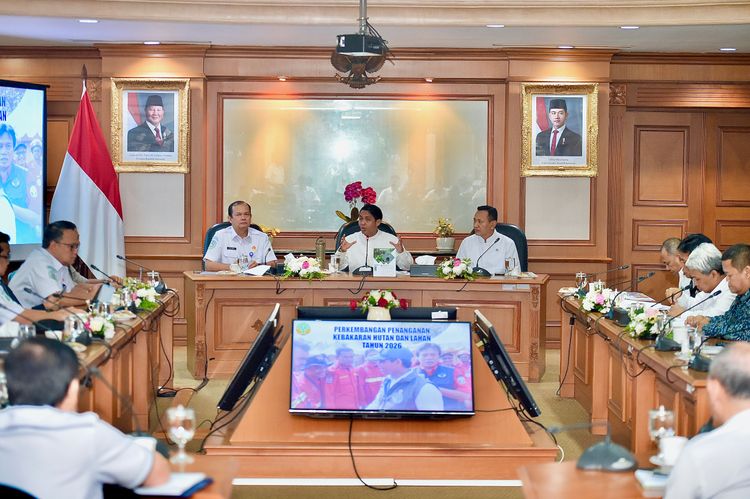
Raja Juli Antoni stated that Indonesia is expected to face an earlier and longer dry season this year, increasing the likelihood of more severe forest and land fires compared to the previous year. He delivered the statement during a press conference following a coordination meeting on April 6, 2026, in Jakarta.
He urged the public to remain vigilant and responsible in the use of fire, particularly during land clearing activities, which are a major contributor to forest fires. He emphasized that both communities and companies must exercise greater caution to prevent fire outbreaks.
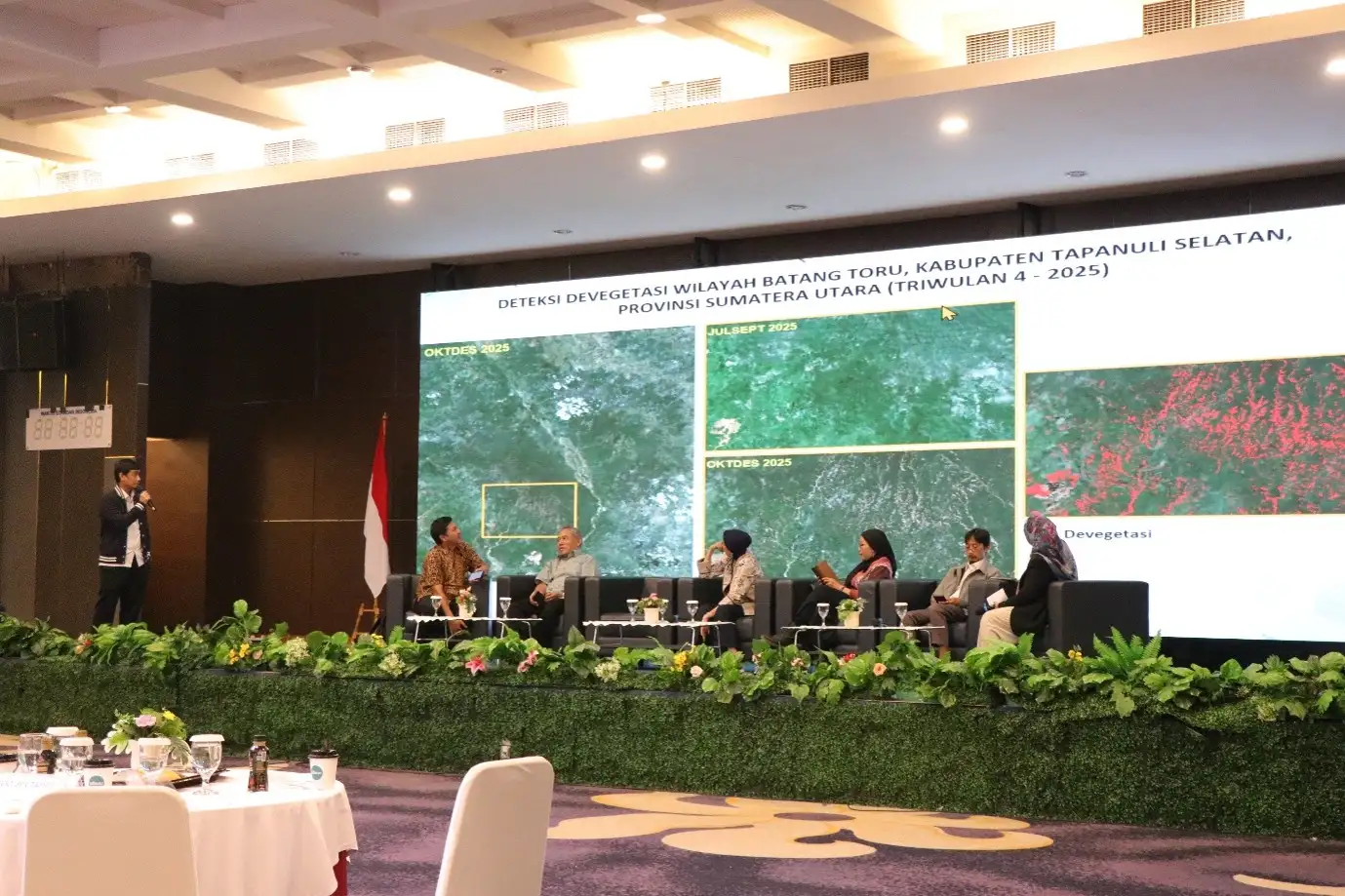
Based on satellite imagery analysis, the Ministry of Forestry recorded 32,637.43 hectares of burned land between January and February 2026. Field data for March 2026 estimates an additional 10,175.48 hectares affected, with the highest impacts recorded in Riau Province (8,858.87 hectares), followed by West Kalimantan, Central Kalimantan, East Nusa Tenggara, and the Riau Islands.
Teuku Faisal Fathani reported that climate analysis indicates the 2026 dry season will arrive earlier, last longer, and bring below-normal rainfall compared to the past 30-year average. He added that while El Niño conditions are currently weak to moderate, continuous monitoring will be conducted through 2027.
BMKG projections show that climate conditions, including ENSO and the Indian Ocean Dipole, remained neutral as of March 2026. However, models suggest a possible transition to El Niño conditions in the second half of the year. Approximately 7 percent of Indonesia’s seasonal zones had entered the dry season by the end of March, with a significant expansion expected between April and June.
To enhance response capacity, BNPB has deployed 16 helicopters for water bombing operations and 12 for aerial patrols. These resources may be adjusted depending on the severity of fire incidents. Data from the Sipongi monitoring system recorded 702 hotspot occurrences between January 1 and April 5, 2026, marking a sharp increase from 125 hotspots during the same period in 2025.
As part of mitigation efforts, authorities have implemented Operasi Modifikasi Cuaca (OMC), particularly in Riau Province, with two operational phases involving 24 salt-seeding sorties using 24,000 kilograms of sodium chloride. Aerial operations have also been intensified for surveillance, hotspot verification, and fire suppression in remote areas.
Law enforcement measures have been carried out against violations related to forest fires. A total of 12 forest utilization business permits across several provinces, including Riau, Jambi, South Sumatra, Bangka Belitung, and West Kalimantan, have been subjected to supervision and administrative sanctions.
The government continues to strengthen cross-agency coordination in line with Instruksi Presiden Nomor 3 Tahun 2020, calling on ministries, the military, police, regional governments, companies, and communities to enhance vigilance and cooperation in preventing and controlling forest fires.
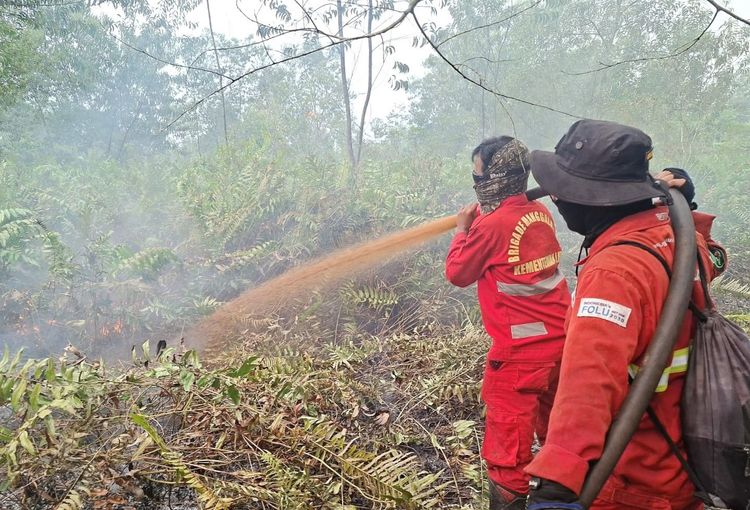
Authorities emphasized that rapid and effective fire suppression remains a priority, with aerial and ground operations working in synergy. Public awareness campaigns, training programs, and technical guidance are also being expanded to improve community capacity in mitigating forest and land fire risks. (*)