

Enviro News Asia, Riau — The Ministry of Forestry and the Forest Area Enforcement Task Force (Satgas PKH) expanded joint operations in Tesso Nilo National Park (TNTN), Riau Province, to secure one of Sumatra’s last lowland forest ecosystems and the habitat of the well-known elephant calf Domang. Authorities said the intensified effort responds to rising public attention around the Save Tesso Nilo campaign and the need to reclaim the park from widespread illegal oil palm expansion.
Director General of Forest Law Enforcement Dwi Januanto Nugroho said Domang symbolizes a new generation of Sumatran elephants that deserve an intact and safe home. He stressed that the government’s operations aim to restore Tesso Nilo as a protected area, not a plantation zone.
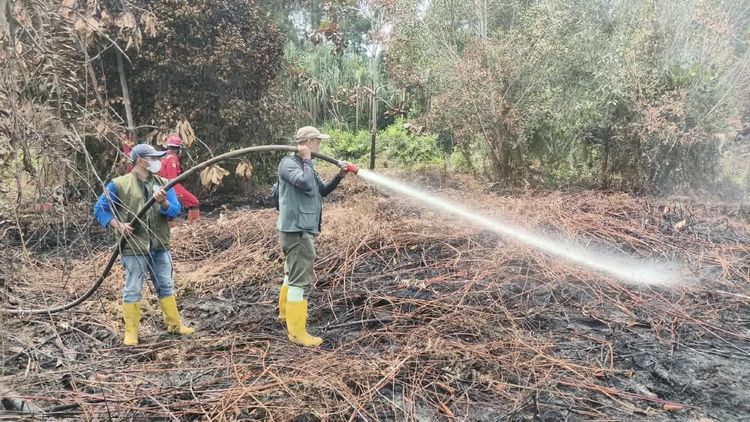
Joint teams from the Ministry of Forestry, Satgas PKH, the Tesso Nilo National Park Office, and supporting agencies have cleared about 4,700 hectares of illegal oil palm inside the park. Field actions include shutting down illegal palm fruit collection points, dismantling huts and structures, stopping new land clearing, disabling unauthorized roads and bridges, constructing boundary trenches, and installing warning signage to reaffirm state authority over the conservation area.
Tensions escalated when a group entered the tactical post and damaged government facilities in protest of ongoing enforcement. Authorities said they respect peaceful expression but emphasized that destroying state property and obstructing law enforcement is unacceptable. To prevent confrontation, personnel were temporarily relocated to a nearby management office for safety.
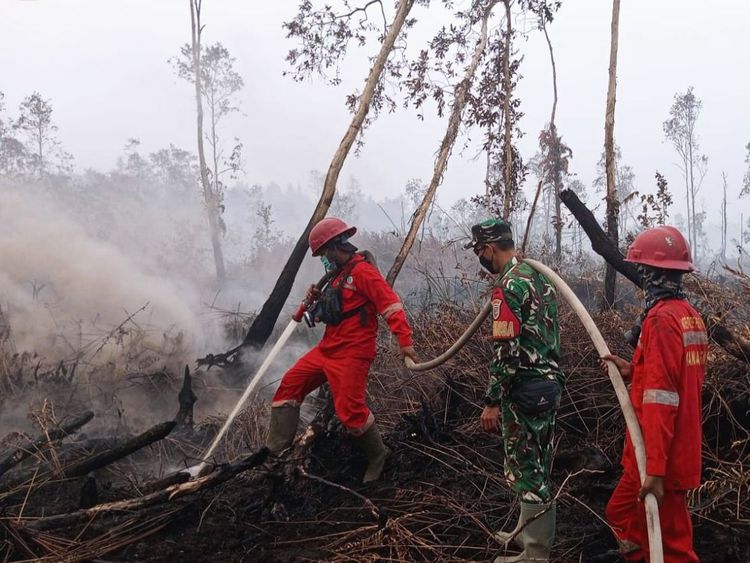
In response, the Ministry of Forestry and Satgas PKH deployed an additional 30 soldiers from Kodam XIX/Tuanku Tambusai and 20 forest rangers, including Rapid Response Units (SPORC). The reinforcements aim to resecure the tactical post, prevent further damage, and ensure ecosystem restoration continues without disruption. The facility will be repaired and reinstated as the command center for park security.
The increased deployment will strengthen routine patrols, protect critical encroachment points, guard checkpoints and boundary trenches, and support restoration of approximately 8,000 hectares of priority areas. Authorities stressed that the state will not retreat when its facilities are attacked but will respond through measured and lawful action to safeguard the national park.
Alongside enforcement, the Ministry emphasized a persuasive approach for community members willing to cooperate. Local residents questioned during operations received explanations about land status, legal implications, and proper procedures. Several individuals voluntarily declared their readiness to relinquish occupied land through written statements. Officials clarified that law enforcement prioritizes landowners, financiers, and heavy-equipment operators—not residents who cooperate with restoration efforts.
Dwi Januanto said the goal is to dismantle the business chain driving forest destruction while protecting communities. He stated that restoring Tesso Nilo as a habitat for Domang and other elephants is central to the operation’s mission.
The Ministry of Forestry and Satgas PKH will continue integrated enforcement and restoration, including criminal prosecution, administrative sanctions for licensing violations, rehabilitation of degraded land, improved access control, strengthened park boundaries, and habitat recovery. The programs will be carried out with regional governments, compliant businesses, conservation organizations, and local communities to ensure long-term protection for the forest, wildlife, and surrounding populations. (*)