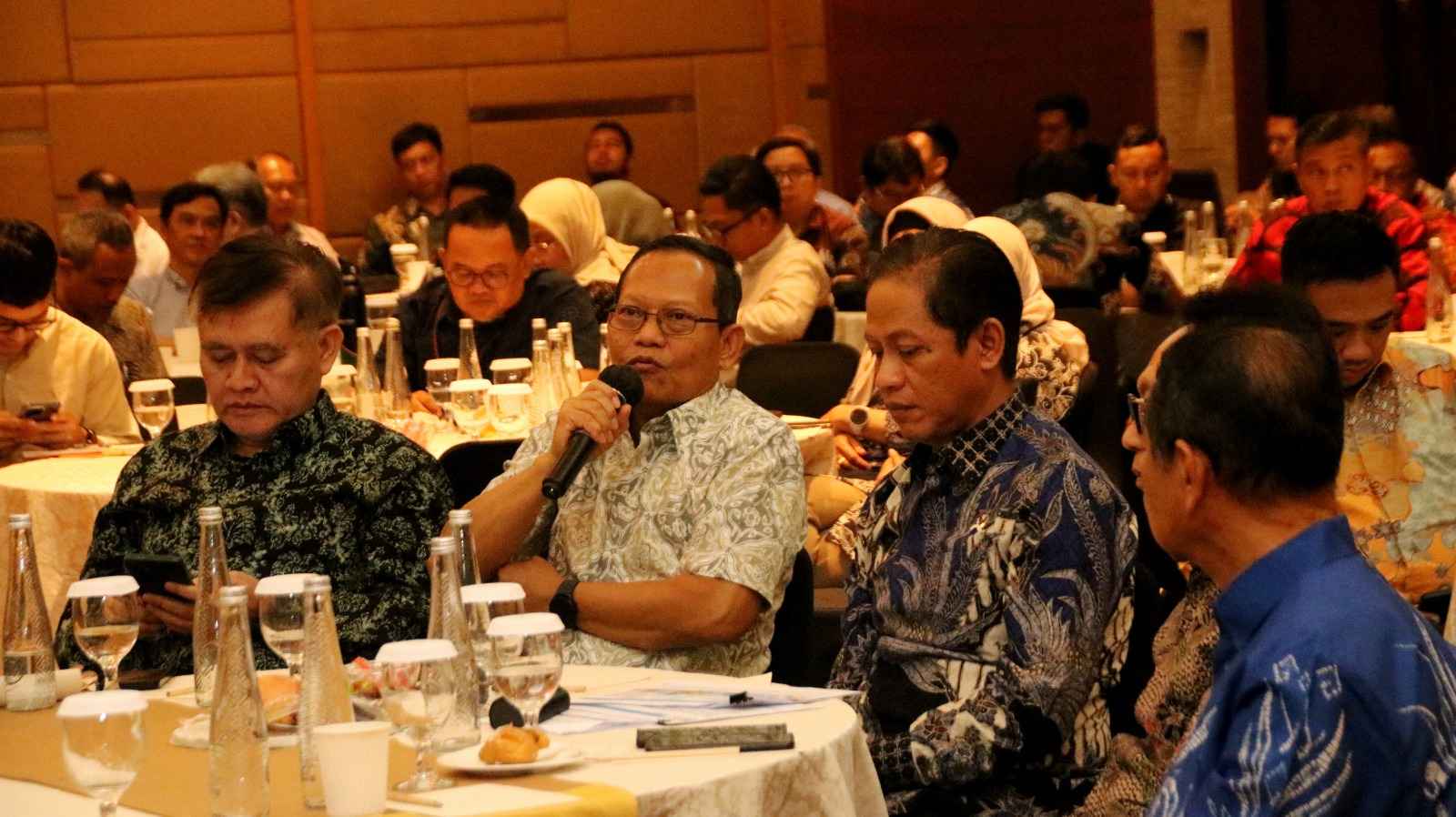
Indonesia continues to reinforce the global market position of its forest-based products through stronger policy coordination and internationally recognized certification systems. This commitment was underscored during the seminar Synergizing to Promote Sustainable Forests and the Acceptance of Indonesian Forest Products in Global Markets, held by the Indonesian Forestry Certification Cooperation (IFCC) in Jakarta on 25 November 2025. The event aimed to enhance the synergy of national forestry certification schemes and expand international acceptance of Indonesian forest products.
The seminar was attended by representatives from the Ministry of Forestry, The Association of The Indonesian Forest Concessionaires (APHI), certification bodies, and holders of Forest Utilization Business Permits (PBPH), representing the national forestry industry.
Director General of Sustainable Forest Management, Laksmi Wijayanti, emphasized that strengthening certification systems is a key instrument for addressing global challenges. She noted that the forestry sector contributes significantly to Indonesia’s national economy, although growth in several commodities has shown signs of stagnation.
Laksmi explained that Indonesia has robust regulatory frameworks and forest management practices, yet reputational challenges persist. She called for more comprehensive, data-driven, and consistent communication to demonstrate that Indonesia manages its forests as renewable and traceable resources. “Certification is a crucial anchor for ensuring the integrity, traceability, and accountability of Indonesian timber products,” she said, adding that the government remains open to recognizing credible international certification systems as part of efforts to enhance competitiveness.
She further stressed that Indonesia must not fall behind in global competition. Laksmi urged stronger collaboration between regulators and industry players to accelerate improvements in the business ecosystem, address social and high-cost economy issues, and expand the diversification of non-timber products and environmental services. “We must communicate comprehensively and honestly, and continue improving ourselves to strengthen the acceptance of Indonesian products,” she added.
IFCC Chairperson Saniah Widuri stated that the IFCC, as the national governing body of the Programme for the Endorsement of Forest Certification (PEFC), continues to uphold the credibility of sustainable forest management and chain-of-custody certification. She explained that IFCC standards were developed based on Indonesia’s national context through multi-stakeholder engagement and require compliance with regulations, including the Timber Legality Verification System (SVLK). To date, IFCC certification covers more than 5 million hectares of forests and 66 industries with Chain of Custody (CoC) certificates, contributing to the growth of pulp and paper exports valued at up to USD 3 billion.
According to Saniah, the adoption of international standards is increasingly relevant ahead of the implementation of European Union regulations, including the EU Deforestation Regulation (EUDR), which requires traceability of timber sources and assurance of social and environmental safeguards. IFCC will conduct a review of its standards in 2026 to strengthen system integrity and ensure alignment with evolving global requirements. “Synergy with the Directorate General of Sustainable Forest Management and The Association of The Indonesian Forest Concessionaires is a strategic step to expand the implementation of IFCC-PEFC certification and strengthen the global acceptance of Indonesian products,” she said.
APHI Chairperson Soewarso welcomed the collaboration as a collective effort to strengthen the position of Indonesia’s forestry industry. He noted that most PBPH holders under APHI have committed to sustainable forest management principles and require credible, internationally recognized certification systems for support. Through the Memorandum of Understanding with IFCC, APHI aims to enhance member capacity in certification implementation, expand outreach efforts, and accelerate the strengthening of certified supply chains across Indonesia.
Soewarso also underscored the urgency of responding to the EUDR and other global regulations that demand higher standards of traceability and sustainability. He stressed that IFCC-PEFC certification can serve as a strategic instrument to safeguard market access and enhance the competitiveness of Indonesian timber products. “Through synergy between industry players, the government, and certification bodies, we can ensure that forest management practices continue to align with sustainability principles while delivering economic benefits to communities,” he said.
He concluded by stating that today’s signing of the MoU represents the forestry sector’s concrete commitment to addressing global challenges and strengthening the international acceptance of Indonesian products.