Enviro News Asia, Belém — The Indonesian Ministry of Forestry is reinforcing carbon market governance by formulating four derivative regulations to ensure integrity, transparency, and effectiveness in implementing the Carbon Economic Value (NEK) within the forestry sector. The initiative was announced by Vice Minister of Forestry Rohmat Marzuki during the Ministerial Dialogue session themed “Accelerating Climate Action through Inclusive and Integrated National Policies” at the Indonesia Pavilion, COP30 UNFCCC in Belém, Brazil.
“The Ministry of Forestry is currently preparing four derivative regulations to strengthen the governance of the carbon market,” said Vice Minister Rohmat Marzuki. “These include the revision of Regulation No. 7/2023 on carbon trading procedures in the forestry sector, Regulation No. 8/2021 on forest zoning and forest management planning, the revision of Regulation No. 9/2021 on Social Forestry management, and a new regulation on ecosystem services utilization in conservation areas.”
He emphasized that these regulations will establish a strong legal foundation to build a credible, transparent, and inclusive carbon market.
The issuance of Presidential Regulation No. 110/2025 on the Carbon Economic Value (NEK) marks a key milestone in affirming the strategic role of Indonesia’s forestry sector as a high-integrity carbon credit provider. The regulation ensures that the benefits of the carbon market not only support national climate goals but also deliver tangible economic value to communities through social forestry and critical land rehabilitation programs.
In October 2025, the Ministry achieved a major milestone by signing a Memorandum of Understanding (MoU) with the International Emission Trading Association (IETA) to enhance capacity building, knowledge exchange, and international cooperation in carbon market design and implementation. This collaboration also aims to expand private sector participation in the national carbon market.
“These initiatives are fully aligned with President Prabowo Subianto’s Asta Cita vision, particularly the two interrelated pillars of food security and environmental management,” Rohmat added. “Forestry development today calls for institutional reform, modernization of governance, and the alignment of economic progress with environmental integrity.”
To realize this vision, the Ministry of Forestry is advancing five flagship programs that serve as the foundation for forestry sector transformation:
- Digitalization of services to improve transparency and accountability;
- Equitable forest management through recognition of customary forests and community-based management;
- Optimization of non-timber forest products through agroforestry;
- Strengthening forest conservation to maintain forests as the world’s lungs; and
- Implementation of the One Map Policy to reduce land conflicts and strengthen legal certainty.
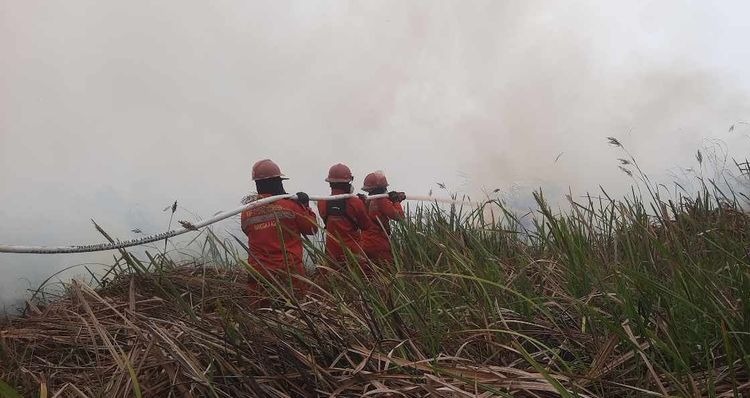
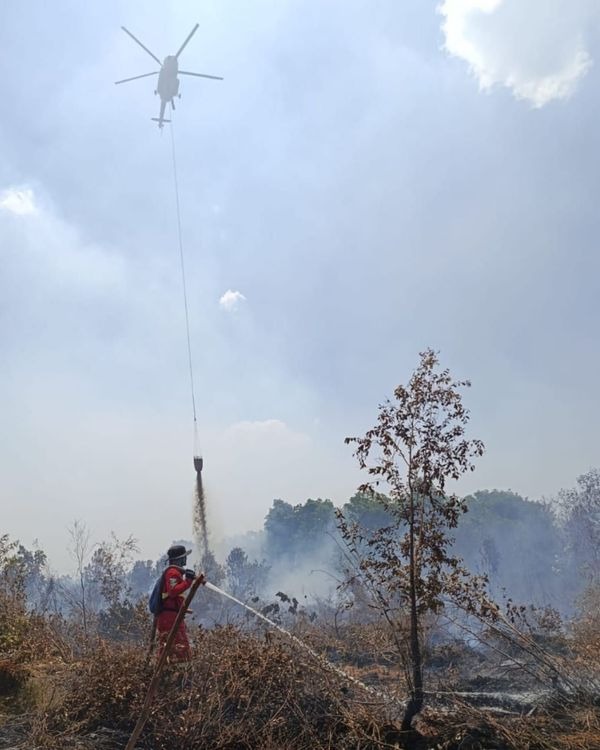
This policy transformation has yielded significant results. Forest fires have drastically declined—from 2.6 million hectares in 2015 to around 213,000 hectares in 2025—thanks to early warning systems and cross-sector coordination. The Ministry has also modernized 57 national parks with digital monitoring systems, improved safety standards, and sustainable ecotourism programs.
The Ministry is also driving large-scale forest restoration projects, including a USD 150 million partnership in Way Kambas National Park projected to create 750 jobs and generate up to USD 450 million in economic value while protecting Sumatran elephants. In Aceh, the Peusangan Elephant Conservation Initiative covers 20,000 hectares, protecting around 100 wild elephants and promoting human-wildlife coexistence.
Through the Multi-Use Forestry (MUK) approach, license holders can diversify into non-timber businesses such as honey, rattan, resin, medicinal plants, and carbon-based ecosystem services. This initiative is expected to create over 240,000 green jobs and strengthen local economies. Supporting the national energy transition, the Ministry is also developing bioethanol from palm oil with a potential production of 24 million kiloliters—reducing fuel imports by up to 50%.
Vice Minister Rohmat underscored the importance of inclusivity in forest management. As of 2025, 8.4 million hectares have been allocated for Social Forestry, benefiting 1.4 million households and creating 5.6 million green jobs. To strengthen financing access, the Ministry and Indonesia’s Financial Services Authority (OJK) have included Social Forestry in the National Green Taxonomy. Additionally, the Customary Forest Task Force has facilitated recognition of 70,688 hectares of customary forests, targeting 1.4 million hectares by 2029.
“Indonesia’s success in addressing climate change depends on collaboration among government, the private sector, communities, and international partners. For a tropical forest country like ours, cooperation is not an option—it’s a necessity,” he stressed.
He concluded that Indonesia is ready to become a global carbon market hub, offering high-quality carbon credits that support global climate ambitions while uplifting local prosperity.
“Our forests are living reservoirs that sustain biodiversity, water, energy, and our shared future,” Rohmat affirmed.
At COP30 UNFCCC, Minister of Forestry Raja Juli Antoni led the Indonesian delegation under President Prabowo Subianto’s directive, accompanying Presidential Envoy for Climate and Energy Hashim Djojohadikusumo. The Ministry promoted the campaign “Indonesia: From Rainforest to Global Carbon Hub and Marketplace,” marking Indonesia’s readiness to lead the international carbon trading arena following the issuance of Presidential Regulation No. 110/2025.
Earlier, on November 4, Minister Raja Juli Antoni attended the United for Wildlife Global Summit and High-Level Ministerial Roundtable organized by The Royal Foundation of The Prince and Princess of Wales in Rio de Janeiro, Brazil. (*)