
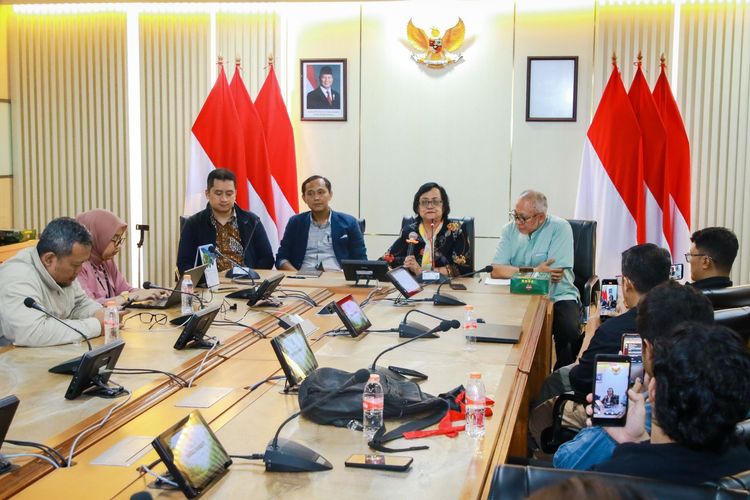
Enviro News Asia, Jakarta — Indonesia’s long-term efforts to protect the critically endangered Javan rhinoceros (Rhinoceros sondaicus) include establishing a second population, strengthening genetic diversity and improving habitat management, conservation experts said, emphasising that carefully planned translocation is essential to reducing the species’ risk of extinction.
The experts made the remarks as public discussion intensified over the government’s plan to relocate some Javan rhinos, following speculation linking the initiative to mining activities and habitat degradation. They stressed that the strategy had been discussed for decades and was based on scientific considerations rather than a response to recent controversies.
Sandy Nurvianto, a wildlife conservation expert at Gadjah Mada University (UGM), said the idea of relocating Javan rhinos dated back to 1986, following the sudden deaths of five animals suspected to have been affected by a disease outbreak.
He said establishing additional populations would reduce the risk of losing the entire species if a disaster or disease outbreak affected its only remaining population in Ujung Kulon National Park.
“The single population needs to be divided into several new populations so that if one population faces a disturbance, another can survive,” Sandy said.
The proposed second population was intended as both a rescue measure and a risk mitigation strategy. Apart from disease, the existing population faces potential natural disasters, including tsunamis triggered by an eruption of Anak Krakatau volcano.
The area was devastated by the 1883 Krakatau eruption before natural succession gradually restored its forest ecosystem, highlighting the vulnerability of relying on a single habitat.
Sandy noted that Javan rhinos once occupied a much wider range but their distribution gradually contracted under human pressure, leaving Ujung Kulon as their last remaining natural stronghold.
Muhammad Agil, a researcher at IPB University’s School of Veterinary Medicine and Biomedical Sciences, said the government and conservation experts had formulated strategies for Javan rhino protection since 1993. One major consideration was the limited carrying capacity of Ujung Kulon as the population continued to grow.
“Ujung Kulon is a limited area, while the population will continue to increase. Eventually, the habitat will reach its carrying capacity, even though we want Indonesia’s Javan rhino population to keep growing,” Agil said.
He also rejected claims that severe habitat degradation was undermining the population, pointing to figures showing a steady increase over the past four decades. When population data were first announced in the 1980s, Ujung Kulon was estimated to have around 25 rhinos. The number has since exceeded 80 and is approaching 100 individuals.
The growth indicates that the population has been able to survive in Ujung Kulon, he said, but limited habitat capacity and the threat of natural disasters make the development of a second population increasingly important.
Harini Muntasib, a professor at IPB University who has studied Javan rhinos since 1990, also described the current condition of the population in Ujung Kulon as relatively good, citing continued breeding as evidence.
She acknowledged that the forest, which is more than a century old, has not reached its ecological climax and that the availability of understory vegetation for food has become more limited than in the past. However, she said the habitat still provided sufficient space for rhinos to hide and move around.
Harini clarified that the current government initiative did not involve simply moving animals outside the national park. Instead, it involved managing the population within the same ecosystem, including through the Javan Rhino Study and Conservation Area (JRSCA), to reduce the risks associated with inbreeding.
With the population concentrated in a single habitat, repeated mating among related individuals could increase the risk of genetic defects. Moving selected animals to a nearby habitat with different environmental conditions could help improve breeding management and the genetic quality of future offspring, she said.
Sandy added that the government had explained that the current translocation plan was local, involving the movement of rhinos between locations within Ujung Kulon. The development of JRSCA was intended to support breeding under more controlled conditions.
He stressed that experts must first ensure the population was healthy before any animals were moved. They must also assess whether removing selected individuals would negatively affect the remaining population.
Plans to establish a second wild population outside Ujung Kulon remain under careful consideration. Agil said potential locations had been assessed since 2007, but none had yet met all ecological and social requirements.
He warned that habitat suitability alone would not guarantee success. Security conditions and support from surrounding communities would also determine whether a new population could survive.
Agil cited previous rhino translocation efforts in Nepal as a warning, noting the risk of relocated animals being hunted if adequate protection was not ensured.
Beyond reducing extinction risks, translocation and further research could also help restore genetic diversity. Historical records and museum specimens in Berlin indicate that Javan rhinos once inhabited a much broader area, including Sukabumi, Yogyakarta and Magetan, suggesting that the species had greater genetic variation in the past.
Agil said carefully managed breeding could help preserve and expand desirable genetic variations. He also pointed to potential future applications of advanced technologies, including genetic engineering and in-vitro fertilisation, to support the recovery of genetic material that may have been lost.
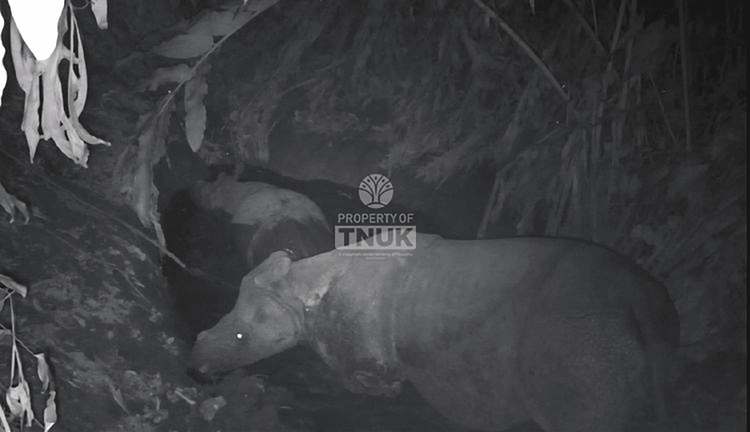
Harini described the current conservation programme as part of a long-running effort that began during the Dutch colonial period. She welcomed cooperation among successive generations of researchers and the adoption of modern monitoring technology, particularly camera traps, which have replaced earlier methods that relied heavily on manually counting animal footprints.
She said growing public and institutional interest in Javan rhino conservation, combined with advances in research technology, offered new opportunities to strengthen protection efforts. (*)