Enviro News Asia, Jakarta — The Ministry of Forestry of Indonesia has introduced an innovative financing approach to strengthen sustainable forest management and improve community welfare through the development of a Blended Finance Model (BFM) under the Sustainable Landscape Investment Partnership Project (KIBAR).
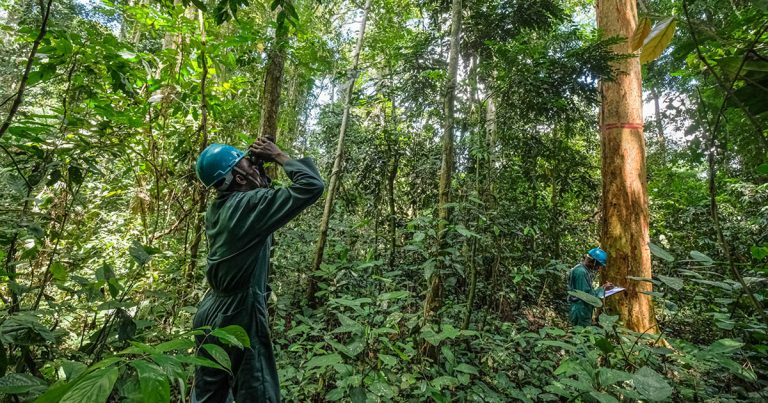
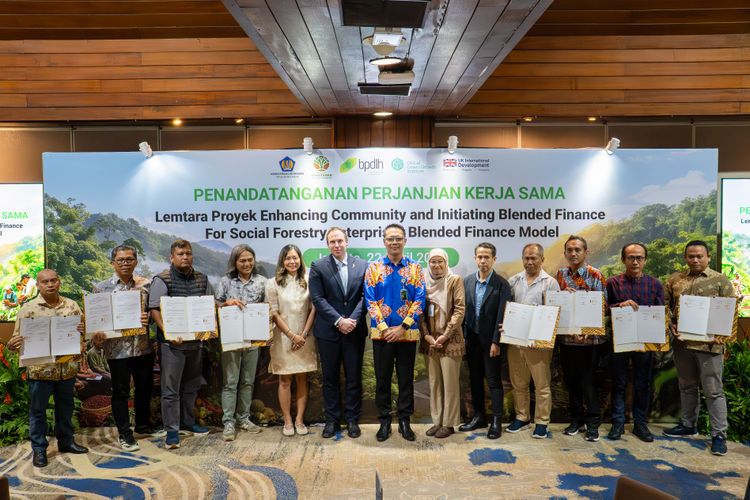
The initiative, implemented through the Environmental Fund Management Agency, officially commenced following the signing of cooperation agreements with selected intermediary institutions in Jakarta. The scheme is designed to expand access to financing for Social Forestry Business Groups (KUPS) while enhancing their operational capacity at the grassroots level.
The BFM integrates public funding, development partner support, and other financial sources to build a more inclusive and sustainable financing ecosystem for communities living around forest areas. The program is part of a broader collaboration between the Indonesian government and the UK Foreign, Commonwealth & Development Office.
The Ministry of Forestry plays a central role in ensuring alignment with national policies, while the Global Green Growth Institute provides technical assistance and capacity-building support. BPDLH acts as a key facilitator, ensuring that funding mechanisms effectively reach beneficiaries at the local level.
Representing the Directorate General of Social Forestry, Enik Ekowati emphasized that the BFM scheme serves as a strategic instrument to support KUPS that are not yet fully bankable. She noted that the initiative contributes to achieving Indonesia’s FOLU Net Sink 2030 target by transforming community-based forestry from subsistence activities into market-oriented enterprises.
BPDLH President Director Joko Tri Haryanto underlined that the agreement marks a critical milestone in transforming financing mechanisms in the social forestry sector.
“This is not merely an administrative process, but the starting point of a more inclusive and sustainable financing transformation. Blended finance serves as a bridge between available funding sources and real needs on the ground,” he said.
International partners also highlighted the importance of the initiative. Saul Hathaway from UKFCDO stated that financial support from the UK government aims to mitigate investment risks in landscape-based sectors, thereby accelerating capital access for local communities while preserving forest ecosystems.
Meanwhile, Charlotte Türk of GGGI Indonesia explained that the project combines technical assistance, business incubation, and risk mitigation mechanisms to improve the bankability of social forestry enterprises. Grant funding will act as a catalytic instrument, supported by de-risking strategies and guarantees managed by BPDLH.
The selection process for intermediary institutions involved rigorous evaluation by a cross-institutional technical team comprising BPDLH, the Ministry of Forestry, and GGGI. Out of 40 proposals submitted, 10 proposals from 8 institutions were selected for funding. The approved programs will be implemented across seven provinces, covering 18 districts/cities, involving 64 KUPS, and initiating 16 Integrated Area Development (IAD) projects.
The BFM initiative also promotes agroforestry practices that balance economic productivity with environmental sustainability. In addition to international partners such as the World Bank, UNDP, UNEP, GIZ, and FAO, private sector actors including Olam and Mars have been engaged as offtakers to ensure market access and price certainty for KUPS products.
Through this initiative, the Ministry of Forestry and its partners aim to establish a scalable financing model that strengthens natural capital, enhances rural livelihoods, and supports sustainable economic growth in Indonesia’s forest-dependent communities. (*)