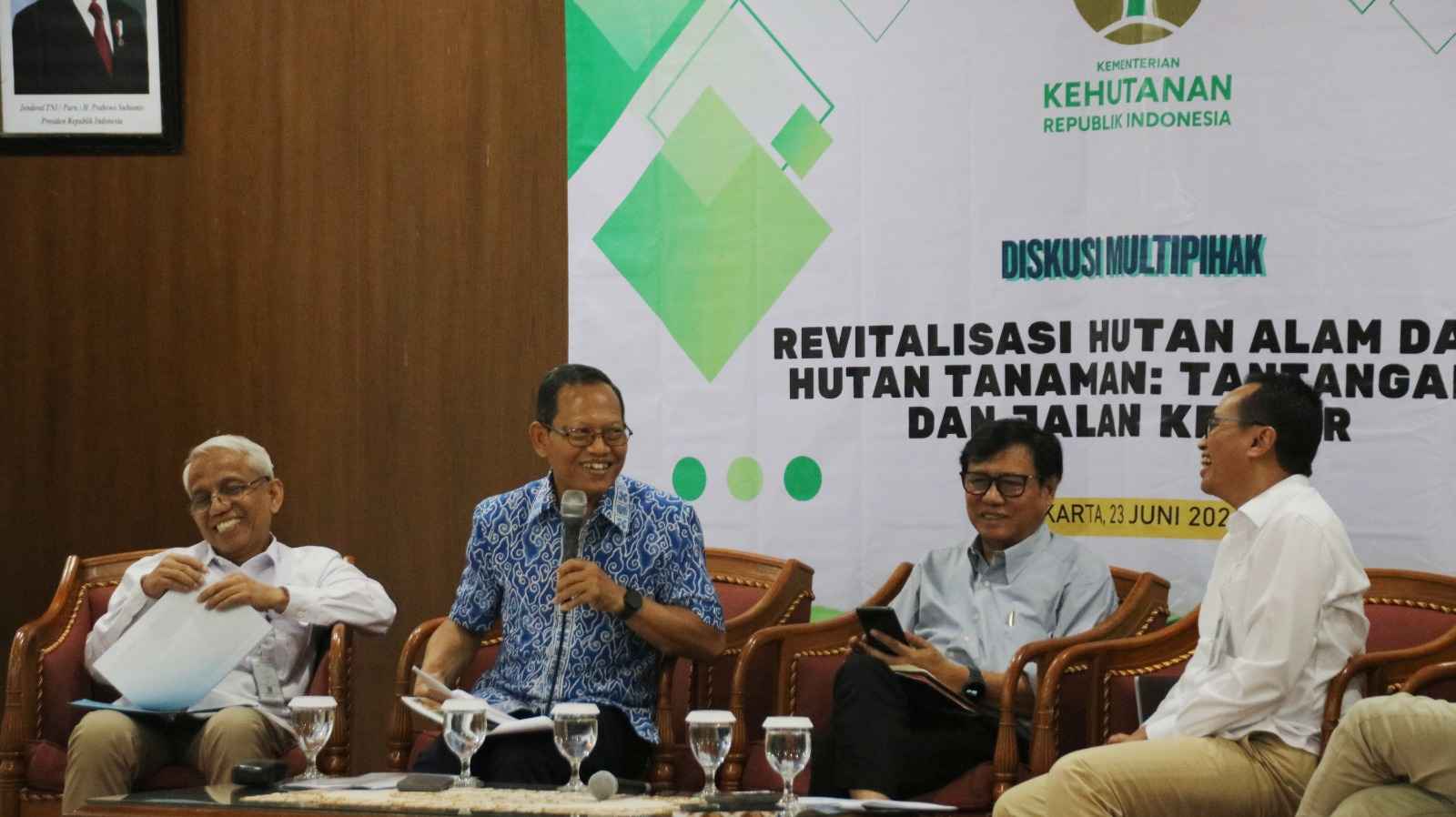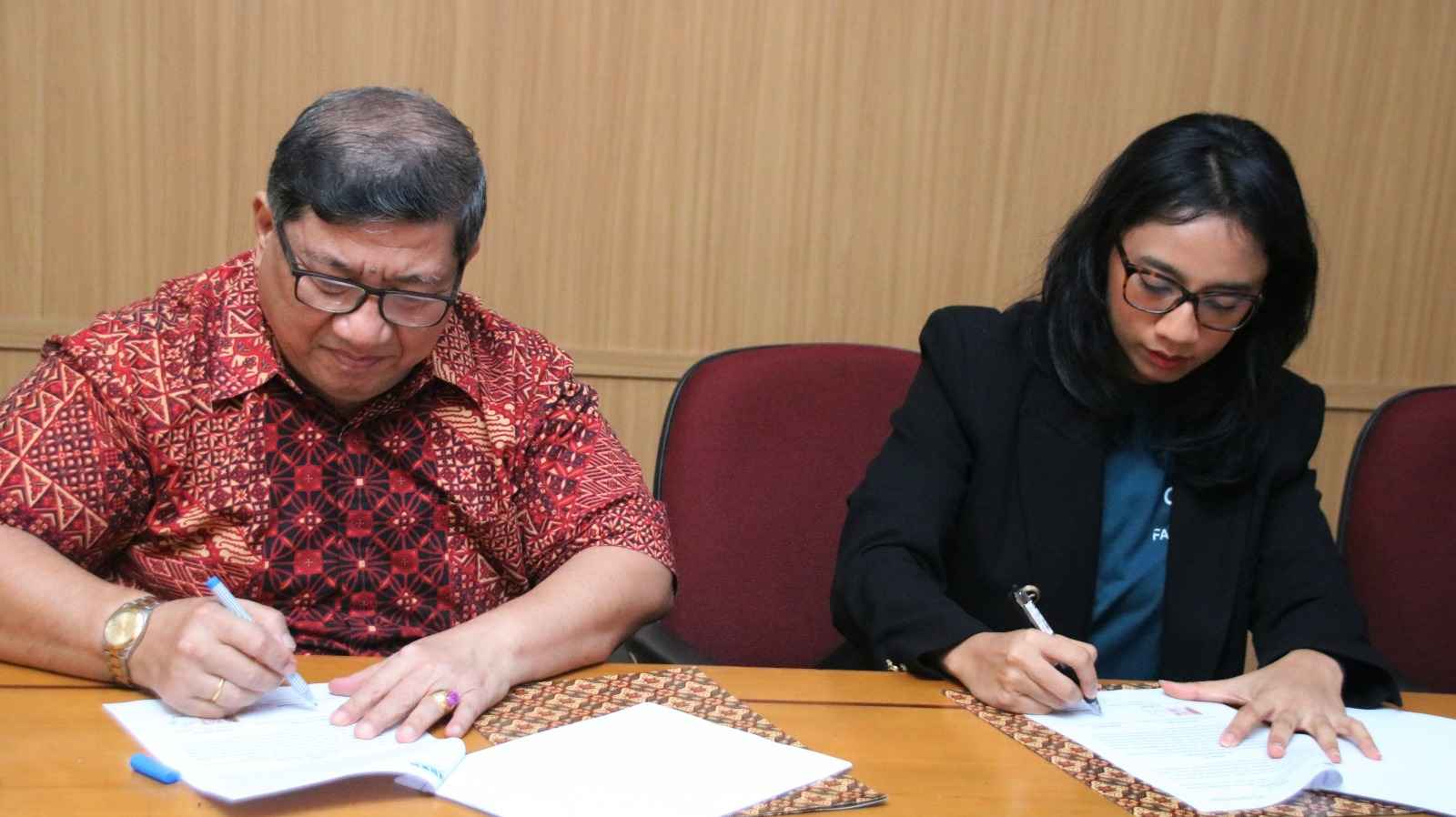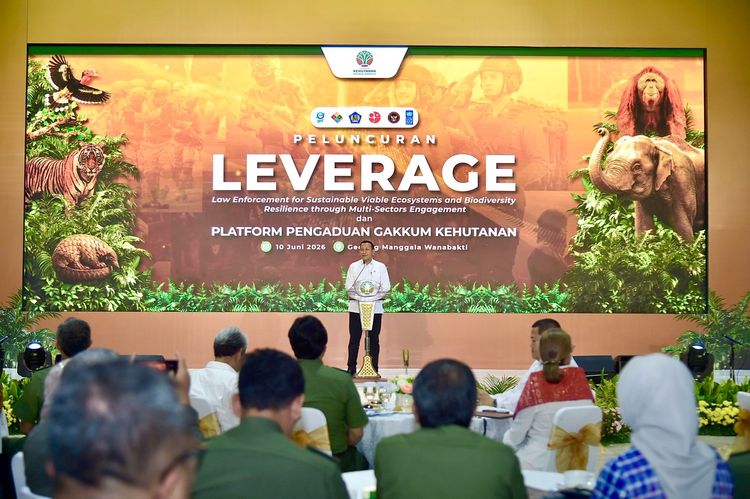
Enviro News Asia, Jakarta — Indonesia’s Ministry of Forestry officially launched the Law Enforcement for Sustainable Viable Ecosystems and Biodiversity Resilience through Multi-Sectors Engagement (LEVERAGE) initiative and introduced a digital Forestry Law Enforcement Complaint Platform on Wednesday to strengthen environmental governance and improve public participation in combating forestry crimes.
The two initiatives were unveiled in Jakarta on June 10 with support from the United Nations Development Programme (UNDP) through the Global Environment Facility (GEF-8). The complaint platform is designed to provide a participatory, transparent, and accountable channel through which the public can report suspected forestry crimes and monitor case handling in real time.
Opening the event, Deputy Minister of Forestry Rohmat Marzuki conveyed appreciation from Forestry Minister Raja Juli Antoni for the strategic collaboration. He outlined six key directives to guide the implementation of LEVERAGE and the operation of the new digital platform.
Rohmat emphasized that the project must align with national forestry development priorities, Indonesia’s FOLU Net Sink 2030 agenda, the Sustainable Development Goals (SDGs), and biodiversity conservation commitments.
He also stressed that habitat protection should remain central to all conservation interventions, noting that wildlife cannot survive without healthy ecosystems. In addition, he called for stronger cross-sector law enforcement supported by intelligence operations, cyber patrols, network analysis, and cooperation among law enforcement agencies to tackle the growing illegal wildlife trade on social media.
The deputy minister highlighted the importance of involving communities living around forest areas as key partners in prevention, reporting, conflict mitigation, and sustainable forest management.
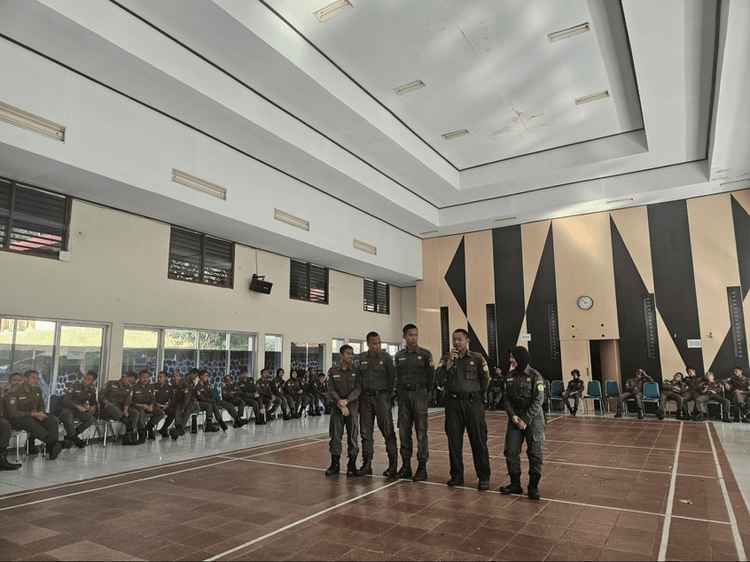
He further instructed that knowledge generated through LEVERAGE be integrated into the Ministry’s Corporate University to ensure long-term institutional learning and strengthen the capacities of forestry police officers and civil investigators nationwide.
Regarding the newly launched complaint platform, Rohmat emphasized the need for integrity, discipline, measurable response times, and effective coordination to ensure public trust and reinforce the state’s presence in addressing forestry crimes.
He also reiterated President Prabowo Subianto’s commitment to strengthening forestry law enforcement, including plans to recruit an additional 21,000 forestry police officers. According to Rohmat, the LEVERAGE initiative supports Indonesia’s FOLU Net Sink 2030 roadmap and contributes to achieving SDG targets.
Director General of Forestry Law Enforcement Dwi Januanto Nugroho said law enforcement cannot function effectively through isolated efforts. He described LEVERAGE as a national framework designed to mobilize stakeholders and build a comprehensive forestry law enforcement ecosystem.
Dwi acknowledged institutional limitations in personnel, funding, equipment, and methodologies, stressing that stronger partnerships with the police, prosecutors, the Ministry of Finance, and scientific institutions such as the National Research and Innovation Agency (BRIN) are essential. He said these collaborations are based on four principles: mutual respect, trust, benefit, and responsibility.
UNDP Indonesia Resident Representative Sara Ferrer Olivella underlined that biodiversity conservation is ultimately about people, as healthy forests and ecosystems support livelihoods, climate resilience, and sustainable development.
“Protecting wildlife and habitats means protecting livelihoods, climate resilience, and Indonesia’s development future. Through LEVERAGE, UNDP supports the Government of Indonesia in strengthening cross-sector collaboration to reinforce law enforcement while safeguarding ecosystems that underpin human well-being,” she said. (*)