

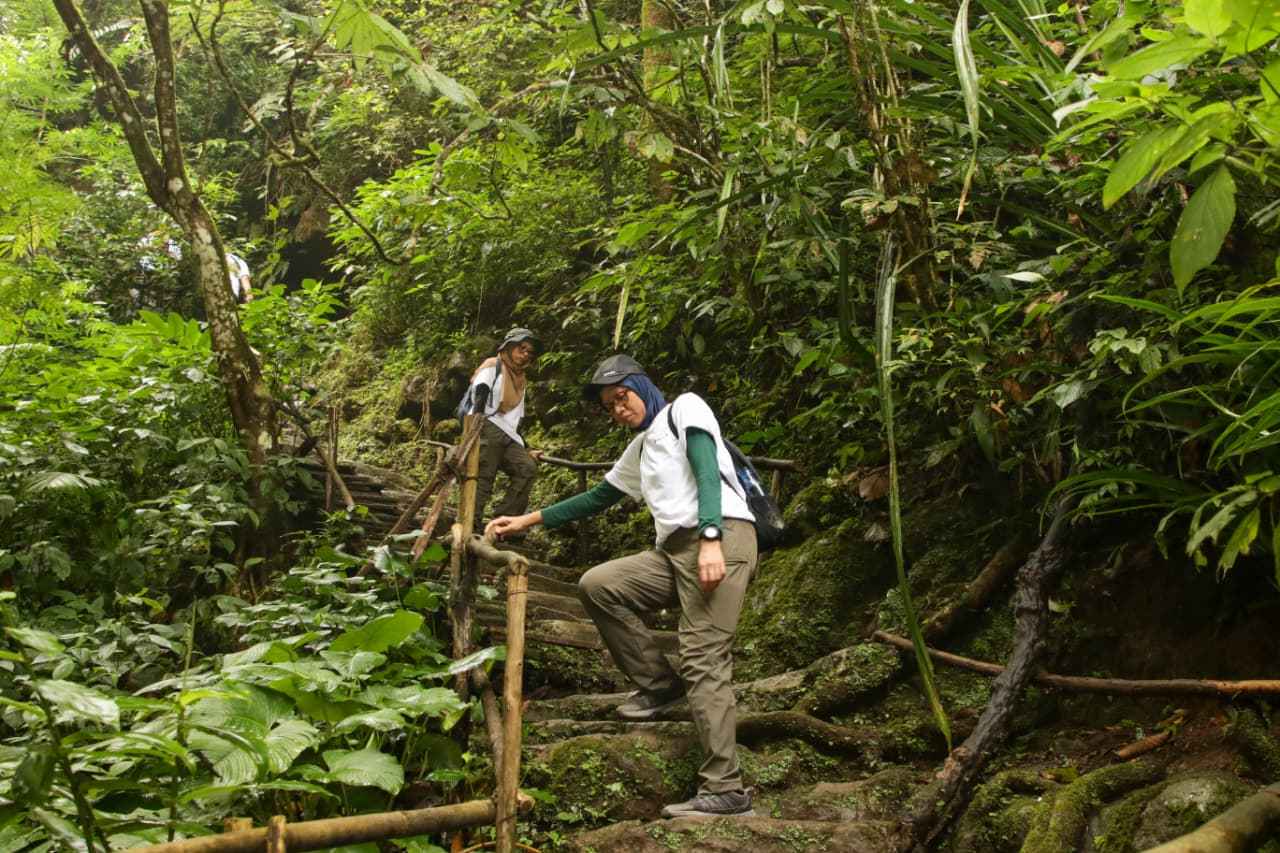
Enviro News Asia, Kuningan — Indonesia’s Ministry of Forestry strengthened multi-stakeholder collaboration and the role of women in supporting the implementation of Indonesia’s FOLU Net Sink 2030 through the “Indonesian Women Synergy for Indonesia’s FOLU Net Sink 2030” program held at Gunung Ciremai National Park from 11–13 May 2026.
The event brought together representatives from government institutions, environmental organizations, media, communities, businesses, and conservation activists to build collective awareness on forest conservation, climate change mitigation, and public communication in support of Indonesia’s emissions reduction targets.
The Head of Gunung Ciremai National Park emphasized that conservation areas play a vital role in achieving Indonesia’s FOLU Net Sink 2030 target through ecosystem protection, forest restoration, and community engagement in environmental preservation efforts.
“TNGC is not only a conservation area, but also a safeguard for water sources, climate control, and a collaborative learning space for communities in supporting Indonesia’s FOLU Net Sink 2030,” he said.
According to the park authority, the conservation area contains at least 97 water springs with a combined flow rate of more than 9,000 liters per second across six watersheds, making it essential for ecological balance and community livelihoods in the Ciayumajakuning region.
The park management has also developed several bioprospecting innovations, including drought-resistant bacteria, anti-frost technologies, and environmentally friendly pest control systems to support conservation-based industries and community empowerment around forest areas.
Representing the Bureau of Public Relations and International Cooperation of the Ministry of Forestry, Aryani stated that the program was designed not only as a discussion forum but also as a cross-sector collaboration platform to improve public understanding of the role of forestry in climate change mitigation.
“We want to present a more grounded communication approach through field education, biodiversity exploration, forest healing, and collective tree-planting activities in conservation areas,” Aryani said.
She added that the involvement of ministries, media, environmental organizations, businesses, women’s communities, and influencers is crucial in strengthening positive narratives about Indonesia’s forest management and climate agenda.
Meanwhile, Wildlife Conservation Society representative Gini Wening Galih highlighted the significant role of women living around conservation areas as environmental guardians, economic leaders, and architects of sustainability.
“Women are not invisible, but often systems make their roles invisible,” she said, emphasizing the importance of strengthening women’s leadership capacity, economic access, and participation in conservation and sustainable development.
Conservation activist Umi Thoyibah also stressed that protecting nature requires sincerity, care, and long-term commitment from all stakeholders to maintain harmony between humans and the environment.
Through the program, the Ministry of Forestry hopes to strengthen collaboration among government institutions, communities, businesses, media, and women’s groups in supporting Indonesia’s FOLU Net Sink 2030 agenda and broader climate action efforts. (*)