

By: Prof. Gusti Hardiansyah
Professor at Universitas Tanjungpura — Chairman of ICMI West Kalimantan
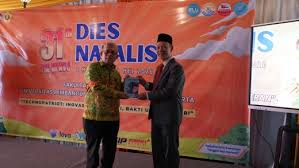
At the closing of the 35th National Gathering and Anniversary of ICMI in Bali, the Coordinating Minister—who is also former Minister of Trade—Zulkifli Hasan delivered a speech that both inspired and challenged our national consciousness regarding the direction of future development. He did not speak in technical jargon, but rather through simple logic that is often overlooked in policy frameworks: that food sovereignty, economic justice, and the future of the nation ultimately rest in the village.
Before national figures such as the Chairman of the Regional Representatives Council Sultan B. Najamudin, Prof. Jimly Asshiddiqie, Prof. Ilham Habibie, and ICMI Chairman Prof. Arief Satria, Zulhas presented an idea that went beyond a standard work report. It resembled an effort to redefine the very foundation of Indonesia’s economy—an architecture that places the people, especially farmers, fishers, and livestock breeders, as the primary agents of development.
Food Sovereignty: From Impossibility to Reality
Zulhas began his remarks with a candid reflection:
“Many have said it is impossible to feed 82.9 million people. Impossible to achieve self-sufficiency. But we proved them wrong.”
He backed this statement with data: last year Indonesia imported 4.5 million tons of rice. This year, rice imports were reduced to zero. National production increased from 30 million tons to 34.7 million tons, creating a surplus of 4.7 million tons. Corn production similarly rose by nearly 10 percent.
These achievements did not occur by chance. They emerged from bold political decisions—repairing irrigation systems, securing fair grain prices, and treating farmers as strategic national assets.
Here lies Zulhas’s central point:
food sovereignty is not a technical issue, but a political decision.
This principle forms the basis for the next development pillar: strengthening villages as centers of production.
Merah Putih Village Cooperatives: Rebuilding the Nation from the Village
One of Zulhas’s most innovative proposals is the establishment of:
- Merah Putih Village Cooperatives, and
- Merah Putih Egg Cooperatives
These cooperatives are envisioned as the “economic heart” of the village. They will absorb all local products—eggs, corn, rice grain, fish, and other commodities—supported by Kopjet, a national cooperative network serving as the off-taker.
The operational design is simple yet transformative:
Village produces →
Merah Putih Cooperative aggregates →
Kopjet purchases →
Kopjet collaborates with Bulog and SPPG for national distribution.
Through this system, villages will no longer stand alone in the marketplace. They gain guaranteed buyers, stable prices, and distribution access.
Zulhas emphasized a fundamental message:
“People’s economy can only grow when we shorten the supply chain and return value to the village.”
Cutting the Supply Chain: Dismantling the Power of Middlemen
For decades farmers and fishers have lived in a paradox:
they sell cheap,
consumers buy expensive,
while middlemen reap the largest profits.
The new economic architecture seeks to dismantle this long-standing structure. Village cooperatives stand at the frontline of production; Kopjet functions as the collector and distributor; while Bulog ensures price stability.
Zulhas acknowledged that reducing supply-chain layers is difficult, but he affirmed:
“Alhamdulillah, the effort to shorten the long supply chain has begun to succeed. Next year we will complete it.”
This is not merely a technical reform—it is a restructuring of economic power.
Towards Protein Self-Sufficiency: The Second Pillar of National Resilience
Following the success in securing rice and corn production, the government now shifts focus to protein sources. In 2026, Indonesia will develop:
- Modern fishponds,
- 500 cultivation systems,
- 2,000 fisher villages,
- Feed factories in 20 provinces, including West Kalimantan.
Currently, poultry and egg prices are heavily influenced by two major feed producers. By establishing regional feed factories, this dependency is broken, allowing villages to produce protein independently.
As Zulhas stated:
“We are a great nation. We must not depend on just one or two parties.”
This is a message of sovereignty that goes beyond food—it speaks to national dignity.
People-Centered Economy: A Difficult but Necessary Mindset Shift
Zulhas also recognized the challenges:
Achieving food self-sufficiency is difficult.
Achieving protein self-sufficiency is harder.
Building a people-centered economy is the most difficult because it requires a mindset change.
He called on the Muslim community and ICMI in particular:
“Muslims cannot progress unless we embrace this policy.”
He urged collective action across sectors—agriculture, fisheries, livestock, and trade. A people-centered economy requires a transformation in work culture, not merely changes in budget allocation.
Responding to Accusations: Floods and Spatial Planning
Zulhas addressed a sensitive issue—the recent floods in Sumatra that were linked to spatial planning and licensing policies. He refuted these accusations with geographic clarification:
Tesso Nilo is located in Riau,
and Riau did not experience flooding during the incident.
He asserted that he did not issue any permits in Aceh, North Sumatra, or West Sumatra. He also clarified that the degradation of Tesso Nilo was not caused by government permits, but by large-scale encroachment that has occurred for decades.
On the widely debated issue of 1.6 million hectares, he explained:
“That is not a new permit. It is spatial adjustment so that old villages, customary areas, and long-established settlements have legal certainty.”
This clarification is crucial to prevent the spread of misleading narratives.
The Role of ICMI: Embracing an Era of Transformation
In closing, Zulhas praised ICMI as a home for knowledge and national ethics. He stressed that a people-centered economy requires ideas, guidance, and constructive criticism from Muslim intellectuals.
“Conceptual thinking is essential to achieving the Indonesia we aspire to—an advanced, just, and dignified nation.”
This encapsulates the essence of Silaknas 2025: an invitation for ICMI to move beyond discussion forums and become a center of intellectual and social transformation.
Conclusion: Indonesia’s Future Begins in the Village
Zulhas’s speech at Silaknas ICMI 2025 reinforces a truth often forgotten amid national politics:
that Indonesia’s future is not built in Jakarta’s skyscrapers,
but in its villages,
in the farmers’ fields,
in the fishers’ ponds,
in the livestock barns,
and in the small cooperatives that are only beginning to find their confidence.
There lies the soul of the people’s economy.
There lies Indonesia’s rediscovered identity.
And there, as Zulhas said, begins a new civilization—one that grows from the village, upheld by the people, and guided by scholars.
For the people’s economy is not merely a program,
but a historical choice.
And the history of this nation, as always,
begins in the village.