Enviro News Asia, Bogor – Food loss and waste (FLW) has become a critical issue in the global food system due to its broad impacts on the environment, economy, and food security. According to the Food and Agriculture Organization of the United Nations (2019), around 1.3 billion tons of food are wasted annually worldwide. This figure not only reflects the waste of production resources such as water, energy, and farmland but also contributes to 8–10% of global greenhouse gas (GHG) emissions, equivalent to 4.4 gigatons of GHG emissions.
In Indonesia, based on a 2021 report from the National Development Planning Agency (Bappenas), the country is among those with the highest levels of food waste in the world, with an estimated 23 million–48 million tons of food wasted annually, translating to economic losses of IDR 213 trillion to IDR 551 trillion.
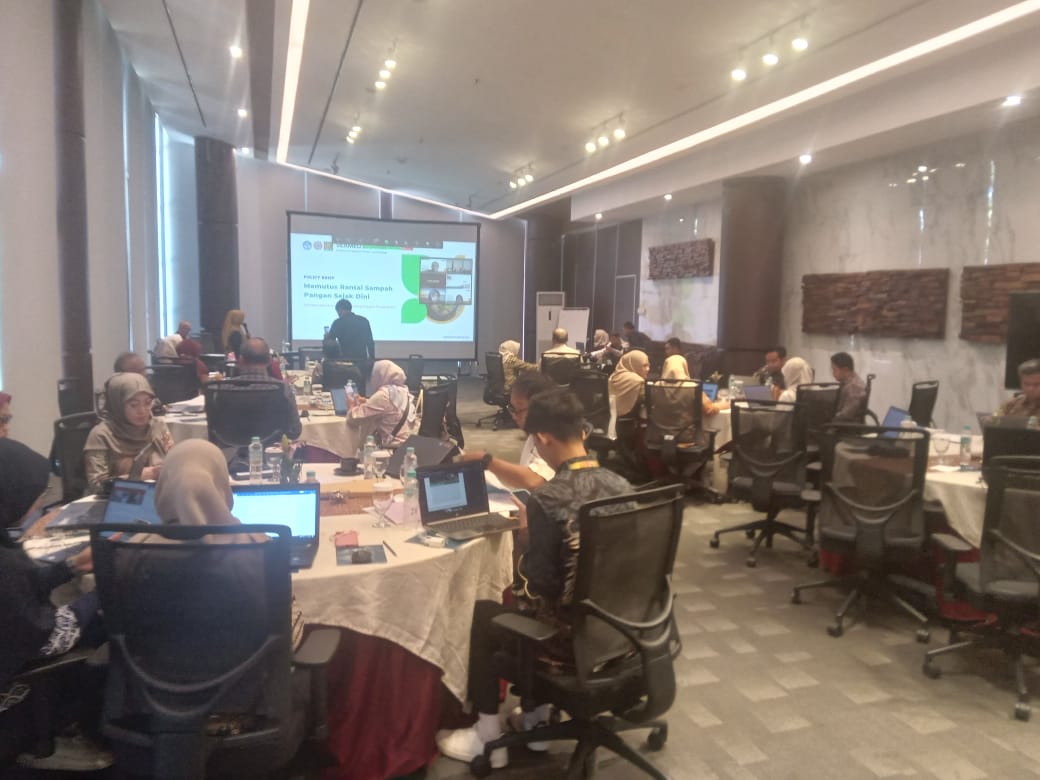
“One of the sources of food waste that is often overlooked is the school environment. In many schools, leftover food from canteens, students’ lunch boxes, and waste from learning activities are often poorly managed,” said Ellis Rosdiawati, Deputy Director for Administration of the Southeast Asian Regional Centre for Tropical Biology (SEAMEO BIOTROP), during the Strategic Consultative Meeting Policy Brief titled Breaking the Chain of Food Waste from an Early Age: Empowering Schools as Agents of Change, held in Bogor on Thursday (September 4, 2025).
SEAMEO BIOTROP is a regional center in tropical biology mandated to address tropical biology issues in Southeast Asia through science education, capacity building, and information dissemination. Based in Indonesia, SEAMEO BIOTROP works closely with the Ministry of Primary and Secondary Education through the Secretary General as its parent institution.
Given its role, SEAMEO BIOTROP sees a strategic opportunity to develop ideas and policy recommendations on educating students about wise consumption and food waste management. Schools, as learning environments, can serve as strong entry points to instill a culture of responsible consumption from an early age. “Action-based education (experiential learning) and the establishment of environmentally friendly school cultures can be concrete steps in breaking the chain of food waste from an early age,” Ellis Rosdiawati added.
Speakers at the event included Head of the National Nutrition Agency Dadan Hindayana, Head of the Center for Education Standards and Policy at the Ministry of Primary and Secondary Education Irsyad Zamzani, Soepriati from the National Food Agency, as well as several other speakers. Through this policy brief, SEAMEO BIOTROP aims to strengthen its contribution to promoting a more food-conscious and sustainable national education system. (JON)