To Prevent Land Overlaps, Baleg Pushes for Spatial Planning-Forestry Synchronization
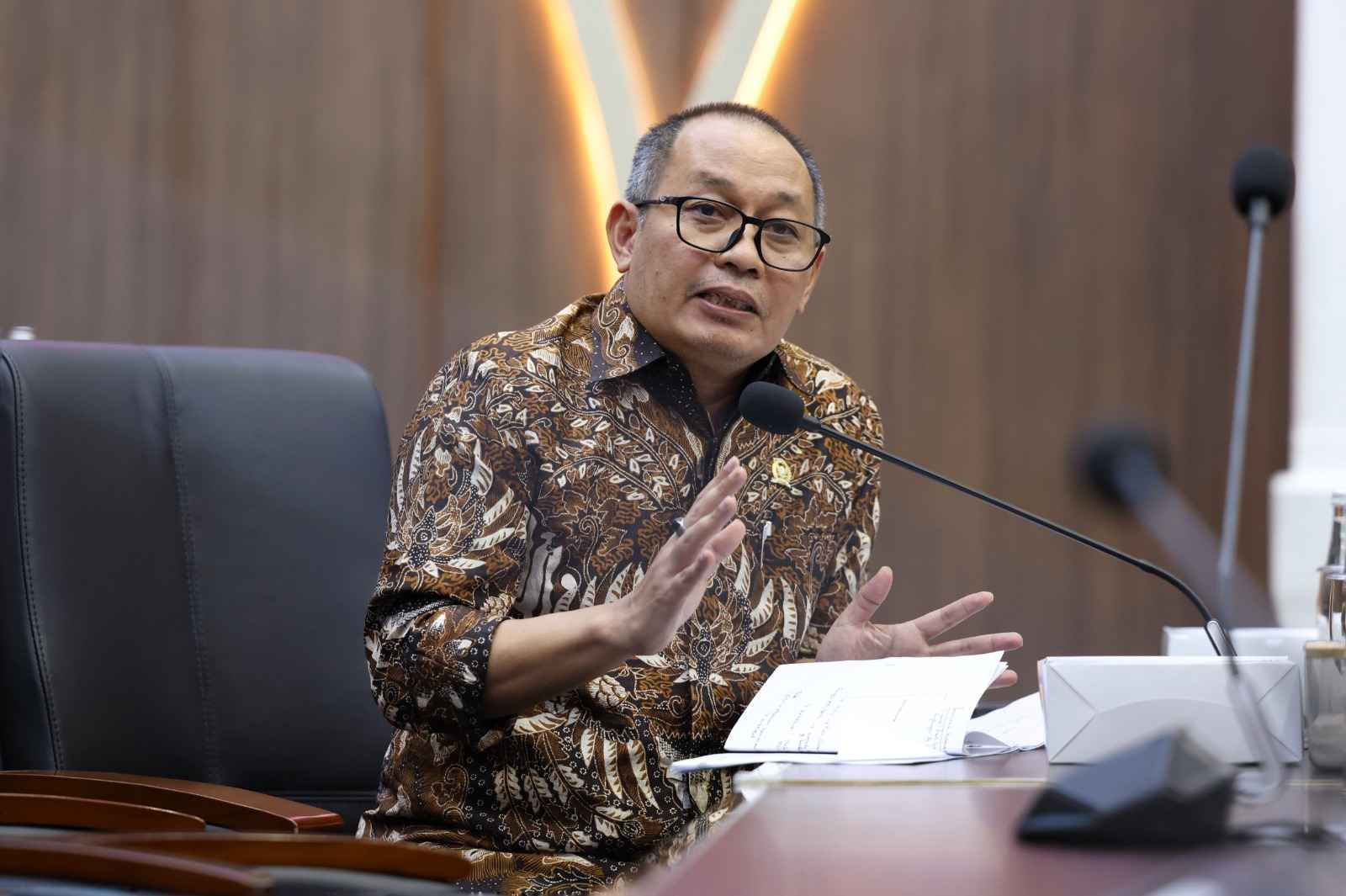
Enviro News Asia, Jakarta — A member of the House of Representatives’ Legislation Body (Baleg), Sofwan Dedi, has stressed the importance of synchronizing spatial planning policy with forest area designation in deliberations on the bill for the fourth amendment to Law No. 41 of 1999 on Forestry. He said recurring land overlap issues point to the need for regulatory reform to ensure legal certainty and improved forest governance.
Sofwan made the remarks during a Baleg working meeting with the Ministry of Agrarian Affairs and Spatial Planning/National Land Agency (ATR/BPN) at the Nusantara I Building, House of Representatives Complex in Senayan, Jakarta, on Monday (6/15/2026).
Sofwan explained that forestry issues cannot be separated from spatial planning, pointing to ongoing cases involving business use rights (HGU) and development activities later found to fall within forest areas due to inconsistent data and maps between agencies.
“This forestry discussion is closely tied to spatial planning. That’s why input from ATR/BPN is important to refine the revision of the Forestry Law,” Sofwan said.
He noted that Law No. 41 of 1999 on Forestry has been in place for some time and needs to be adjusted to reflect current developments and the dynamics of land use today.
Sofwan said that in a number of regions, areas that have developed into government centers, industrial zones, and even ports are still officially classified as forest areas. Conversely, he said, there are also activities taking place within forest areas without a clear legal basis due to uncertainty over land status.
“Conditions like this show the need for better land governance so that overlapping policies that harm the public or hinder development no longer occur,” he said.
Sofwan also raised concerns over the mechanism for using forest areas for mining activities, arguing that post-mining environmental rehabilitation should receive greater attention in the law’s revision, given that the impact of mining extends beyond the size of land used to include changes in landscape caused by mining operations.
He expressed hope that input from the Ministry of ATR/BPN would serve as important material in refining the Forestry Law revision, particularly to strengthen spatial planning synchronization, clarify the status of forest areas, and provide legal certainty for both the public and business operators.
“This legal revision must be able to address the various problems that have emerged on the ground, so that forest area management can run in a more orderly, sustainable manner and provide certainty for all parties,” he concluded. (*)