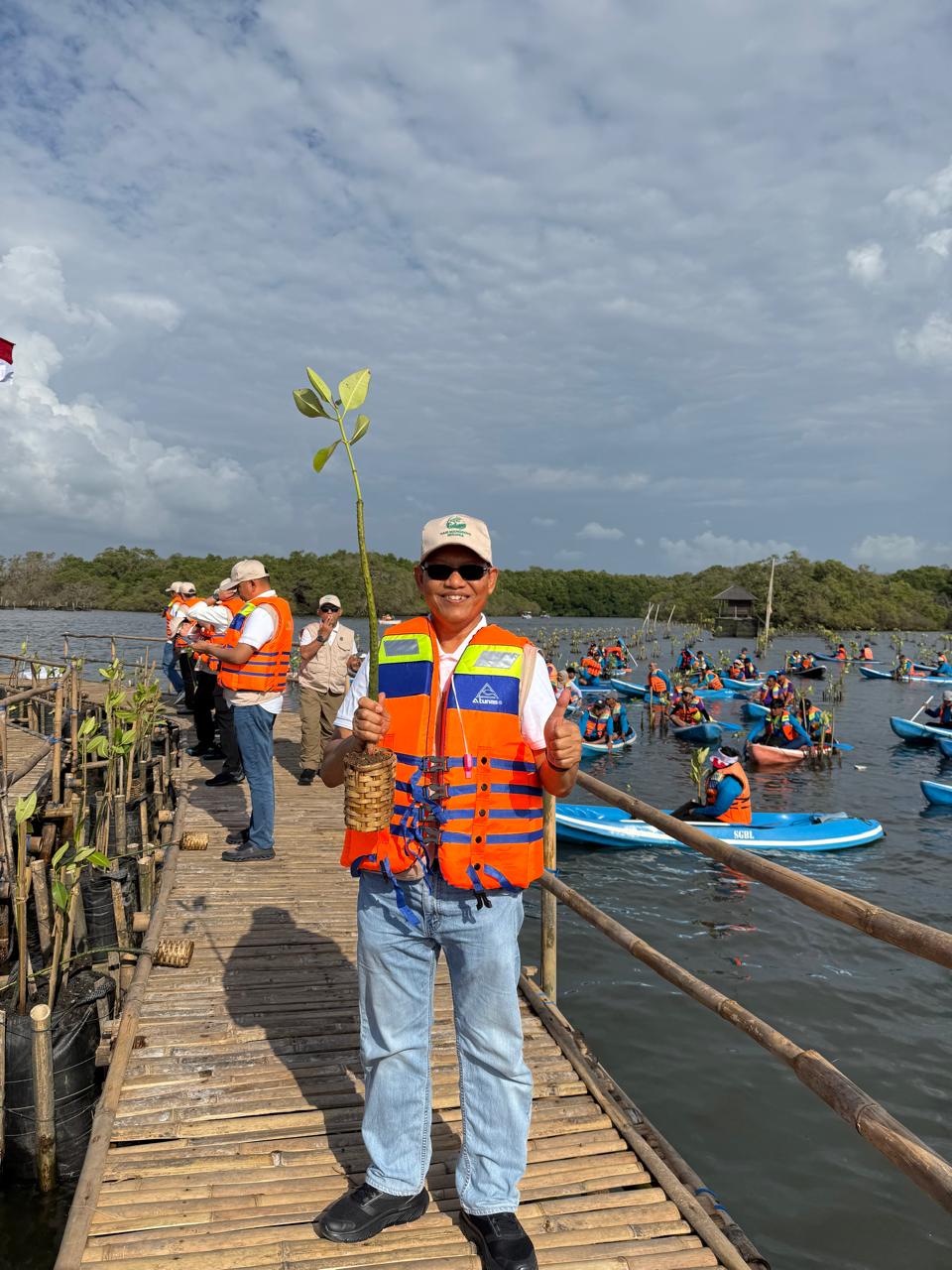
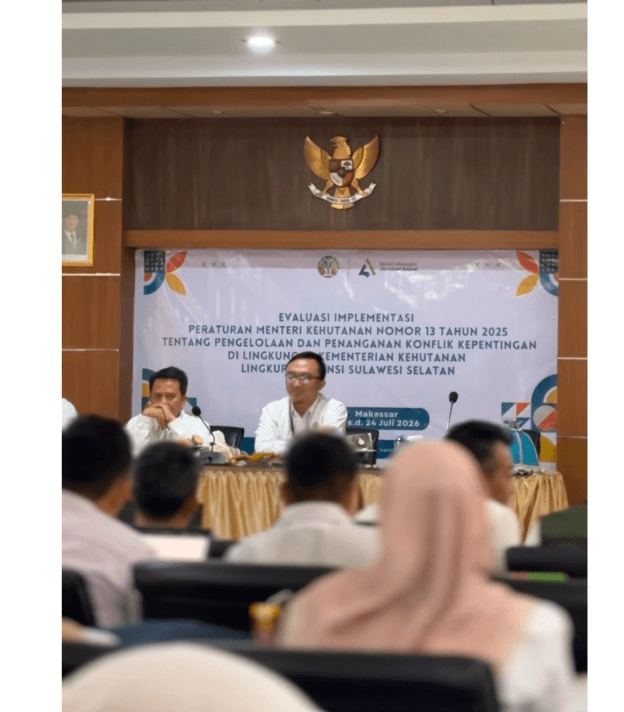
Enviro News Asia, Belém – Amid the dynamic atmosphere of the COP30 Climate Change Conference in Belém, Brazil, the Indonesian delegation delivered a central message: mangroves are not only natural coastal defenses but also climate investment engines that have long been overlooked. This message was emphasized in a presentation delivered by Ristianto Pribadi, Director of Mangrove Rehabilitation at the Ministry of Forestry, at the Japan Pavilion upon invitation from the Japan International Cooperation Agency (JICA) on 13 November 2025. In a room filled with diplomats, researchers, and environmental practitioners, Ristianto opened his remarks with a striking fact: Indonesia possesses 3.44 million hectares of mangroves—nearly one-quarter of the world’s total.
In the realm of climate diplomacy, often saturated with rhetoric, this figure is far more than a statistic. It represents both political and scientific capital that positions Indonesia as a key player in advancing Nature-Based Solutions (NbS). Ristianto described mangroves as ecosystems that work quietly yet deliver extraordinary benefits. For instance, two to five hectares of mangroves can filter waste from one hectare of fish ponds, making them an invisible guardian of coastal food systems. At the same time, mangrove roots store three to five times more carbon than terrestrial forests, rendering them a “carbon vault” often overlooked by the public.
Beneath their dense stilt roots, mangroves also provide habitat for more than 3,000 fish species that support the livelihoods of millions. When high waves strike coastal areas, mangroves have proven to be five times more cost-effective than concrete seawalls increasingly built in coastal cities. “This ecosystem is a nature-based solution already available. We simply need to finance and manage it correctly,” Ristianto stated.
However, he reminded the audience that restoring mangroves is not as simple as planting trees. Biogeophysical complexities, social dynamics within coastal communities, and land tenure issues all contribute to challenges that conventional approaches cannot resolve. Short-term projects fall short of matching ecological rhythms that require time, patience, and sustained financing. “We need a paradigm shift. Financing must be adaptive, collaborative, and responsive to real conditions on the ground,” he said.
This is where the concept of innovative finance becomes the backbone of Indonesia’s strategy. The approach blends mixed funding (blended finance), international climate financing mechanisms, philanthropic contributions, and performance-based instruments to generate financial flows that are fast, flexible, and long-term. These funds must also reach the grassroots level—local communities who play the most critical role but often receive the least benefits.
Ristianto presented six requirements for achieving effective mangrove rehabilitation: long-term financing of at least 5–7 years; clear multi-stakeholder governance; integration of community-based economic benefits; adaptive, science-driven management; land tenure security; and knowledge-sharing mechanisms through South–South cooperation. “Without these six elements, rehabilitation will occur, but it will not last,” he noted.
All of these efforts are carried out through the synergy of five key actors: the government with its direction and regulations; international partners providing funding and technology; local communities as frontline implementers; research institutions ensuring evidence-based decisions; and civil society organizations bridging advocacy and mobilization. According to Ristianto, this model ensures that mangrove restoration becomes not merely an environmental project, but an inclusive climate-development framework.
Through this approach, Indonesia is not only showcasing its ecosystem restoration achievements at COP30. The country is also offering a climate financing model that can be replicated globally, at a time when the world is urgently seeking concrete solutions amid a deepening climate crisis. Mangroves—often perceived as “coastal fringe forests”—appear to have finally found their global stage. (*)