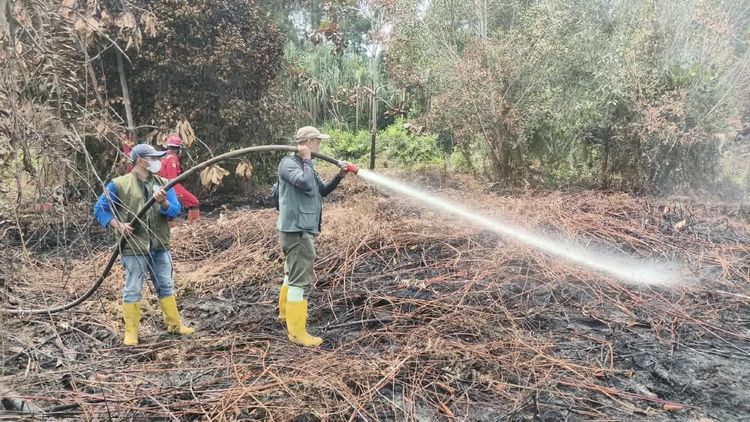


Enviro News Asia, Lampung – For communities living around Way Kambas National Park, sharing their daily lives with Sumatran elephants is a fact of existence. Behind that rich biodiversity, however, lies a challenge that must be faced collectively: the growing number of interactions between humans and wild elephants, with consequences for community safety, livelihoods, and the survival of the protected species itself.
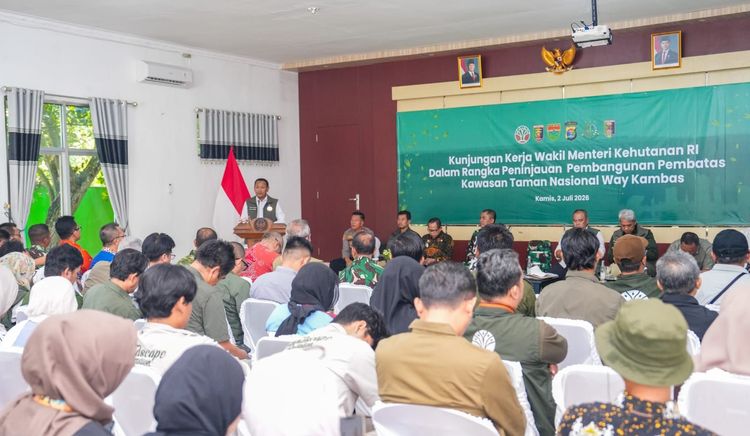
In response, Vice Minister of Forestry Rohmat Marzuki conducted a working visit to Way Kambas National Park (TNWK) in Lampung Timur Regency on Thursday (7/2) to strengthen coordination and ensure the effective, measurable implementation of the Sumatran elephant-human conflict mitigation program in ways that deliver real benefits to communities.
The visit opened with a briefing attended by representatives of the Lampung Provincial Government, the Lampung Timur Regency Government, Danrem 043/Garuda Hitam, the Lampung Police Criminal Investigation Directorate, the Lampung Timur Military District Command, the Head of the Lampung High Prosecutor’s Office, the Rector of the Institut Teknologi Sumatera (ITERA), Ministry of Forestry officials, the Sumatran Elephant Negative Interaction Mitigation and Handling Committee, and conservation partners.
In his remarks, the Vice Minister affirmed that Way Kambas National Park, covering around 125,631 hectares, is one of the last strongholds of Sumatran elephant habitat, home to an estimated 146 to 170 individual elephants.
Growing human-elephant interactions, however, represent a challenge demanding serious attention. Of 38 buffer villages around the park, 17 have experienced direct interactions with wild elephants. Over the past three years, the number of incidents has steadily increased from 114 cases in 2023 to 128 in 2024 and 140 in 2025.
“Handling negative elephant interactions at Way Kambas National Park is not only a conservation issue, but also a humanitarian issue, a territorial security issue, and a community livelihood sustainability issue,” the Vice Minister stressed.
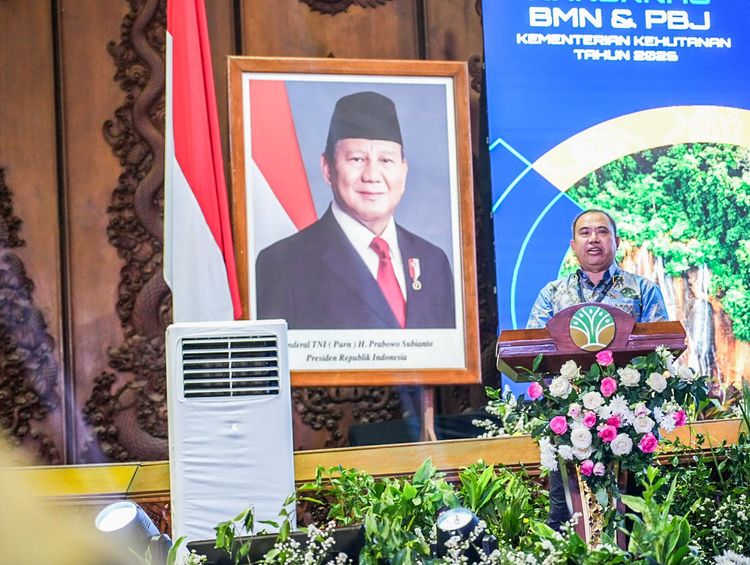
He said President Prabowo Subianto’s direction on supporting elephant conflict mitigation and negative interaction handling must be followed up, with the program oriented not only toward physical construction but also toward building a more permanent mitigation system, improving community safety, and ensuring the survival of the Sumatran elephant in its natural habitat. These efforts also form part of the Ministry of Forestry’s commitment to supporting the FOLU Net Sink 2030 target through the strengthening of forest area protection and sustainable biodiversity conservation.
He reminded all parties that any adjustments in program implementation must remain grounded in field needs, have a clear basis, and not deviate from the primary objective of reducing the intensity of negative human-elephant interactions.
“The success of this program must be measured by its impact: whether negative interaction incidents decrease, whether communities feel safer, whether elephants are better protected, and whether area governance becomes stronger,” the Vice Minister said.
Following the briefing, the Vice Minister and his delegation inspected Resort Margahayu, participated in red lemongrass planting, attended the groundbreaking ceremony for a view deck at the Way Kambas Elephant Training Center, inspected an embung reservoir under construction, interacted with trained elephants, and reviewed the construction of the Way Kambas National Park Main Gate and steel pipe fencing.
Closing his remarks, the Vice Minister called on all stakeholders to make the working visit a momentum for strengthening collaboration, accelerating the completion of priority work, and building a data-driven, technology-based, and community-participatory model for human-wildlife conflict mitigation.
Through these steps, it is hoped that conservation will not only protect the survival of the Sumatran elephant but also deliver a sense of safety, improve community welfare, and strengthen the sustainable management of Indonesia’s conservation areas. (*)