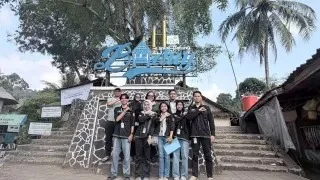


Enviro News Asia, Jakarta – The journalist workshop themed “Strengthening the Role of Media in Supporting Indonesia’s FOLU Net Sink 2030 Agenda” continued with a field visit to Rumpin Nursery, Bogor, on Saturday (May 17, 2025).
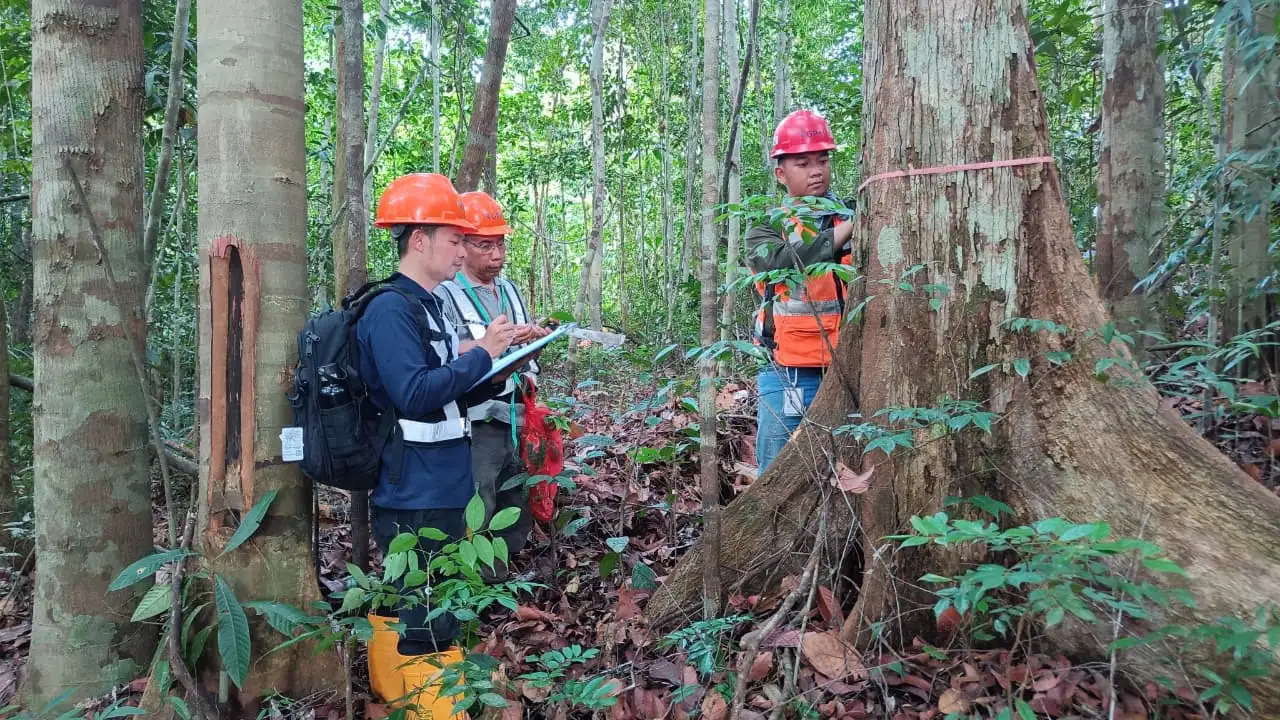
During this visit, journalists gained firsthand insights into how modern nurseries support carbon emission absorption targets through rehabilitation and tree planting programs under the FOLU Net Sink 2030 scheme.
Rumpin Nursery, inaugurated by President Joko Widodo in 2021, is one of the largest nursery centers in Indonesia with a production capacity of up to 12 million tree seedlings per year.
This nursery serves as a backbone for forest and land rehabilitation (FLR), ecosystem restoration, and reforestation programs that are integral to Indonesia’s strategy in achieving the FOLU Net Sink 2030 target.
“Rumpin Nursery is not just a seedling center—it’s also a hub for education, conservation, and innovation in sustainable landscape management,” said Heru Permana, Head of the Citarum-Ciliwung Watershed Management Agency (BPDAS), who was one of the key speakers during the visit.
According to Heru, seedlings from this nursery have been distributed across various regions to support the rehabilitation of critical forests and degraded lands, including priority watershed areas.
Large-scale tree planting is not only an ecological restoration effort but also a natural solution for absorbing carbon emissions from the atmosphere.
Haruni Krisnawati, Deputy Chair II of the Indonesia FOLU Net Sink 2030 Task Force, also explained that land rehabilitation through tree planting plays a significant role in emission reduction targets.
Of the total emission reduction target of -140 million tons of CO₂e in the FOLU sector, a substantial portion is expected to come from increased forest cover and vegetation recovery through activities like those taking place at Rumpin Nursery.
“Every tree planted is part of the climate solution. With a landscape-based approach, effective rehabilitation can enhance ecosystem functions, protect biodiversity, and reduce climate-related disaster risks such as floods and droughts,” Haruni stated.
During a discussion session, sustainability communication expert and Rector of UPNVJ Jakarta, Anter Venus, emphasized the importance of positive and data-driven narratives in reporting climate change issues.
“Media must be able to convey the message that climate solutions are real and already underway—as we’ve seen here in Rumpin. This is crucial for building public optimism,” he said.
He added that public education about the FOLU Net Sink 2030 agenda is essential, as synergy in reducing greenhouse gas (GHG) emissions can only be achieved through shared understanding supported by continuous communication.
“There is no more effective way to drive behavioral change among stakeholders to participate in GHG emission reductions than through sustained communication. Persuasive environmental communication can generate powerful synergy to accelerate the achievement of Indonesia’s Nationally Determined Contribution (NDC), in line with the government’s commitment to the Paris Agreement,” Venus elaborated.
Representing the Indonesian Forest Concessionaires Association (APHI), Trisia Megawati also stated that the private sector is ready to contribute to rehabilitation and restoration efforts, particularly through green investment schemes and multi-stakeholder collaboration.
“APHI members have developed various advanced nurseries to support planting in company concession areas. These nursery centers are not just for producing seedlings—they’re the backbone of tree planting efforts in production forests to meet companies’ operational needs,” Trisia added.
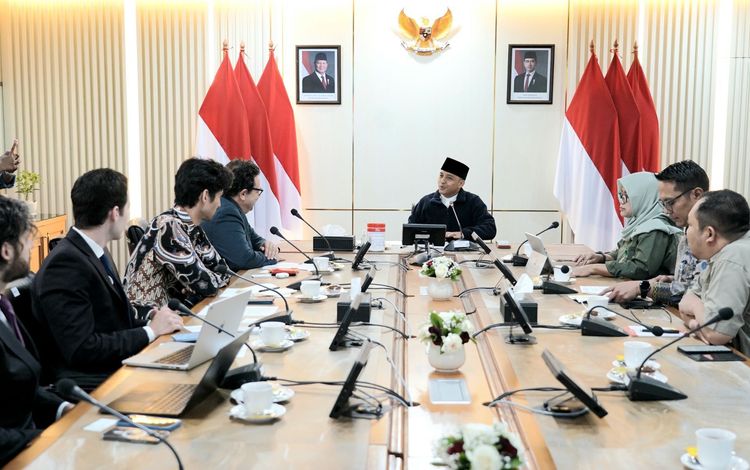
This activity is part of a series of workshops organized by the Public Relations and International Cooperation Bureau of the Ministry of Forestry, supported by UNDP’s Climate Promise.
The goal is to strengthen journalists’ understanding of the FOLU Net Sink 2030 agenda and encourage active media involvement in supporting national climate action.
Through field visits like this one to Rumpin Nursery, workshop participants not only receive technical information but also witness firsthand how efforts to cultivate superior seedlings are nurturing a culture of planting—an investment in a more sustainable environmental future for Indonesia. *