Enviro News Asia, Côte d’Ivoire – Women farmers play a crucial role in advancing climate action and environmental restoration, yet they remain widely overlooked in access to land rights, financial resources, and decision-making power, according to development experts and recent field evidence.
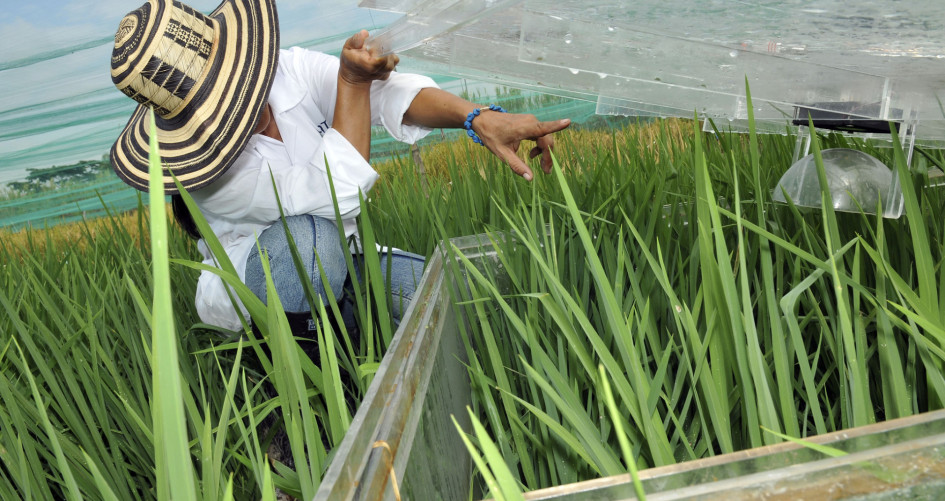
Evidence from multiple climate and agricultural initiatives shows that climate solutions become more effective and sustainable when women gain access to land, credit, training, and leadership roles in community projects.
In the village of Kirifi in Côte d’Ivoire, women farmers are cultivating climate-resilient crops in a community market garden. The harvest supplies food directly to local school cafeterias, improving children’s nutrition while generating income for the farmers.
Similar results have emerged in Venezuela’s Imataca Forest Reserve, where a project funded by the Global Environment Facility helped Indigenous Karina women establish the country’s first Indigenous agroforestry company. The women co-manage approximately 7,000 hectares of forest while developing nurseries and expanding climate-resilient crops that improve household incomes and reduce pressure on forest ecosystems.
Research by the Food and Agriculture Organization of the United Nations shows that women farmers are equally capable as men in adopting climate-adaptive agricultural practices. However, women often experience greater losses during climate extremes due to structural barriers such as insecure land tenure, limited access to credit and agricultural inputs, and lack of participation in decision-making processes.
Past experiences have demonstrated that climate programmes must carefully address gender dynamics. A climate-adaptation initiative launched in Mali in 2011 initially supported women farmers through improved sesame cultivation and market access. As the crops became more profitable, however, men gradually took control of production and resources, leading to conflicts and reduced participation among women farmers.
Recent program evaluations covering more than 40 climate and biodiversity initiatives supported by the Global Environment Facility and implemented by the Food and Agriculture Organization show that projects that integrate women’s leadership achieve stronger community support, fewer operational challenges, and longer-lasting environmental results.
Practical adjustments in programme design have also expanded women’s participation in climate-resilient livelihoods. In Senegal’s Casamance region, a climate adaptation initiative introduced lighter modular beehives to replace heavy traditional hives. The change enabled more women to participate in mangrove beekeeping, increasing household income while encouraging protection of mangrove ecosystems.
In Cambodia, the Green Climate Fund-supported PEARL project trains women farmers to develop business plans and access agricultural financing while adopting environmentally friendly pest management techniques. The initiative also connects farmers with premium buyers seeking low-chemical agricultural products.
Despite these successes, land ownership remains a critical barrier. Global assessments on land governance indicate that women are significantly less likely than men to own land in most countries, limiting their access to credit, infrastructure investment, and financial benefits from carbon markets or conservation incentives.
Experts emphasize that strengthening women’s rights and leadership in agriculture and natural resource management can significantly enhance climate resilience, biodiversity protection, and sustainable rural development. (*)