Enviro News Asia, West Pokot – A youth-driven environmental movement in rural Kenya is quietly restoring degraded mountain landscapes while reconnecting communities to their cultural roots. The Pokot Mountain and Landscape Initiative (PMLI), founded by filmmaker and conservation advocate Seth Matumbai, is emerging as a grassroots model of climate action grounded in local identity and storytelling.
The initiative traces its origins to a devastating landslide in Paraywa, West Pokot, in 2019. At the time, Matumbai was working as a photographer for World Vision Kenya when he witnessed displacement and loss caused by environmental degradation. The experience reshaped his perspective.
“I remember asking myself what would happen if such a disaster occurred again,” Matumbai recalled. “That moment made me think about how I could contribute to protecting our environment.”
He began mobilizing fellow photographers, videographers, and community members in March 2023. In January 2025, he formally established PMLI as a youth-led movement dedicated to restoring the Pokot Mountain ecosystem and preserving the community’s cultural heritage.
Operating from Morpus village in Chepareria Sub-location, West Pokot County, PMLI has already restored approximately 11 hectares of degraded land and established about half an acre of tree nursery. The initiative currently involves 35 members, including staff and volunteers.
Youth and local residents participate in seedling propagation, tree planting, clean-up drives, and environmental education sessions. The group also organizes community dialogues that combine traditional ecological knowledge with modern conservation techniques.
“Pokot culture and nature have a deep connection,” Matumbai explained. “By combining restoration with cultural preservation, we help our community see conservation not as something foreign, but as part of their identity and daily responsibility.”
This approach positions environmental stewardship not merely as a project, but as a shared cultural duty across generations.
The Pokot Mountains face multiple environmental pressures. Deforestation driven by charcoal production and firewood use continues to reduce tree cover. Overgrazing contributes to soil erosion and land degradation. Climate change intensifies drought and disrupts rainfall patterns, affecting both water sources and young trees.
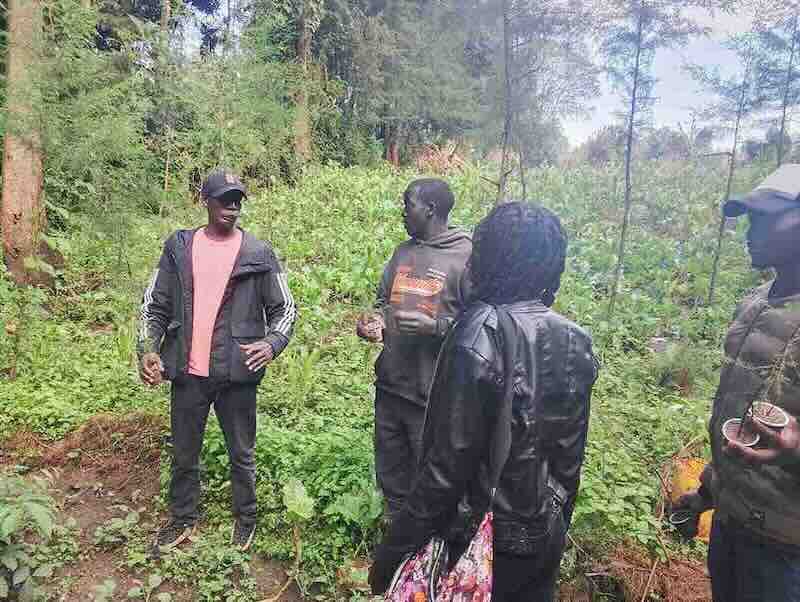
The initiative also operates under logistical and social constraints, including limited funding for seedlings, poor road access to interior restoration sites, and occasional local insecurity that restricts mobility and community gatherings.
Despite these barriers, PMLI continues expanding outreach efforts, focusing particularly on youth engagement. The organization trains young people as environmental ambassadors and encourages leadership in restoration activities.
What sets PMLI apart from many grassroots conservation initiatives is its integration of film and visual storytelling. Drawing from his background as a filmmaker, Matumbai uses documentaries, interviews, and photography to document environmental challenges and local resilience.
Through ongoing collaborations with local creatives, including Aperit Radio and independent directors, PMLI is currently gathering footage for a documentary project highlighting the Pokot landscape, cultural preservation, and youth-led restoration efforts.
“Every tree we plant tells a story of hope — a story that the next generation will continue,” Matumbai said.
By framing restoration as both ecological recovery and cultural renewal, PMLI offers a model of community-centered climate action that resonates beyond Kenya. As global climate challenges intensify, the initiative demonstrates how locally rooted leadership can drive sustainable change.
“When we protect our land, we protect our culture and our future,” Matumbai affirmed. (*)