Enviro News Asia, Bonn — The UNFCCC Secretariat has released the 2025 Synthesis Report on Nationally Determined Contributions (NDCs), presenting the latest overview of national climate pledges and progress toward the Paris Agreement goals. Analyzing 64 new or updated NDCs submitted between January 2024 and September 2025, the report highlights growing momentum for climate action but stresses that collective efforts remain insufficient to limit global temperature rise to 1.5°C.
According to the report, 89% of Parties now include economy-wide targets and most align their NDCs with long-term net-zero goals, aiming for carbon neutrality between 2040 and 2060. Collectively, the new NDCs are projected to reduce global emissions by 17% below 2019 levels by 2035. Nearly all countries (98%) have introduced domestic mitigation measures, and 80% are taking steps in one or more high-impact mitigation areas, such as afforestation, solar energy, and reducing deforestation.
Three-quarters of Parties (75%) have also set quantitative targets to support global initiatives like tripling renewable energy capacity, advancing low-carbon hydrogen, and expanding carbon capture technologies.
COP30 President Designate André Corrêa do Lago emphasized that the report shows countries now view NDCs as “development instruments that extend beyond emission targets, encompassing adaptation, mitigation, finance, technology, and capacity-building.” He added that “COP30 must respond to climate urgency through accelerated implementation, solidarity, and ambitious international cooperation — as the bridge from Belém to the next policy cycle of the Paris Agreement.”
Ana Toni, COP30 CEO, noted that “COP30 will be the ‘COP of Truth’ — a test of the world’s collective resolve to implement the Paris Agreement and connect climate policies to people’s real lives.” She urged all countries yet to submit enhanced NDCs to do so ahead of COP30 to help make it a turning point for multilateral climate action.
Integration of Adaptation, Gender, and Just Transition
The report documents notable advances in integrating adaptation, gender equality, and social inclusion into national climate plans.
- 73% of Parties include adaptation components aligned with the UAE Framework for Global Climate Resilience.
- 89% reference gender-responsive measures, 95% engage non-Party stakeholders, and 88% include youth and children as agents of change.
- 70% of Parties address just transition principles to ensure fair, inclusive, low-carbon growth.
Responding to the Global Stocktake and Expanding Cooperation
The report shows that 88% of NDCs were informed by the first Global Stocktake (GST), signaling how the GST is driving coherence across climate goals. Moreover, 89% of Parties indicate intent to participate in cooperative approaches under Article 6 of the Paris Agreement, reflecting growing confidence in carbon market mechanisms to scale up global action and finance.
Finance and International Cooperation
Almost all countries (97%) identify international cooperation as essential for NDC implementation. About 75% specify financial needs totaling nearly USD 2 trillion, including USD 560 billion for adaptation efforts — with forests, oceans, and just transition strategies emerging as top funding priorities.
A Call to Accelerate the Paris Agreement Implementation
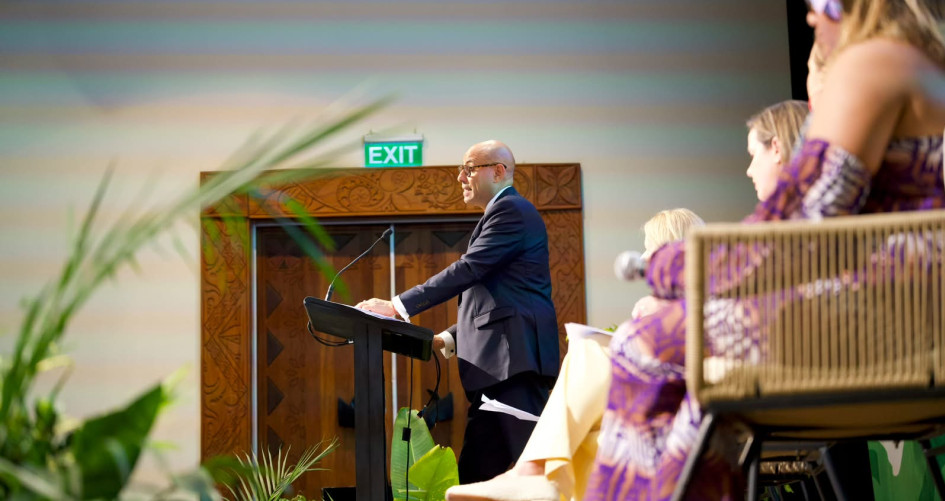
UN Climate Change Executive Secretary Simon Stiell stated that “the direction of travel is improving every year, but we must urgently pick up the pace.”
Ten years after COP21, the Paris Agreement remains a cornerstone of global climate governance. The 2025 NDC Synthesis Report reaffirms that while progress is visible, the coming months before COP30 in Belém will be decisive in transforming ambition into action. From Rio to Paris — and now to Belém — the world stands at a defining moment to strengthen solidarity, accelerate cooperation, and advance a shared vision for a sustainable and climate-resilient future. (*)