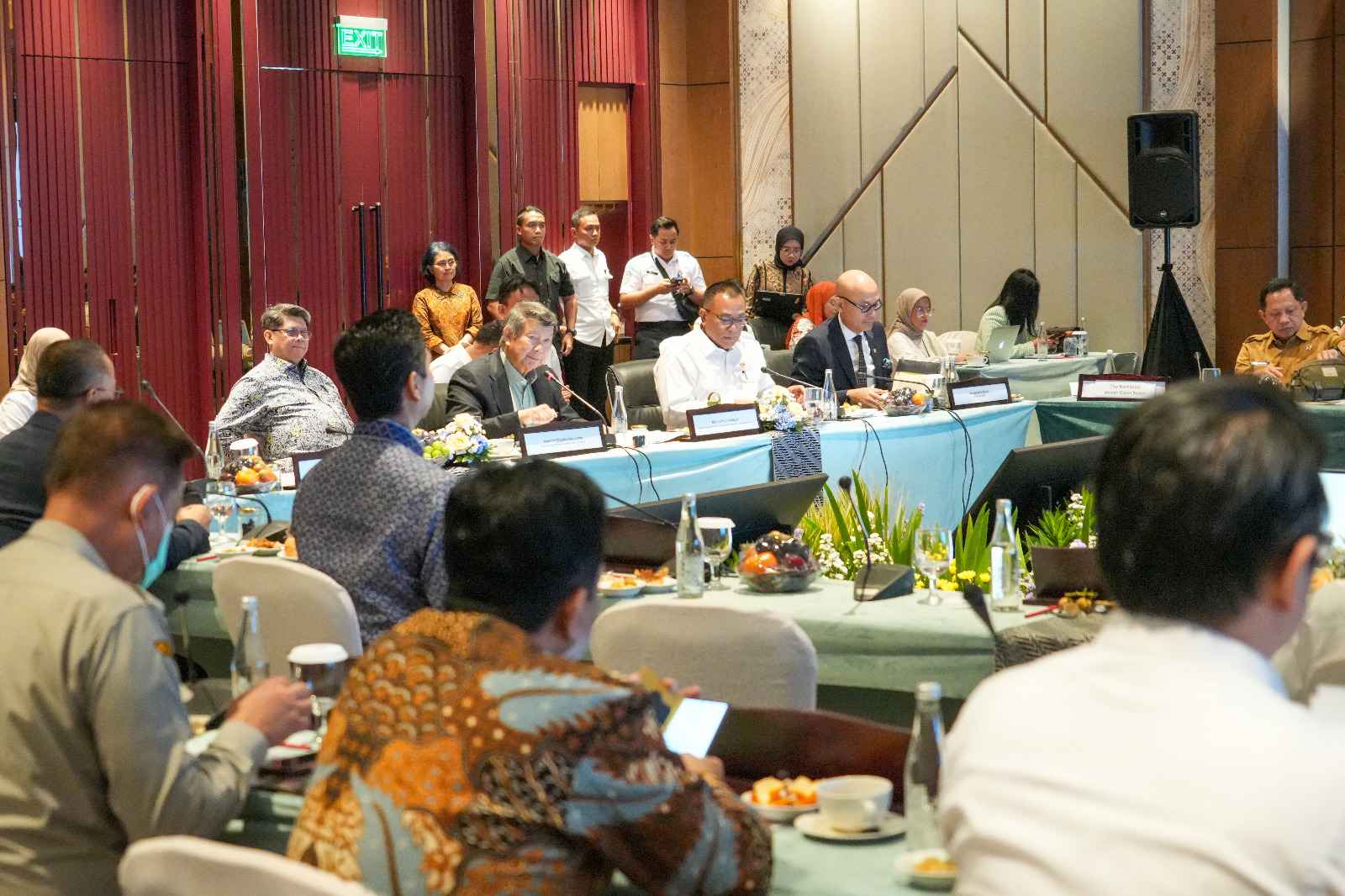
Enviro News Asia, Bali – More than 500 participants from various countries gathered at the Bali Beach Convention in Sanur, Bali, for the International Conference on Oil Palm and the Environment (ICOPE) 2025. The event was organized by Sinar Mas Agribusiness and Food, the Agricultural Research Centre for International Development (CIRAD), and WWF Indonesia.
The conference welcomed delegates from countries such as the United Kingdom, Malaysia, France, the Netherlands, India, Spain, Finland, and Colombia. Participants included academics, industry players, government representatives, financial institutions, and non-governmental organizations (NGOs). They collaborated to formulate sustainable strategies for climate-friendly and environmentally responsible palm oil industry transformation.
The conference was officially opened by Deputy Minister of Agriculture, Sudaryono, on Wednesday (February 12, 2025), and will run until Friday (February 14, 2025). “If we work together, we can go further and faster. The sustainability of palm oil is our golden opportunity,” Sudaryono stated.
Sudaryono emphasized Indonesia’s significant potential to support the three priority programs of President Prabowo Subianto: food self-sufficiency, energy self-sufficiency, and industrial downstreaming. “Through wise natural resource management, Indonesia can advance in the food and energy sectors while improving overall community welfare,” he added.
During his speech, Sudaryono also highlighted three key issues: seed quality, food security program support, and solutions to challenges in the palm oil industry. “If the wrong seeds are chosen, in 10-15 years, farmers will be disappointed because production will not meet expectations,” he explained.
Franky O. Widjaja, Chairman and CEO of Sinar Mas Agribusiness and Food, expressed his belief that the future of the palm oil industry depends on continuous innovation and close collaboration between the government, businesses, NGOs, academics, and society.
Jean-Pierre Caliman, Co-Chairman of ICOPE 2025, emphasized the importance of global stakeholder involvement. “We are united by the same goal: transforming environmental challenges into opportunities for a more climate-friendly and sustainable palm oil industry,” he stated.
Dewi Lestari Yani Rizki, Director of Conservation at WWF Indonesia, affirmed that the palm oil industry can transition into a sustainable business model that supports Indonesia’s government objectives, including carbon emission reductions and biodiversity conservation.
“The palm oil industry must take sustainability governance seriously to meet global market challenges,” she concluded.