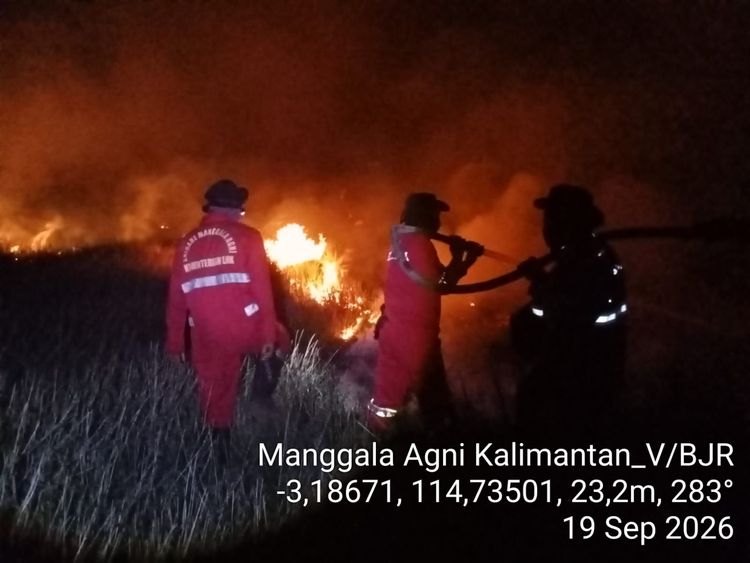
Enviro News Asia, Palangka Raya — Forest and land fires (karhutla) in Central Kalimantan are increasingly having a severe impact on public activities and air transportation. The persistent surge in hotspots across the region triggered dense haze, drastically reducing visibility around Tjilik Riwut Airport in Palangka Raya on Sunday (20/09/2026).
Visibility in the vicinity of the airport temporarily dropped to as low as 600 meters. Due to this extremely limited visibility, at least 14 aircraft movements—comprising seven arrival and seven departure flights—experienced significant schedule disruptions.
Although data from the Ministry of Forestry’s SiPongi system recorded a decrease in high-confidence hotspots in Central Kalimantan from 1,035 to 968 points on September 20, 2026, the province continues to hold the highest number of hotspots in Indonesia. The thick smoke resulting from vegetation and peatland burning has deteriorated the region’s air quality, pushing it into unhealthy to hazardous categories.
Nationally, hotspots actually surged by 209 points from the previous day, reaching a total of 1,532 points. The sharp increase shifted to South Sumatra, which recorded 285 hotspots. Consequently, the Meteorology, Climatology, and Geophysical Agency (BMKG) warned of a high vulnerability to extreme drought in the South Sumatra region, which threatens to expand the burned areas.
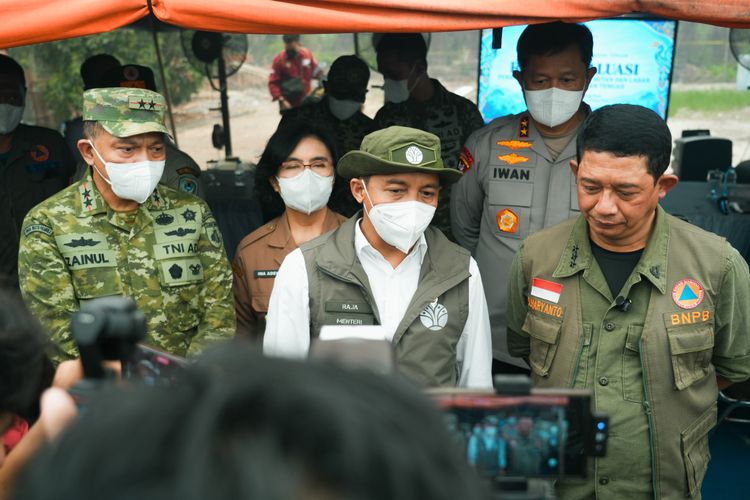
Responding to the critical situation across various regions, Cabinet Secretary Teddy Indra Wijaya confirmed a large-scale fleet deployment ongoing since August. The government has mobilized 64 aircraft and helicopters for water bombing, patrols, and Weather Modification Operations (OMC), supported on the ground by 54,394 joint personnel from Manggala Agni, the Indonesian National Armed Forces (TNI), the Indonesian National Police (Polri), the National Disaster Management Agency (BNPB), and volunteers.
The Ministry of Forestry urges residents in areas affected by dense haze to reduce outdoor activities, consistently wear masks, and lower driving speeds. Businesses and the general public are also strictly reminded to refrain from land burning to prevent the air crisis from worsening. (*)