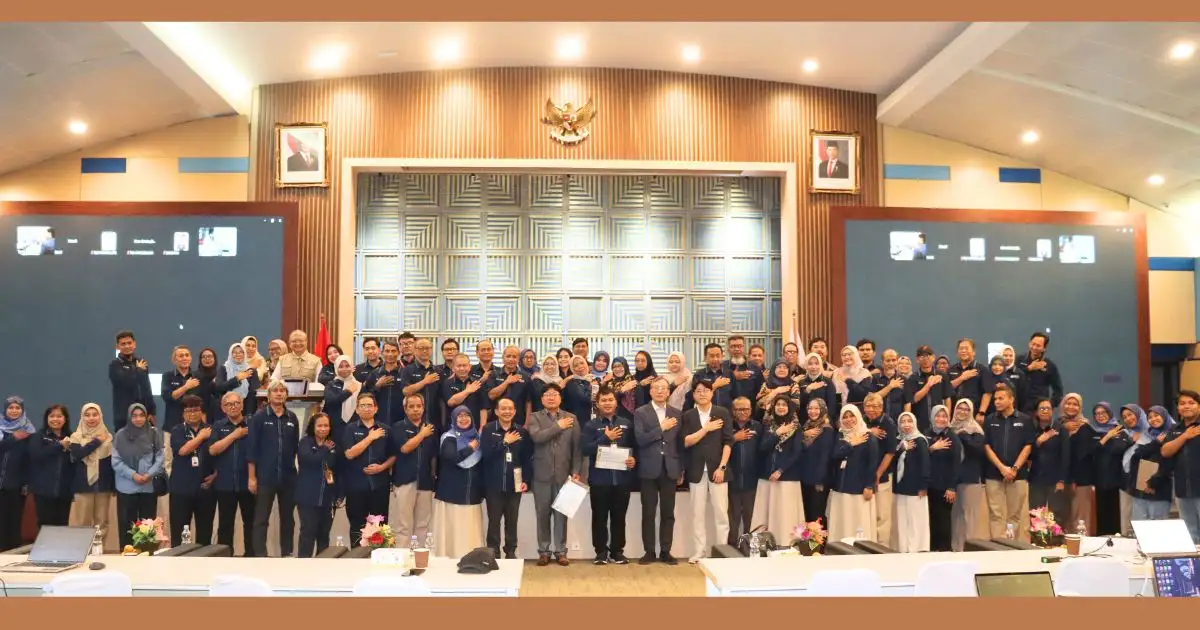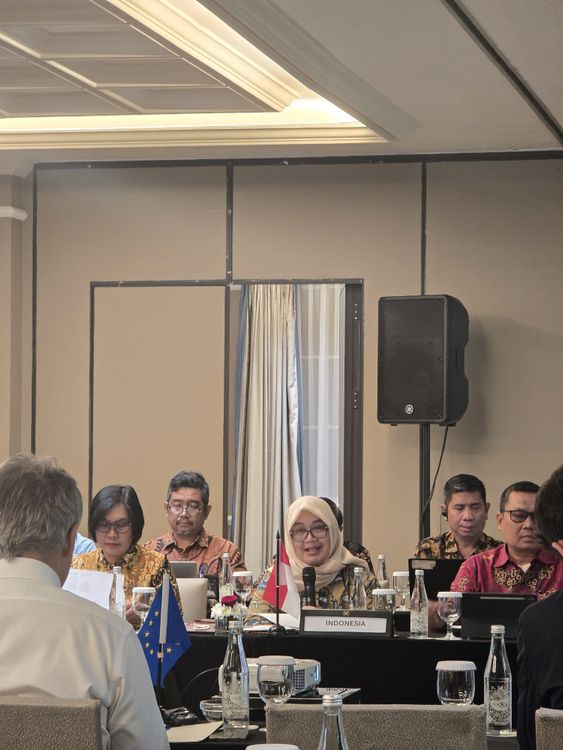
Enviro News Asia, Jakarta — Indonesia and the European Union have reaffirmed their commitment to strengthening sustainable forest management, promoting legal and sustainable forest products, and improving market access through the 11th Indonesia–European Union Joint Implementation Committee (JIC-11) meeting in Jakarta on Friday (August 14).
The JIC meeting is part of the cooperation mechanism under the Forest Law Enforcement, Governance and Trade–Voluntary Partnership Agreement (FLEGT-VPA). The forum serves to evaluate progress in bilateral cooperation and discuss developments in forestry trade policies and regulations at the global level.
The meeting was opened by Director General of Sustainable Forest Management at the Ministry of Forestry, Laksmi Wijayanti, together with EU Ambassador to Indonesia and Brunei Darussalam Denis Chaibi. Representatives from the Indonesian Government, the European Union, EU member states and relevant stakeholders also attended the meeting.
Laksmi emphasized Indonesia’s continued commitment to strengthening sustainable, transparent and accountable forest management. Indonesia implements the Timber Legality and Sustainability Verification System (SVLK) and FLEGT as mechanisms to ensure the legality and traceability of forest products while providing greater certainty for international markets.
She highlighted the importance of dialogue and shared understanding between Indonesia and the European Union in responding to evolving market regulations, including the European Union Deforestation Regulation (EUDR).
“Through the JIC, we hope to strengthen technical communication and cooperation between Indonesia and the European Union so that trade and sustainability policies can be implemented in alignment while continuing to benefit businesses, communities and forest managers in Indonesia,” Laksmi said.
Ambassador Denis Chaibi said FLEGT continues to have practical value within the EUDR framework, particularly because timber products covered by FLEGT Licenses have a specific position in meeting legality requirements.
He added that future Indonesia–EU cooperation should focus on delivering tangible benefits for Indonesian exporters, including greater recognition of FLEGT among European businesses and stronger integration of Indonesian products into global value chains.
One of the key issues discussed at JIC-11 was the implementation of the Indonesia–EU Joint Action Plan 2024–2025, including developments in the SVLK, Indonesia’s import regulations, timber legality requirements, due diligence and V-Legal documents in forest product trade.
Indonesia and the EU also discussed the implementation of the EUDR, including the definition of deforestation, the use of data and maps, and the relationship between the SVLK system and the EUDR due diligence mechanism.
Indonesia emphasized the importance of clarifying the position of FLEGT licensing within EUDR due diligence, including for timber products originating from different sources that have undergone SVLK verification.
The discussions were aimed at ensuring that legality and traceability systems developed through the FLEGT-VPA continue to provide benefits for Indonesian forest product trade in the European market.
JIC-11 also discussed the EU-funded ATLAS Project, implemented through cooperation between the European Union and the International Trade Centre (ITC). The program is designed, among other objectives, to strengthen the capacity of forestry micro, small and medium-sized enterprises (MSMEs) in responding to evolving trade and reporting requirements in the European market.
On the technical implementation of the FLEGT-VPA, Indonesia presented updates on e-licensing, SVLK strengthening and the integration of geolocation information. Both sides also discussed developments in the FLEGT licensing system, including the use of QR codes on FLEGT licenses and their connection with the EU’s TRACES system.
The meeting also provided an opportunity for independent forest monitors to present updates on independent monitoring as part of efforts to maintain transparency and credibility in forest governance.
Meanwhile, Independent Market Monitoring conducted by the UNEP World Conservation Monitoring Centre (UNEP-WCMC) presented developments in timber market analysis, including opportunities to strengthen market incentives for FLEGT-licensed timber products amid changing sustainability regulations in the European Union.
JIC-11 further discussed developments in several EU member states, including the implementation of requirements at entry points for Indonesian forest products entering the European market. The discussion was intended to promote consistency and alignment in the implementation of trade requirements across EU member states.
Through JIC-11, Indonesia and the European Union reaffirmed the importance of dialogue, transparency and technical cooperation in supporting sustainable forest governance and legal and responsible forest product trade.
Indonesia expects the cooperation mechanism established through the FLEGT-VPA to continue generating added value for sustainable forest management, the forest products industry, forestry MSMEs and local communities, while strengthening the competitiveness of Indonesian forest products in global markets.
Both sides also emphasized the importance of maintaining open and constructive dialogue through expert meetings, working groups and technical forums to address issues requiring practical solutions.
The outcomes of JIC-11 will be followed up through further technical discussions and future Indonesia–EU cooperation agendas, including preparations for the Joint Expert Meeting and the next JIC meeting. (*)