Enviro News Asia, Pulang Pisau — Indonesia is strengthening coordination among government agencies, security forces and local communities to tackle forest and land fires in Central Kalimantan as the region enters the peak of its dry season.
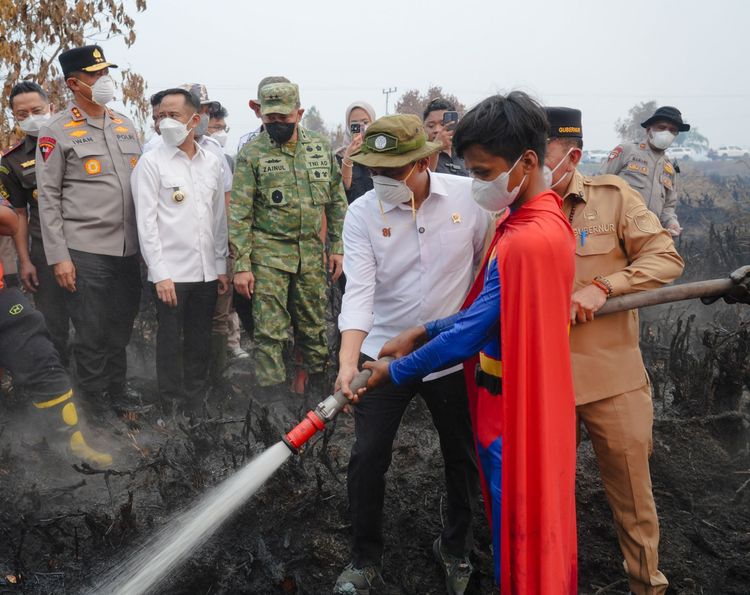
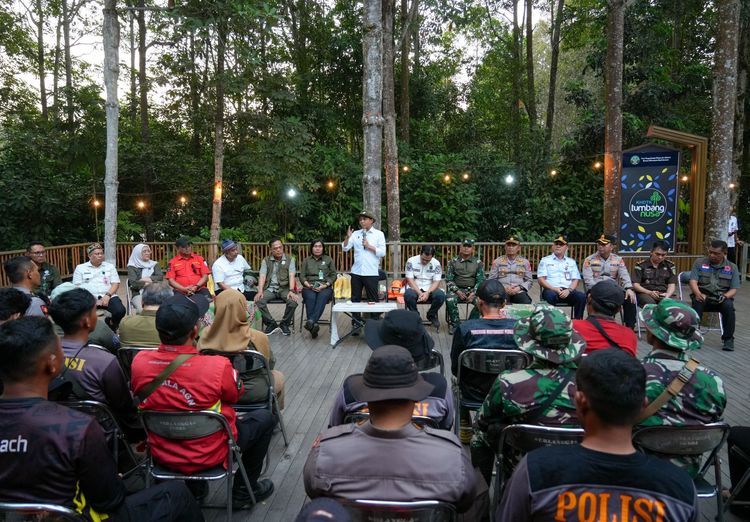
Minister of Forestry Raja Juli Antoni inspected fire management operations at the Tumbang Nusa Peat Camp in Pulang Pisau on Wednesday, emphasizing the need for faster communication and stronger collaboration among agencies dealing with forest and land fires, particularly in peatland areas.
During the visit, Raja Juli inspected an automated peat water-level monitoring device, which recorded a water level of approximately 0.99 meters below the reference point. The condition remains considered vulnerable because the ideal peat water level should be maintained above 0.4 meters below the reference point.
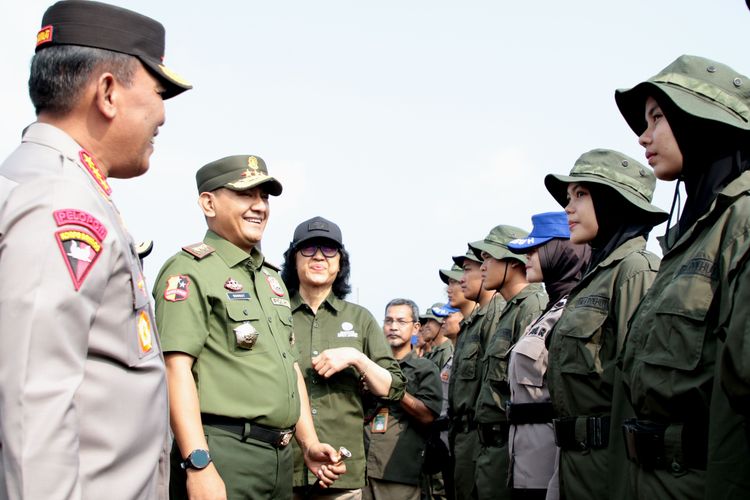
The minister also met with representatives of the Pulang Pisau administration, the National Disaster Management Agency (BNPB), the Meteorology, Climatology and Geophysical Agency (BMKG), the Indonesian Military and Police, Manggala Agni firefighting units, the Disaster Management Agency (BPBD), and local Fire Care Communities.
Raja Juli said forest and land fire management requires joint action without being constrained by institutional boundaries. Fires can occur both inside and outside forest areas, making coordination between central and regional authorities essential.
He also highlighted increasingly challenging weather conditions. According to the minister, the arrival of El Niño earlier than previously expected illustrates the growing impact of climate change on Indonesia’s environmental conditions.
“Climate change is real,” Raja Juli said, stressing the need to strengthen preparedness and cooperation in responding to increasingly complex fire risks.
BMKG representatives said Central Kalimantan is currently experiencing the peak of its dry season, which is expected to continue through August and September. Rainfall is forecast to begin increasing in early October.
Weather modification operations have also been conducted several times, but BMKG reported that their effectiveness has been limited by insufficient cloud growth in several areas. Rainfall generated through the operations has occurred at some locations but has not been intense enough to significantly support firefighting efforts.
BNPB has strengthened aerial operations through patrol helicopters, fixed-wing aircraft and water-bombing helicopters. However, the agency emphasized that ground forces remain the primary component of forest and land fire suppression, while water bombing serves as additional support, particularly for fire locations that are difficult to reach from the ground.
Heavy smoke has also affected aerial operations around Jabiren, Tanjung Taruna and the Sebangau area. Poor visibility has forced aircraft to limit or suspend operations in certain locations to maintain flight safety.
The government is also considering additional water sources, including permanent and temporary bore wells, as well as increased water-bombing support if weather and operational conditions permit. Weather modification operations will also continue to be considered when BMKG identifies suitable clouds for cloud seeding.
During the visit, Raja Juli symbolically handed over firefighting equipment to the local Fire Care Community, including a portable firefighting pump, hoses, personal protective equipment, boots, helmets, firefighting masks and protective eyewear.
The government said the continued response to forest and land fires requires not only firefighting equipment and aerial support but also stronger cooperation among authorities, security forces, firefighters, volunteers and communities.
The Central Kalimantan operation highlights the importance of strengthening peatland management, early detection, water-level monitoring and community-based prevention as Indonesia faces increasingly challenging dry-season conditions. (*)