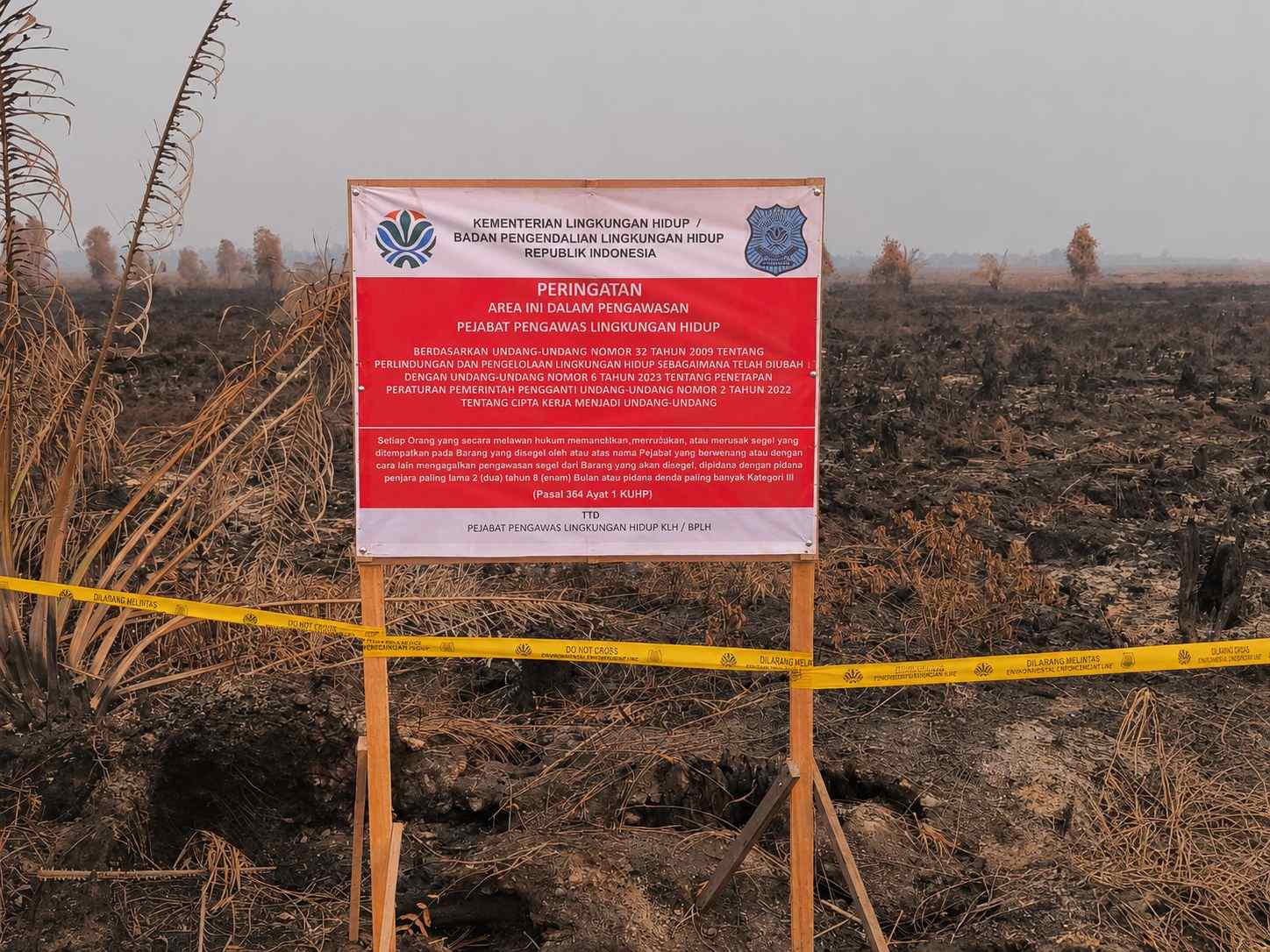
Enviro News Asia, Palangka Raya — Indonesia’s Ministry of Environment and the Environmental Control Agency (KLH/BPLH) has deployed weather modification technology to strengthen forest and land fire control in Central Kalimantan amid heightened fire risks.
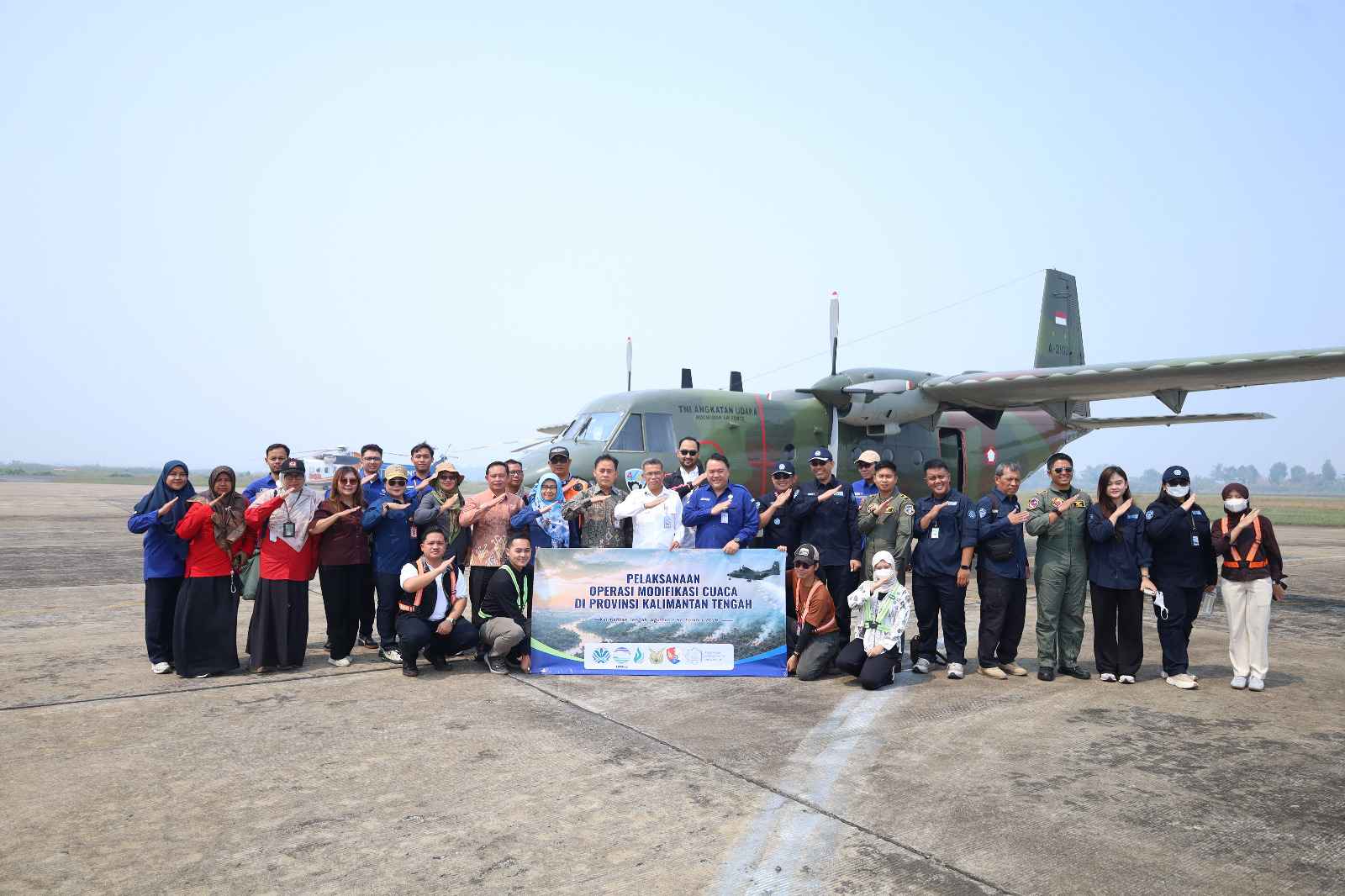
The Weather Modification Operation (OMC) was officially launched from Tjilik Riwut Airport in Palangka Raya on August 28, 2026. The operation is designed to increase rainfall, maintain moisture levels in peatland ecosystems, and reduce the potential for fires to develop and spread in vulnerable areas.
Dasrul Chaniago, Director of Land Fire Control at KLH/BPLH, said the government is shifting its approach from reactive firefighting toward proactive prevention and preparedness.
“Forest and land fire control cannot be carried out only after fires have emerged. Prevention must be prioritized through environmental management and improved preparedness for potential fires,” Dasrul said while leading the weather modification operation.
The operation relies on continuous meteorological monitoring to identify cloud formations suitable for cloud seeding. Meteorological teams from the Meteorology, Climatology and Geophysical Agency (BMKG) are monitoring cloud development, wind direction, atmospheric moisture, and other weather conditions to determine suitable targets and timing for cloud seeding.
Budi Harsoyo, Director of Weather Modification Operations at BMKG, said accurate and continuous meteorological information is essential to maximize the effectiveness of the operation.
Weather modification aircraft operated by KLH/BPLH, together with the Indonesian Air Force, deployed approximately 800 kilograms of sodium chloride (NaCl), or salt, at altitudes of between 6,000 and 7,000 feet over targeted areas in Pulang Pisau and Katingan regencies.
The salt is used as a cloud-seeding material to stimulate precipitation when suitable cloud formations are available. The resulting rainfall is expected to increase surface moisture and peatland humidity, helping reduce conditions favorable to fire ignition and spread.
The operation forms part of a broader cross-sector effort involving KLH/BPLH, the Ministry of Forestry, BMKG, the National Disaster Management Agency (BNPB), the Indonesian Air Force, local governments, and field teams.
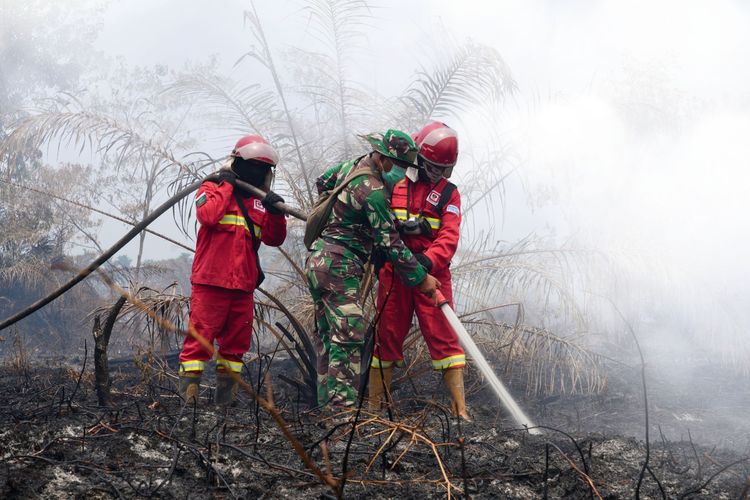
The government is combining weather modification with ground-based fire prevention and response measures to address forest and land fires more comprehensively.
The strategy is particularly important for Central Kalimantan, where extensive peatland areas can become highly vulnerable to fire during prolonged dry conditions. Maintaining moisture levels is therefore considered an important component of preventing fires from developing into larger incidents.
KLH/BPLH said the operation is intended not only to respond to existing fire risks but also to strengthen early prevention by maintaining environmental conditions that are less conducive to fire.
Through continued coordination between government institutions, security forces, local authorities, and field personnel, Indonesia aims to improve its ability to detect, prevent, and contain forest and land fires before they escalate.
The weather modification operation is part of the government’s broader strategy to protect ecosystems and communities in Central Kalimantan from the impacts of forest and land fires, including smoke pollution and disruption to public health and economic activities. (*)