Enviro News Asia, Jakarta — Preventing recurring peatland fires requires more than extinguishing flames, as restoring and maintaining the hydrological condition of peat ecosystems is essential to reducing fire risks and protecting their ecological functions, a BRIN researcher has said.
Dony Rachmanadi, Principal Researcher at the National Research and Innovation Agency (BRIN) Center for Ecology Research, said peatlands are naturally wet ecosystems formed from accumulated plant material over thousands of years.
Under natural conditions, peat remains saturated with water and can store water at up to around 13 times its weight. However, drainage for various land uses can alter this condition. Canals and water discharge cause previously wet organic material to dry out, making it more vulnerable to fire.
“Peatland fires are essentially a hydrological problem. The fire itself is a consequence. If we want to solve peatland fires, we have to address the hydrological problem,” Dony said during a Media Lounge Discussion at the B.J. Habibie Building in Jakarta on October 6.
He said peatlands have characteristics that distinguish them from mineral soils. They form in waterlogged environments with limited oxygen, slowing the decomposition of organic material and allowing thick layers of carbon-rich peat to accumulate.
Peat formation is extremely slow. Under ideal conditions, forming just one millimeter of peat can take about one year. As a result, fires that destroy peat within a short period can eliminate ecological processes that have developed over thousands of years.
Peatlands are also important for climate change mitigation. Although they cover only around 3% of the world’s land surface, global peat ecosystems store more than 30% of the world’s soil carbon. When peatlands are drained and burned, much of that stored carbon can be released into the atmosphere.
In Indonesia, Dony distinguished between the area covered by peat soils and the broader peat ecosystem. Peat soils more than 50 centimeters thick cover approximately 13.4 million hectares, while the area of peat ecosystems reaches around 24 million hectares when measured using the Peat Hydrological Unit (Kesatuan Hidrologis Gambut/KHG) approach.
A KHG represents an interconnected peat landscape, generally located between two rivers. Dony said this landscape-scale approach is important because peatland management cannot focus only on individual areas where peat soil occurs. It must also account for the hydrological system across the wider landscape.
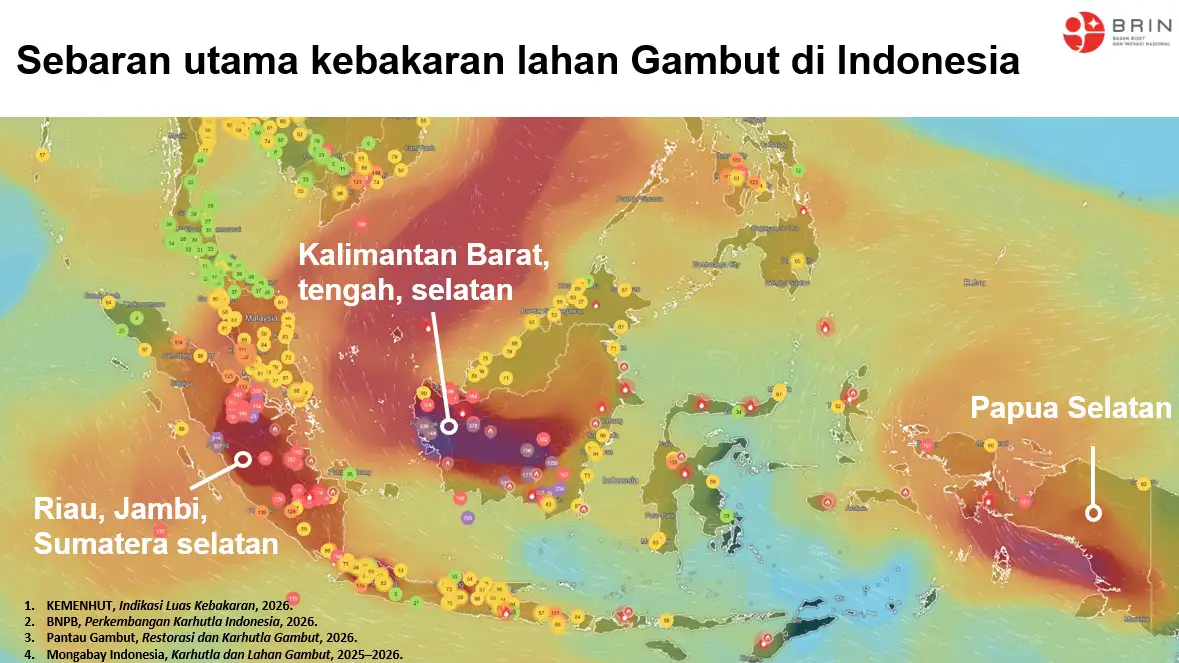
Indonesia’s main peatland areas are located in Sumatra, Kalimantan and Papua. The country also has highland peatlands, including areas in the Dieng Plateau and parts of Sumatra.
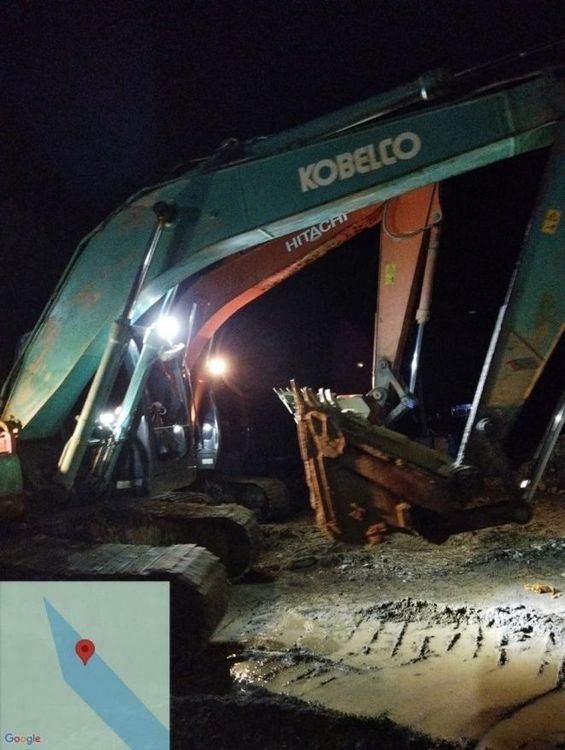
Dony said peatlands become increasingly vulnerable when their hydrological systems are disrupted.
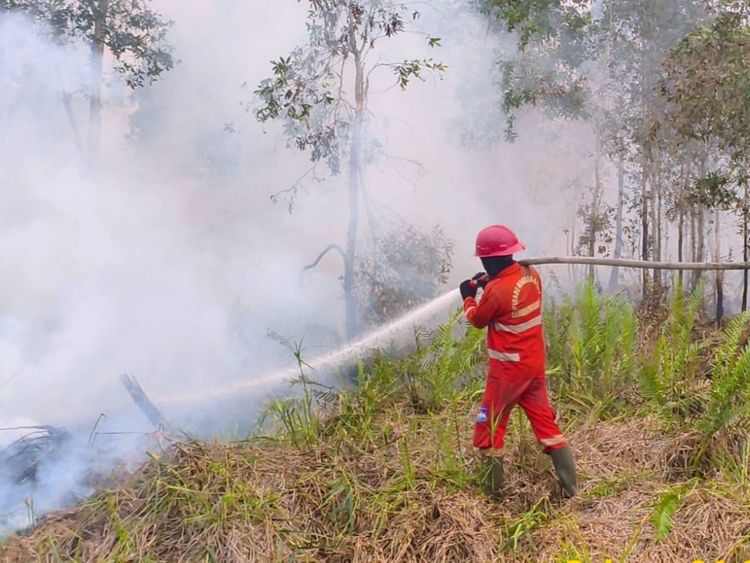
“Drainage makes the organic layer resemble a pile of dry plant material that can easily catch fire. The fire can then spread below the surface and remain inside the peat layer. When it gets oxygen, it can burn again. Peat can truly be extinguished when it is submerged in water again,” he said.
Repeated fires can further reduce the ability of peat to retain water. Based on Dony’s research, a single fire can reduce the water-holding capacity of peat by around 15%. When fires occur repeatedly, up to four times, the reduction can approach 30%.
The damage can increase not only the risk of future fires but also the potential for flooding. Healthy peatlands function like sponges by storing water and helping maintain hydrological stability. When their water-retention capacity declines, water can flow more rapidly into surrounding areas.
“The position of this ecosystem is important for maintaining stable hydrology across the landscape. Once its ability to retain water is lost, water will flow toward villages, cities and roads. That is why fires and floods in peatland areas can be interconnected,” Dony said.
Despite their vulnerability, peatlands can still be used for economic activities if their natural conditions are maintained. Dony said the key is keeping peat wet and selecting commodities suited to wetland conditions.
One approach is paludiculture, which involves cultivating plants adapted to wet or waterlogged peatlands. Such an approach can provide economic opportunities without significantly altering the hydrological system.
“Many native peatland plants have economic potential without requiring major changes to hydrological conditions. As long as we can keep peatlands wet, they can be utilized,” Dony said.
He added that the value of peatland ecosystems should be assessed beyond direct economic returns from individual commodities. Carbon storage, water regulation, biodiversity and bioprospecting potential are also important components of their overall value.
BRIN is conducting research on peatland rehabilitation and restoration, biodiversity and bioprospecting, as well as technologies for fire management. Dony said such research is needed to ensure that peatland management policies reflect the ecological characteristics of these ecosystems.
He also said the government is discussing plans to establish a national agency for peatland and mangrove management. Such an institution could strengthen disaster prevention and support peatland management at village and landscape levels.
However, Dony emphasized that long-term peatland protection also requires the involvement of communities living and working in peatland areas.
Local practices and traditional knowledge can contribute to ecosystem protection while supporting forms of utilization suited to peatland conditions.
Dony summarized sustainable peatland management in three principles: keep peatlands wet, protect them collectively and ensure that management decisions are based on scientific knowledge. (*)