

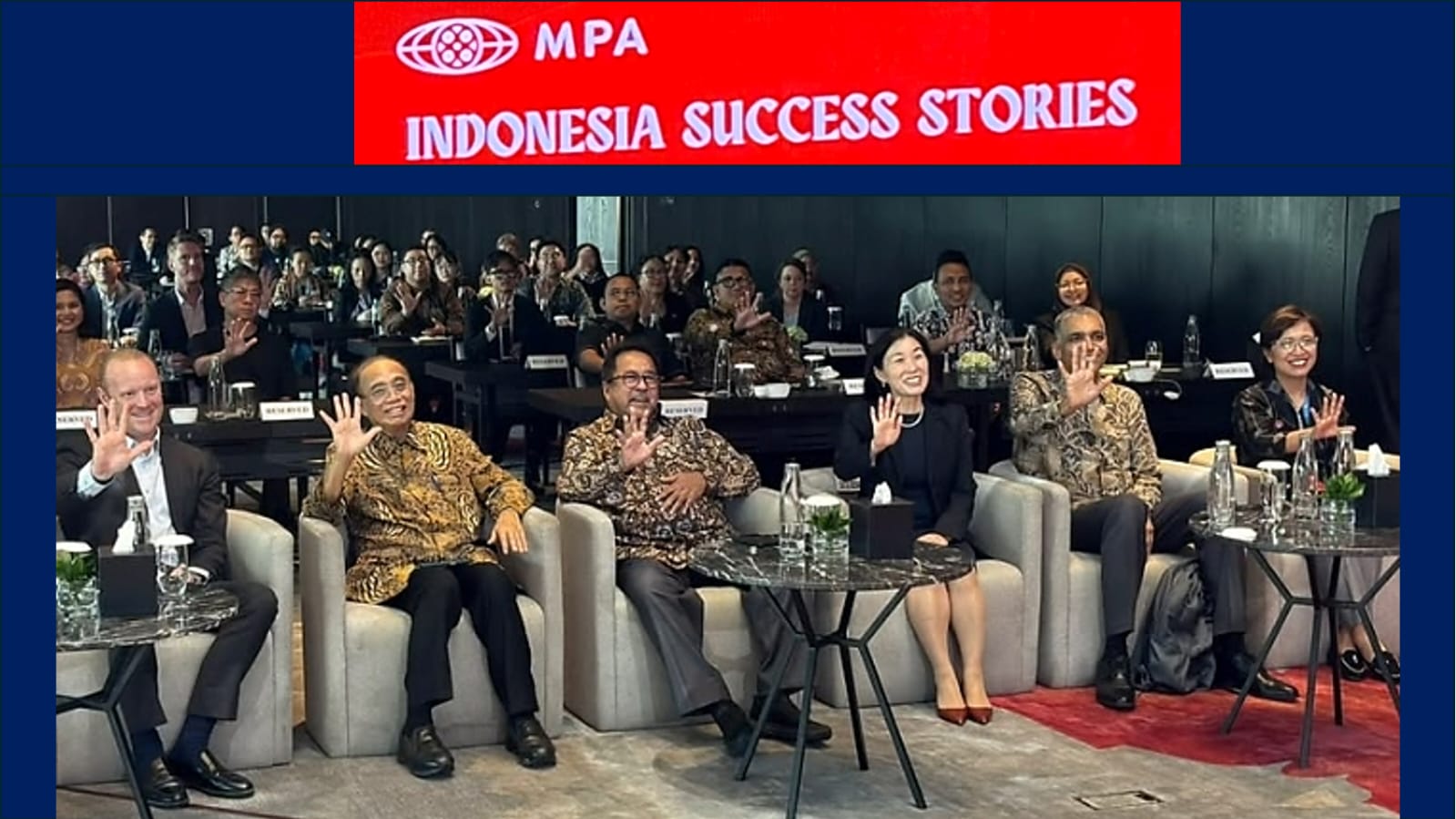
Enviro News Asia, Jakarta — Jakarta is seeking to establish itself as a regional film production hub, with the city government pursuing international partnerships, investment and technological development to strengthen Indonesia’s film industry.
The ambition was highlighted at the second Indonesia Success Stories Seminar, held on Oct. 22 as part of the 2026 Jakarta Film Summit and Jakarta Film Week. The event brought together government officials, filmmakers, investors and international industry representatives to explore opportunities for collaboration and expand Indonesia’s film ecosystem.
Among those attending were Jakarta Deputy Governor Rano Karno; Indonesia’s Ambassador to the United States, Indroyono Soesilo; US Embassy Chargé d’Affaires ad interim Joy M. Sakurai; Indonesian Film Board chairman Fauzan Zidni; and Motion Picture Association (MPA) Vice President Trevor Fernandez.
Rano said the Jakarta administration was strengthening international cooperation to position the capital as a film-friendly city and a future center of the Southeast Asian film industry. He welcomed support from the MPA, emphasizing that international partnerships could help create more competitive and sustainable production opportunities.
Jakarta is also promoting its potential filming locations through Jakarta Scouting Days, an initiative organized by the Jakarta Film Commission to help industry players explore the city as a production destination.
Indonesia’s market potential was another focus of the seminar. Ambassador Indroyono said Indonesian films attracted 82.6 million cinema admissions in 2025, accounting for around 64 percent of total cinema admissions that year.
The PwC Global Entertainment & Media Outlook 2026–2030 projects Indonesia’s box-office revenue will rise from US$353 million in 2025 to US$452 million in 2030, representing annual growth of 5.1 percent. Streaming revenue is also projected to increase from US$1.1 billion to US$1.7 billion over the same period.
Indroyono also highlighted the fourth Indonesia–US Bilateral Digital Technology Forum on Creative Economy, held in Los Angeles in early October 2026. The forum involved Indonesian government representatives, the Jakarta administration, universities and creative industry players, alongside Warner Bros., the Hollywood Chamber of Commerce and the City of Los Angeles.
One of the forum’s recommendations was to establish clear production incentives, adequate facilities and a single point of contact for filmmakers and investors. Indroyono said the Jakarta Film Commission could play an important role in coordinating such support.
The 2026 Jakarta Film Week has added to the momentum, presenting 157 films from 59 countries and organizing masterclasses for filmmakers and other industry professionals.
Artificial intelligence is also creating new opportunities across the production process, including scriptwriting, storyboarding, visual effects and post-production. These tools could improve efficiency and broaden access to filmmaking, but they also raise concerns about creative workers’ livelihoods and intellectual property protection.
Indonesian and US industry cooperation could help address these challenges through AI training, advanced production capabilities and stronger copyright protection, participants said.
The US film and television industry supports around two million jobs and pays US$202 billion in wages and salaries, according to figures cited at the event, illustrating the sector’s wider economic contribution.
With a large domestic audience, locally rooted stories and expanding international partnerships, Jakarta is seeking to attract more productions and investment while strengthening opportunities for Indonesian filmmakers. The challenge will be to ensure that technological innovation and global collaboration support, rather than displace, local creative talent. (*)