

Enviro News Asia, Bali — Indonesia is looking to strengthen food security, develop marine-based renewable energy and expand its blue economy through scientific research and innovation, as ocean scientists call for a balance between economic growth and marine ecosystem protection.
The message emerged at the 22nd Annual Scientific Meeting of the Indonesian Association of Oceanologists (ISOI), held in Bali on Oct. 15–16, 2026. The event brought together around 300 researchers, academics, students and marine industry practitioners to discuss 170 scientific papers covering ocean-climate interactions, oceanography, marine pollution, blue carbon, marine biodiversity, spatial planning, maritime policy and ocean literacy.
ISOI chair Nani Hendiarti opened the meeting, which also featured remarks from Marine Affairs and Fisheries Minister Sakti Wahyu Trenggono. He said the government welcomed input from researchers and academics on implementing blue economy policies, particularly in marine ecosystem protection, aquaculture development, and the adoption of technology and innovation to improve the global competitiveness of Indonesian fishery products.
Trenggono said scientific recommendations were needed to help determine how Indonesia could maintain healthy oceans over the coming decades while strengthening its competitive advantages in the maritime sector.
He identified growing economic activity and an expanding global population as major pressures on marine resources, requiring Indonesia to balance human needs with ecosystem conservation.
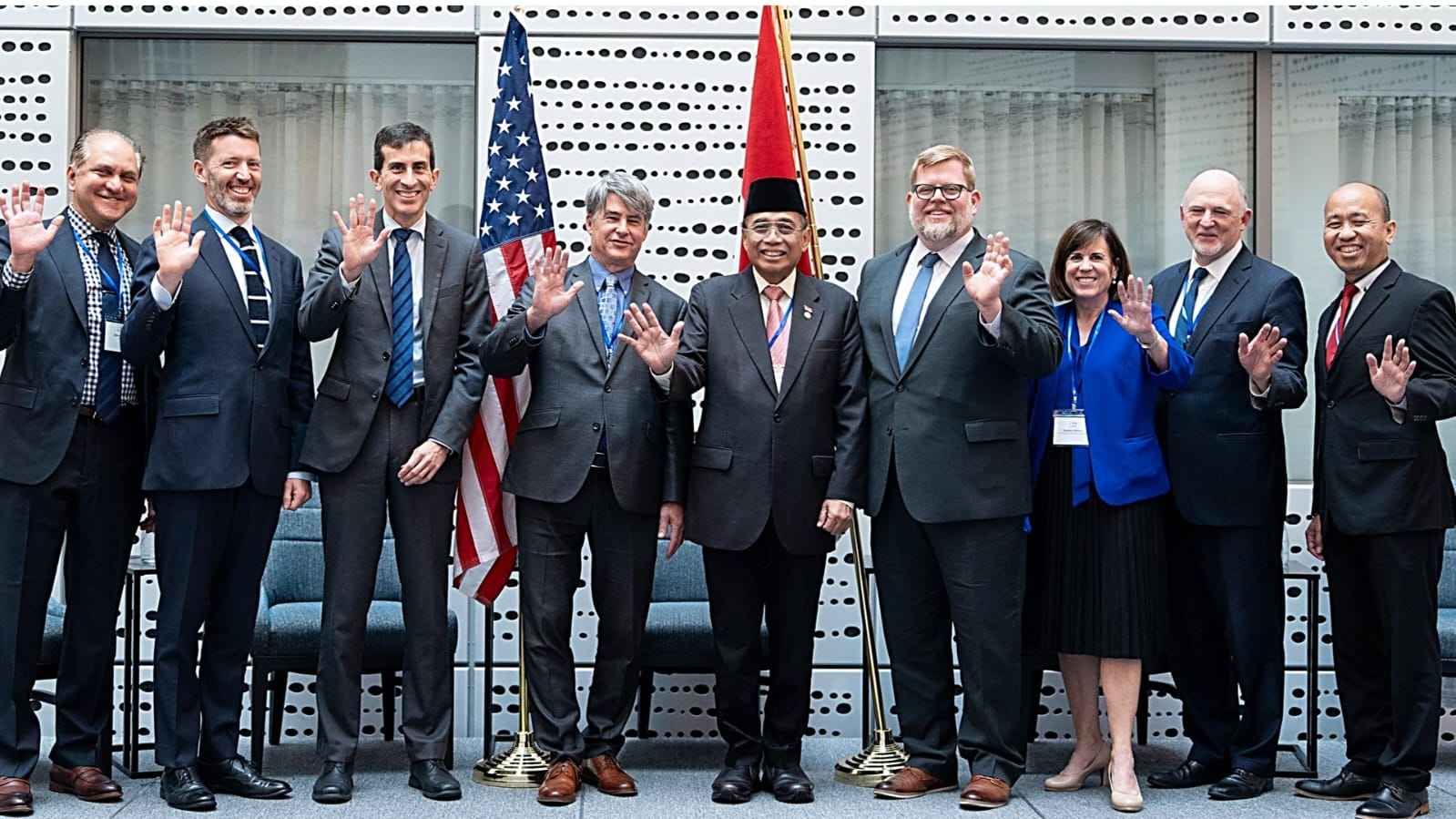
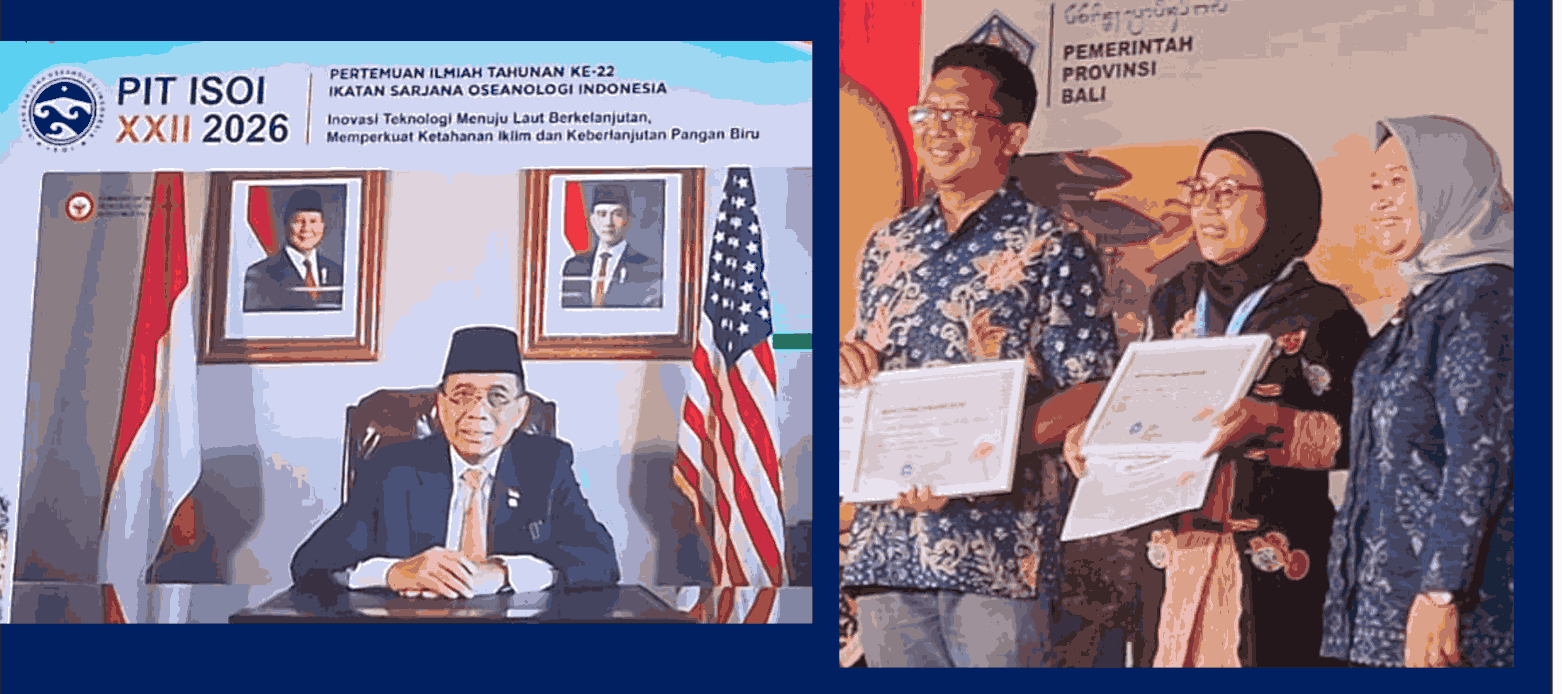
Indonesian Ambassador to the United States Indroyono Soesilo, a former coordinating minister for maritime affairs and ISOI chair for 2010–2012, emphasized the strategic importance of the ocean to Indonesia as a maritime nation.
He described the sea as a source of food, energy, employment and long-term economic opportunity, highlighting the role of ocean science in supporting sustainable development.
Physical oceanography helps scientists understand currents, waves, tides and changing sea conditions, providing information relevant to fishing safety and coastal development. Marine geology contributes to understanding the seabed, energy and mineral resources, while helping assess risks such as coastal erosion, tidal flooding and undersea earthquakes.
Bio-oceanography, meanwhile, examines marine organisms ranging from plankton and fish to coral reefs and seaweed, providing a scientific basis for sustainable fisheries and aquaculture.
Indroyono outlined three key contributions that marine scientists could make to national development. The first is strengthening food security through sustainable fish, shrimp and seaweed farming, alongside responsible fishing practices.
The second is supporting energy security by mapping the potential of ocean currents, waves, tides and offshore winds. The third is advancing downstream processing to increase the value of marine products, including processing fish into higher-value goods and using seaweed in food, cosmetics and pharmaceutical products.
The role of marine research is becoming increasingly important amid El Niño-related climate variability. The phenomenon can contribute to drought, forest and land fires, crop failures and shifts in fish distribution, potentially affecting catches and coastal livelihoods.
Indonesia therefore needs stronger marine observation and forecasting capabilities, including satellites, ocean buoys, sensors, predictive models and field research. Scientists must also translate their findings into practical information that fishers, aquaculture operators, local governments and coastal communities can use to prepare for changing conditions.
During the meeting, ISOI presented its 2026 awards to I Wayan Gede Hendrawan of Udayana University, recognized for his expertise in ocean modelling, and Rima Rachmayani of the Bandung Institute of Technology (ITB), recognized for her work in marine geology and paleo-oceanography.
The meeting is expected to strengthen collaboration among scientists, government institutions, businesses and coastal communities. Its broader objective is to support reliable food supplies, secure energy resources, stronger marine industries, improved livelihoods for fishers and healthier Indonesian oceans. (*)