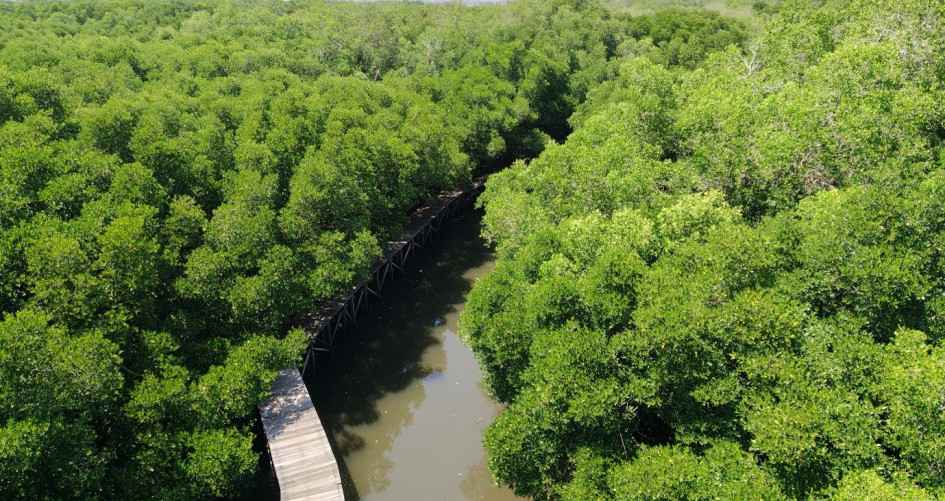
Enviro News Asia, Bandung — Indonesia’s Forestry Ministry is consolidating the management of approximately 85,870 hectares of forest areas designated for environmental services in West Java and Banten to strengthen forest protection, clarify management rights and expand sustainable economic opportunities for local communities.
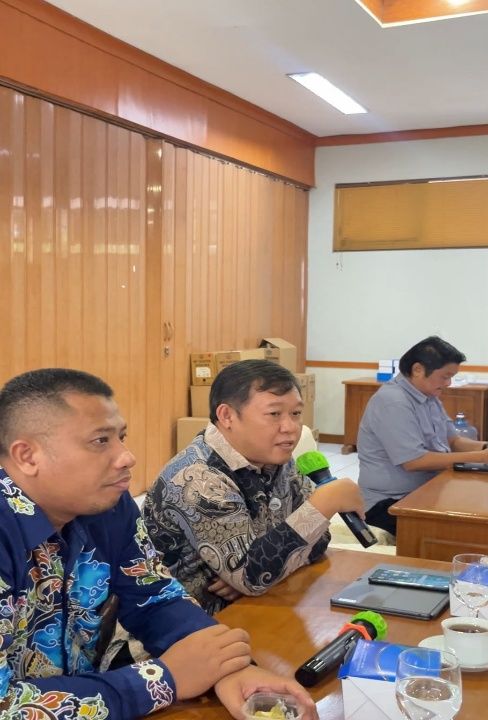
The initiative was discussed at a cross-sector coordination meeting in Bandung on Oct. 28, organized by the Directorate General of Sustainable Forest Management and the Ciamis-based Regional Office VII of Sustainable Forest Management.
The consolidation follows Forestry Ministerial Decree No. 7254 of 2026 on the 2026–2035 Management Plan for Specially Managed Forest Areas (KHDPK). The decree allocates approximately 83,626 hectares in West Java and 2,244 hectares in Banten for environmental services.
Around 119 participants attended the meeting, representing Forestry Ministry offices, the provincial governments of West Java and Banten, district and municipal development planning agencies, forestry offices and state-owned forestry company Perum Perhutani.
The forum aimed to establish a shared understanding of how environmental services should be managed on the ground while identifying opportunities, challenges and solutions to existing management issues.
Director General of Sustainable Forest Management Laksmi Wijayanti said every forest area must have clearly designated management arrangements to ensure effective protection and oversight.
She noted that approximately 77 percent of forest and land fires occur in open-access areas, highlighting the importance of collaborative management and stronger governance at the site level.
Laksmi also stressed that forest planning must align with spatial planning, local social conditions and economic development policies. Environmental services, she said, should be developed in cooperation with regional governments to ensure forest protection goes hand in hand with improved community welfare.
She added that the ministry would first establish the necessary norms, standards, procedures and criteria. While forest protection remains the primary objective, limited commercial activities could be permitted if they deliver tangible economic benefits to communities.
West Java Forestry Agency Head Dodit Ardian Pancapana welcomed the initiative, noting that forest management in the province faces pressure from competing interests and the need to coordinate different stakeholders.
He said forest restoration requires more than planting trees, emphasizing the importance of social mapping to ensure forestry policies are accepted by local communities.
Soraya Isfandari, a member of the KHDPK management-plan drafting team and head of the Gorontalo-based Regional Office XV for Forest Area Consolidation, said the total KHDPK area reaches approximately 1.08 million hectares under Forestry Ministerial Decree No. 615 of 2026.
The designated areas cover social forestry, environmental services, forest rehabilitation, forest-area use and forest-area restructuring, with forest protection serving as a principle across all categories.
She said the management plan brings together the programs of the ministry’s directorates general. Detailed arrangements, including the management of approximately 6,000 tourism assets across Java and revenue-sharing mechanisms, would be developed during a two-year transition period.
Director of Forest Utilization Planning C. Hendro Widjanarko described the management plan as a dynamic document that could be refined through evaluations and field assessments.
He warned that environmental-service areas within KHDPK are largely located in marginal landscapes and areas vulnerable to weather-related disasters, requiring careful management.
Environmental-service activities in these areas may be conducted through Forest Utilization Business Licensing (PBPH) or ministerial approval granted to governors, in accordance with applicable regulations.
Perum Perhutani’s Head of Forest Resources Planning Division Rumhayati said implementation would require adjustments to both planning and operational arrangements as the company’s managed forest areas change, including tourism sites incorporated into KHDPK.
In West Java and Banten, Perhutani tourism locations within KHDPK cover 9,733 hectares, out of the company’s total tourism management area of 21,653 hectares.
She called for clear rules governing asset management, including cooperation arrangements and ownership of permanent infrastructure when partnership agreements end.
The meeting produced several follow-up measures. First, overlapping claims and activities in areas designated for environmental services will be addressed using the Jagarimba Decision Support System and historical licensing records.
Existing social forestry permits and definitive approvals for forest-area use will remain valid. Cooperation agreements between Perum Perhutani and other parties established before KHDPK designation may also continue, but their legal status must be adjusted to the new management plan within one year of the issuance of Decree No. 7254 of 2026.
Second, applications for ministerial approval granted to governors must meet specific requirements. These include locations requiring restoration or already managed by communities, consistency with regional spatial plans, and the submission of technical proposals, mitigation plans and area maps.
Third, environmental-service businesses may operate in areas formally designated for that purpose. Social forestry groups may also continue their environmental-service activities in accordance with approved work plans and applicable regulations.
Stakeholders also agreed on an action-plan framework covering boundary clarification, legal access to forest management, Perhutani asset management, prevention of new open-access areas through transitional licensing arrangements, forest security, optimization of non-tax state revenue and semiannual monitoring and evaluation.
The Forestry Ministry expects the consolidation to strengthen coordination between stakeholders and establish more orderly, collaborative and sustainable forest governance in West Java and Banten.
Clear management responsibilities, legal certainty, ecological protection and community participation are expected to provide the foundation for developing environmental services while safeguarding forest sustainability. (*)