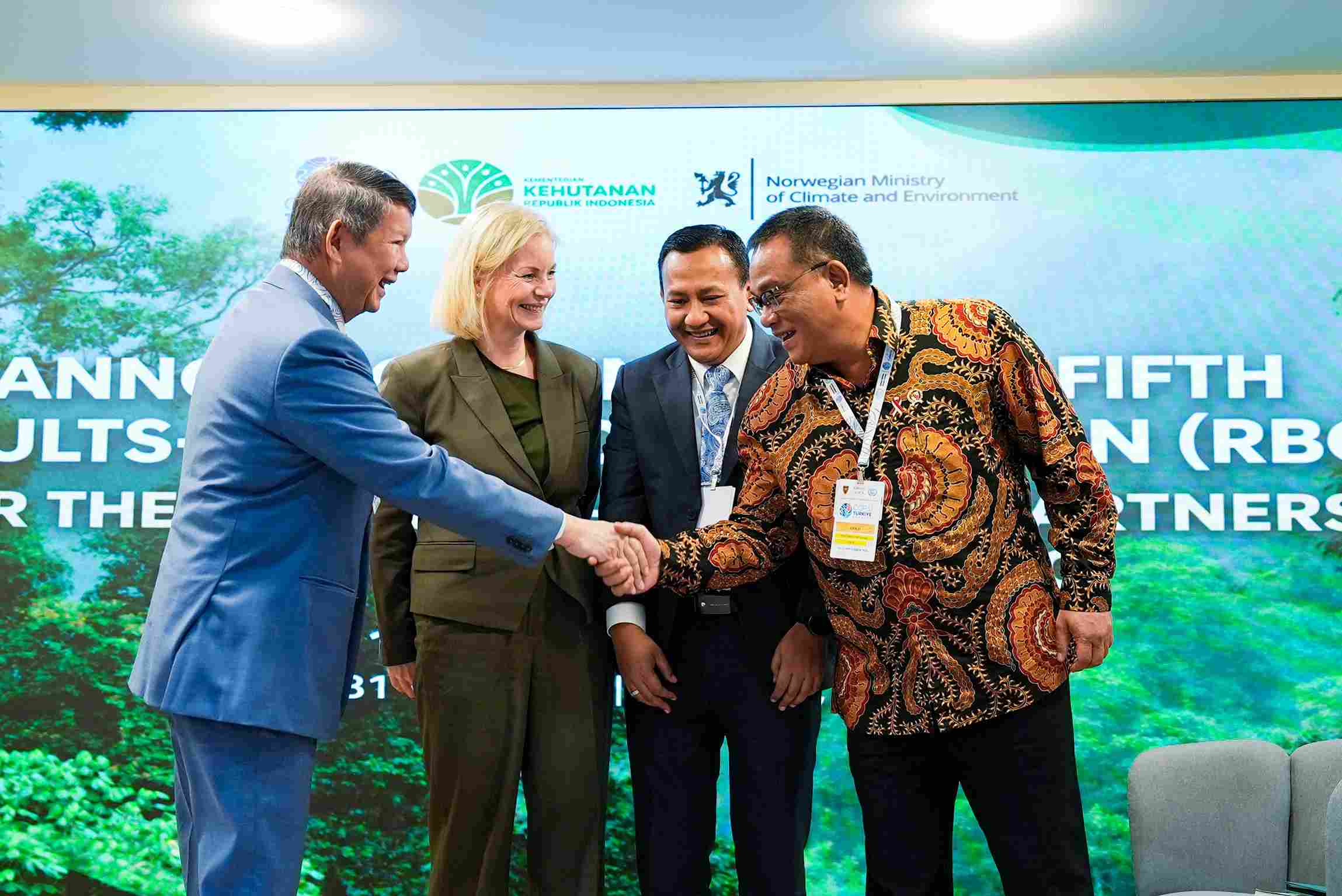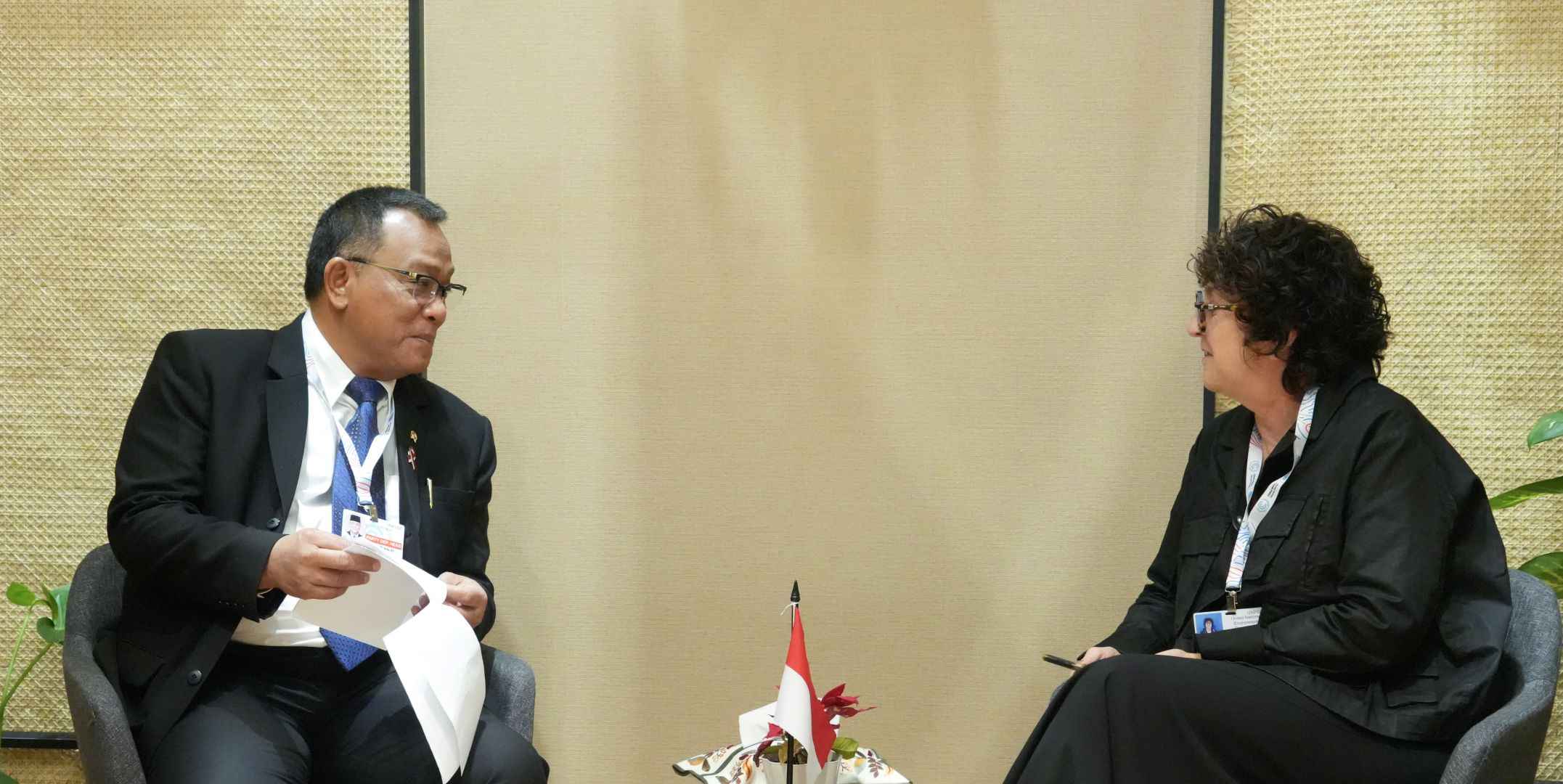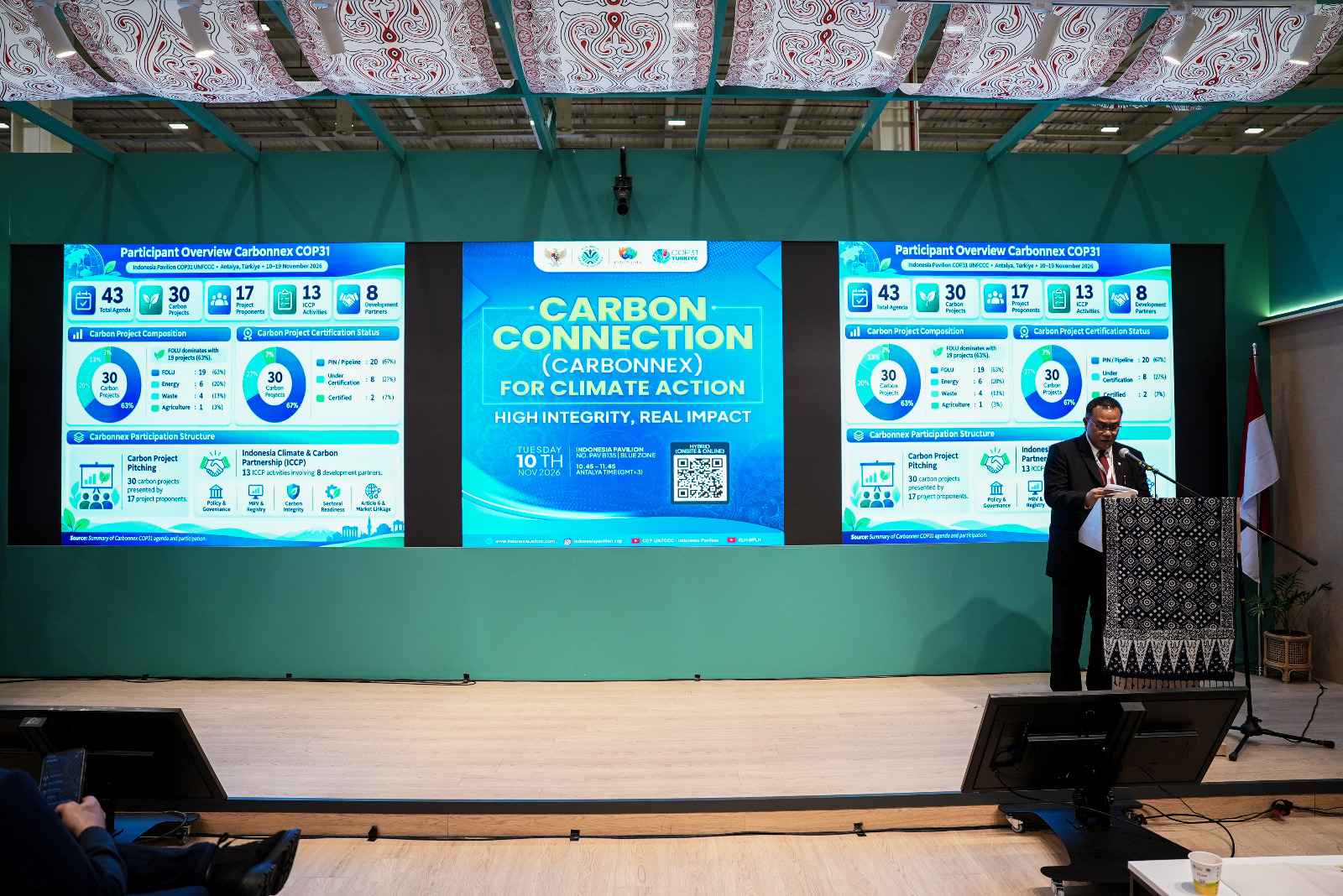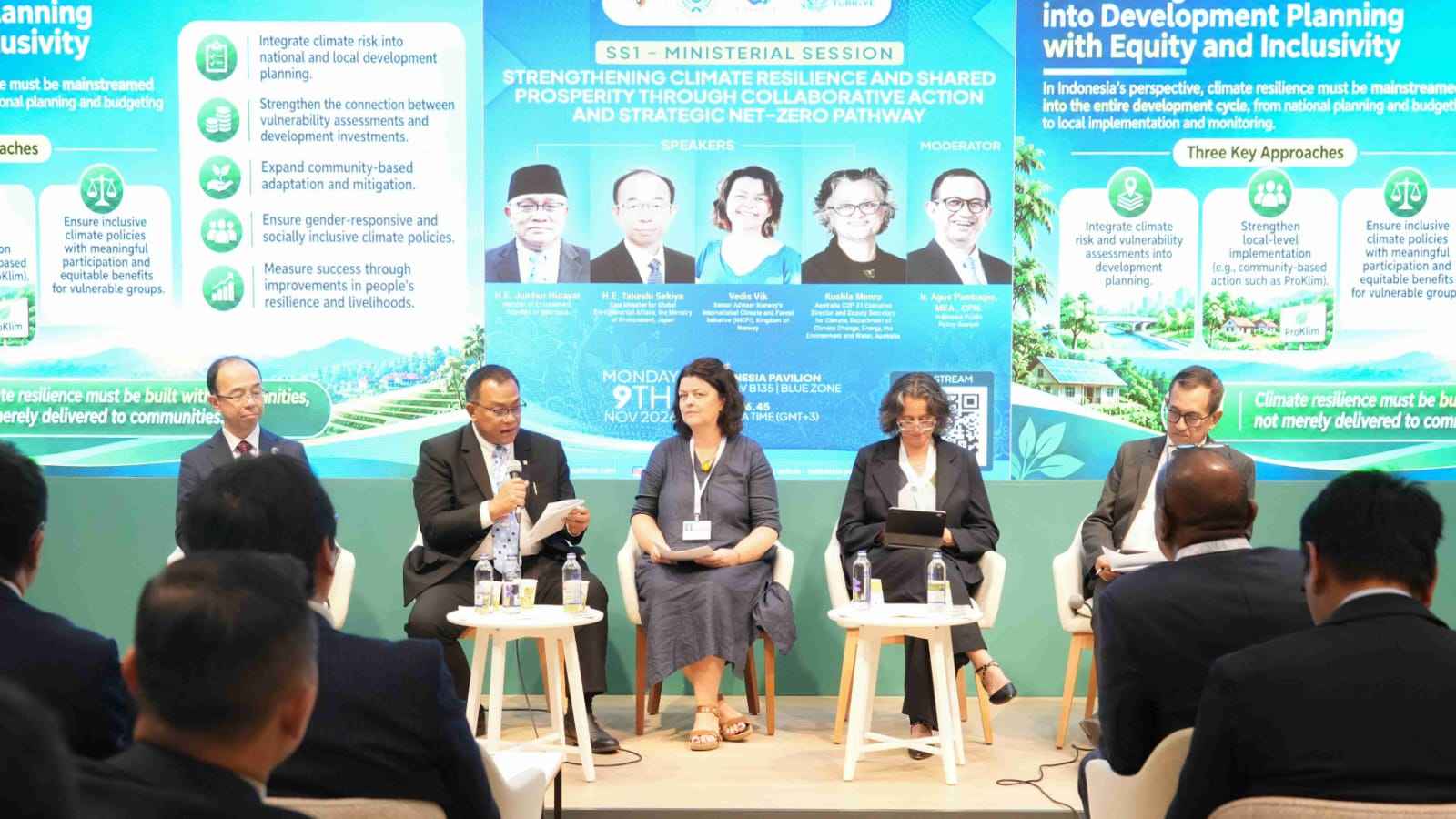
Enviro News Asia, Antalya — Indonesia has called for its transition to net-zero emissions to go hand in hand with stronger climate resilience and improved public welfare, arguing that climate action must create economic opportunities, expand energy access and protect vulnerable communities.
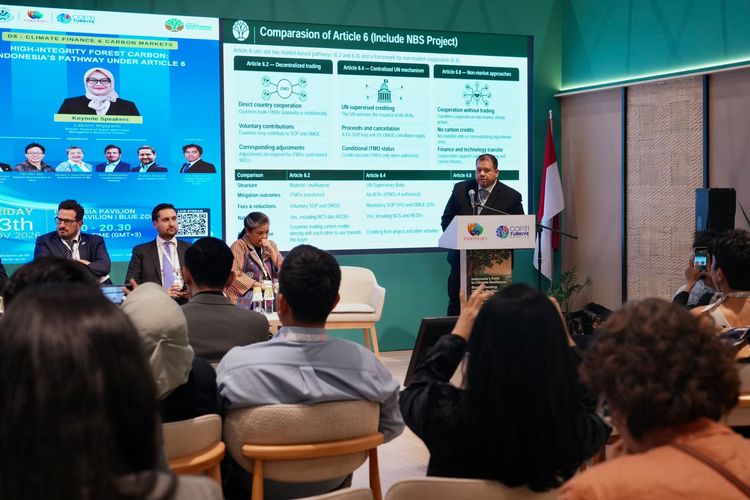
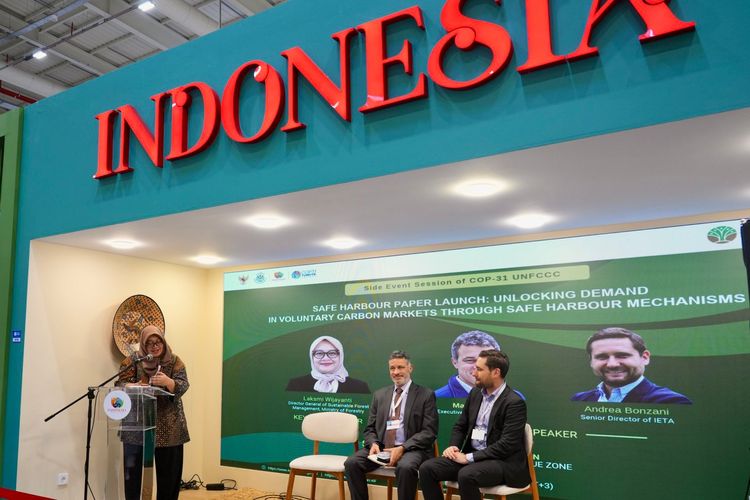
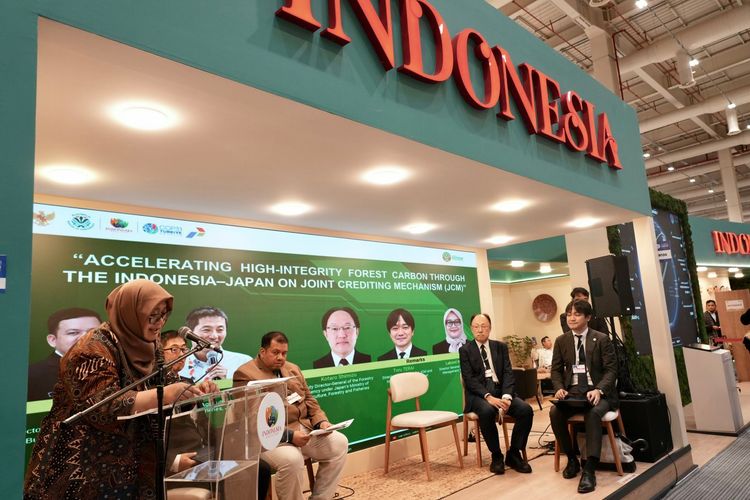
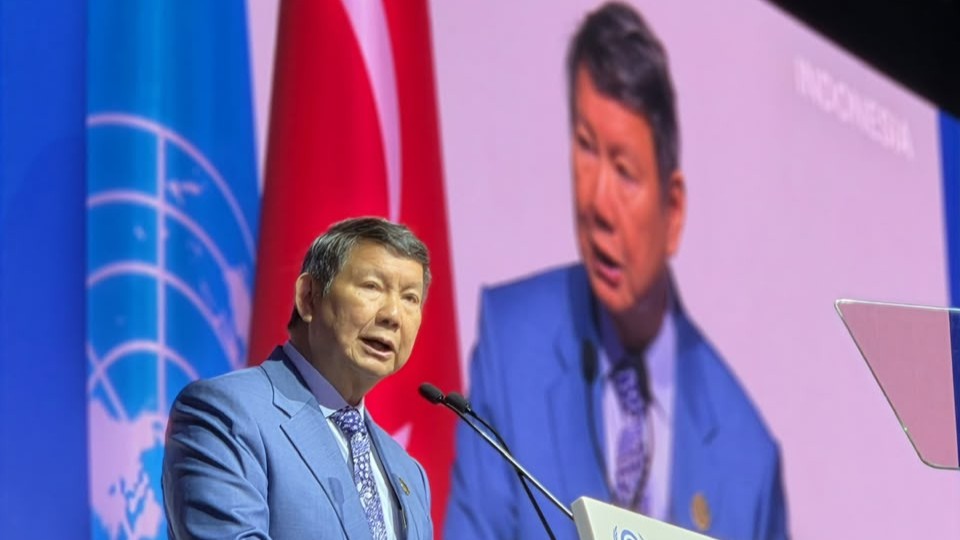
Environment Minister and Environmental Control Agency (BPLH) head Moh Jumhur Hidayat delivered the message during a ministerial dialogue titled “Strengthening Climate Resilience and Shared Prosperity through Collaborative Action and Strategic Net-Zero Pathway” at the Indonesia Pavilion during the COP31 climate conference in Antalya, Türkiye, on Nov. 9.
Jumhur said climate resilience should be integrated into every stage of development, from national planning and budgeting to local implementation, monitoring and evaluation.
Climate risks and vulnerabilities, he added, must inform decisions across sectors, including spatial planning, infrastructure development, agriculture, water management and public health.
“The fundamental principle we must uphold is that climate resilience is built together with communities, not merely communicated to them,” Jumhur said.
He stressed that climate adaptation should not be treated as a standalone environmental programme separate from broader development priorities. National policies must translate into practical action at the local level, including through the Climate Village Programme (ProKlim), which encourages communities to participate directly in climate adaptation and mitigation.
Inclusive Approach to Climate Action
Indonesia also highlighted the need for a whole-of-government and whole-of-society approach to climate action, involving central and regional administrations, businesses, academics and civil society.
Jumhur said effective collaboration required clear institutional responsibilities, measurable targets and integrated monitoring and evaluation systems.
The government also considers fairness and inclusion essential to the low-carbon transition. Women, young people, Indigenous communities, coastal residents and other vulnerable groups must have equal opportunities to participate in climate decision-making and benefit from related policies.
“Net zero must not mean zero economic opportunities. It must represent a transformation towards a more competitive, inclusive and sustainable economy,” Jumhur said.
He added that the shift to clean energy should be accompanied by decent job creation and broader access to energy. Nature-based solutions, including forest protection, peatland and mangrove restoration, and sustainable land management, should also help reduce emissions while supporting community livelihoods.
Carbon Markets and International Finance
On climate financing, Indonesia identified high-integrity carbon markets, climate finance and technological innovation as important tools for accelerating the transition.
Under Article 6 of the Paris Agreement, the government said international carbon trading must deliver credible and transparent emissions reductions while preventing double counting.
Indonesia also called for developing countries to receive greater access to concessional finance, blended finance and technology transfers.
International partnerships, Jumhur said, should deliver tangible results, including climate-resilient infrastructure, sustainable agriculture and clean energy development. Such cooperation should uphold equity and the principle of common but differentiated responsibilities and respective capabilities.
He concluded that climate resilience and net-zero emissions were complementary objectives rather than competing priorities.
“The main measure of our climate ambition is not only how much carbon emissions we manage to reduce, but also how many lives we can protect and how much shared prosperity we can create,” Jumhur said.
Indonesia said its approach was aimed at ensuring that climate policies deliver both environmental benefits and lasting improvements in people’s lives. (*)