Enviro News Asia, Antalya — Indonesia has called on member states of the Organisation of Islamic Cooperation (OIC) to translate spiritual values and environmental ethics into concrete climate action, presenting its National Ecological Repentance Movement as a model for strengthening collective efforts to protect the planet.
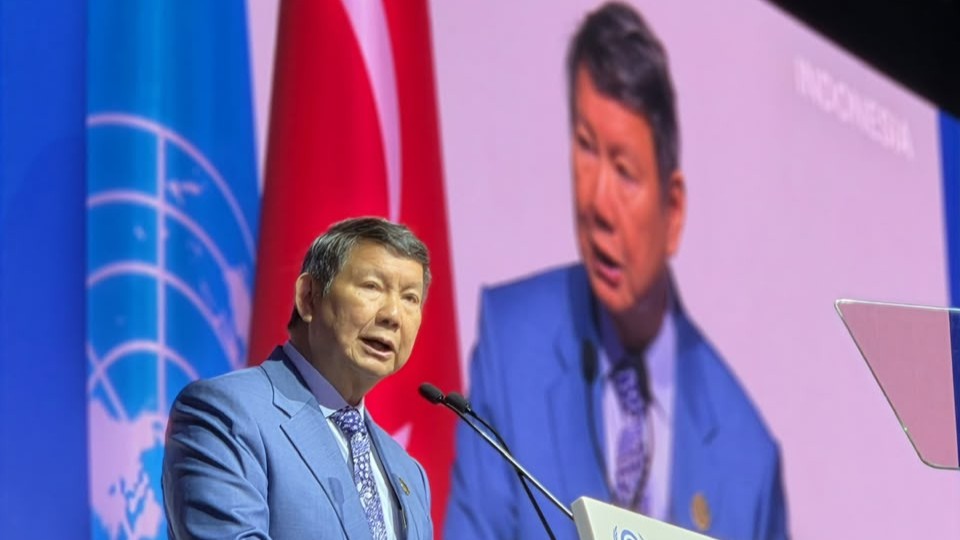
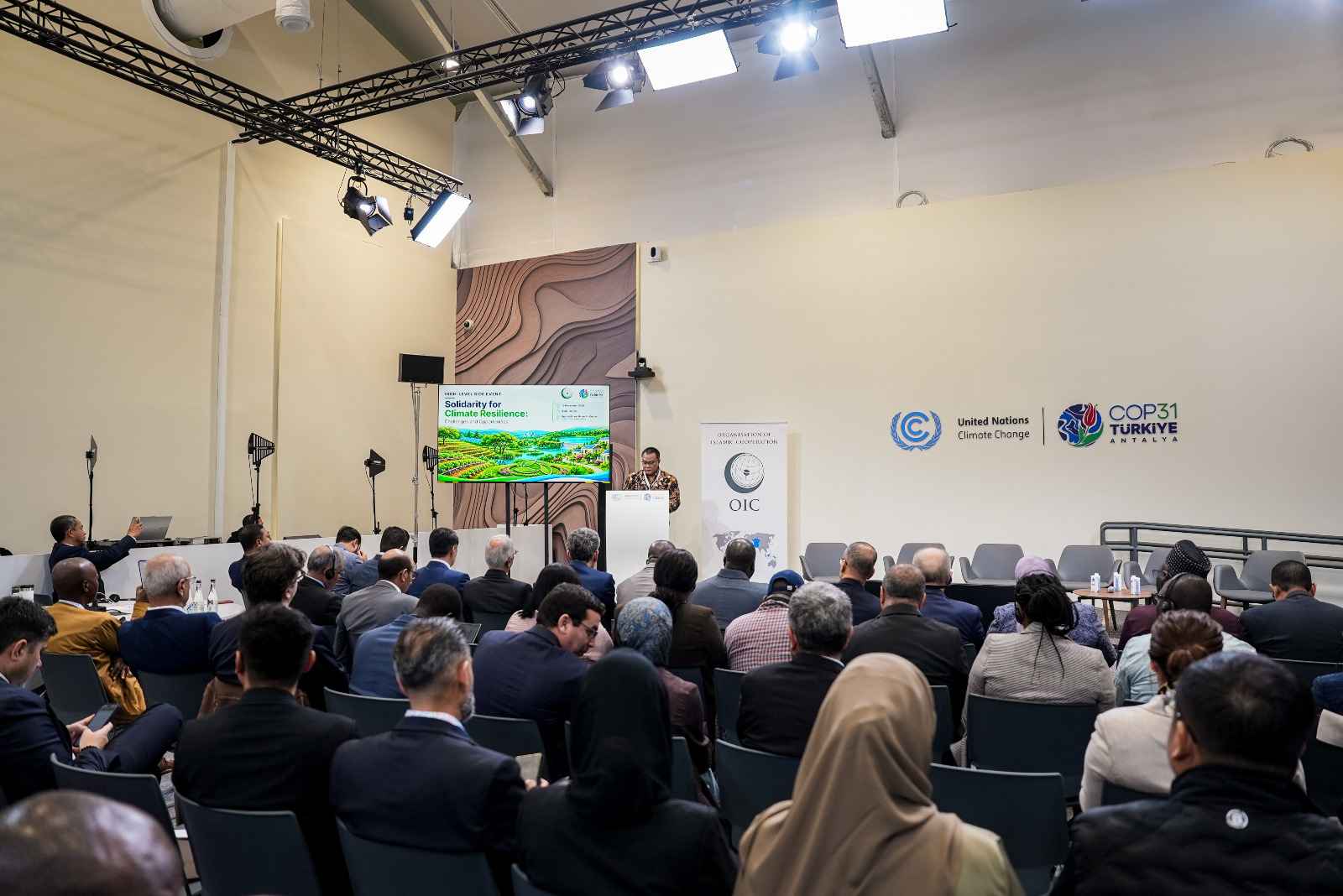
Environment Minister and Head of the Environmental Control Agency (KLH/BPLH) Moh Jumhur Hidayat delivered the message at the high-level forum “Solidarity for Climate Resilience: Challenges and Opportunities” on the sidelines of the 31st United Nations Climate Change Conference (COP31) in Antalya, Türkiye, on Nov. 13, 2026.
Indonesia proposed three areas for joint action among OIC members: strengthening climate adaptation and resilience, advancing climate justice, and expanding community participation in environmental solutions.
Jumhur said the climate crisis had become a major development challenge, with developing countries and vulnerable communities bearing some of its heaviest impacts despite contributing relatively little to global emissions.
“Climate change is no longer merely an environmental issue. It is a development challenge that threatens food and water security, public health, ecosystems and people’s livelihoods,” he said.
Spiritual Values as a Driver of Climate Action
Indonesia sees shared historical, cultural and spiritual values among OIC members as an important foundation for building solidarity against climate change.
In Islamic teachings, protecting the Earth is a trust entrusted to humanity. This principle underpins Indonesia’s Ecological Repentance Movement, which encourages people to acknowledge environmental damage, commit to avoiding further harm and take concrete steps to restore nature.
“Islamic principles remind us that humanity has been entrusted with the responsibility to protect the Earth. Environmental protection is therefore not merely a policy decision, but also a moral obligation for present and future generations,” Jumhur said.
Indonesia said OIC membership should provide a platform for turning shared values and commitments into practical climate initiatives. Solidarity, it added, must go beyond common positions and lead to cooperation that delivers tangible benefits for communities and the environment.
Three Priorities for OIC Cooperation
Indonesia outlined three proposed priorities for joint action.
The first is to strengthen climate adaptation and resilience through risk assessments, early warning systems, resilient infrastructure, ecosystem restoration and nature-based solutions. Indonesia is prepared to share its experience in mangrove rehabilitation and its programme to plant two billion trees.
The second is to advance climate justice by expanding developing countries’ access to climate finance, technology transfer and capacity-building, particularly for adaptation and addressing loss and damage. South-South and triangular cooperation could help support these efforts.
The third is to strengthen community participation by involving women, young people, Indigenous communities and local residents as drivers of climate solutions rather than merely beneficiaries. Indonesia has pursued this approach through its Ecological Repentance Movement in collaboration with schools, universities, religious leaders and Indigenous communities.
Indonesia said it was ready to work with all OIC member states to develop these initiatives, stressing that shared climate challenges require solidarity, cooperation and sustained collective action.
Ecological Repentance Movement Underway in Indonesia
Indonesia said the movement was already being implemented domestically through three stages: acknowledging past harm to nature, committing not to repeat damaging practices, and taking sustained action to restore the environment.
KLH/BPLH has partnered with religious figures and organisations from different faiths, including the Indonesian Ulema Council (MUI), the Central Board of Muhammadiyah, Wahdah Islamiyah, the Supreme Council for Confucian Religion in Indonesia and Catholic priests in North Sumatra.
In cooperation with the Ministry of Religious Affairs and the Ministry of Primary and Secondary Education, 2,649 schools have declared their commitment to the Ecological Repentance Movement towards environmentally conscious schools.
On the ground, the initiative includes the planting of two billion trees, mangrove rehabilitation and the development of bamboo as a nature-based solution. It also involves law enforcement against those responsible for environmental destruction.
Through the movement and international cooperation, KLH/BPLH said Indonesia aims to ensure that humanitarian and spiritual values are translated into practical efforts to protect the environment and build a more resilient, inclusive and sustainable future. (*)