
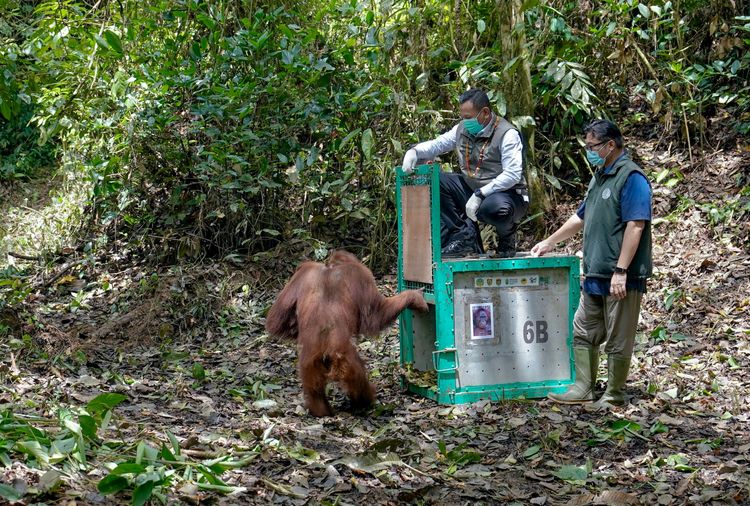
Enviro News Asia, Palangka Raya — Indonesia’s Ministry of Forestry and the Borneo Orangutan Survival Foundation (BOS Foundation) have strengthened their conservation partnership with the opening of new rehabilitation facilities in Central Kalimantan and the release of seven orangutans into Bukit Baka Bukit Raya National Park.
The activities took place on Nov. 26 in Palangka Raya, marking 35 years of the BOS Foundation’s work to protect orangutans and their habitats in Indonesia.
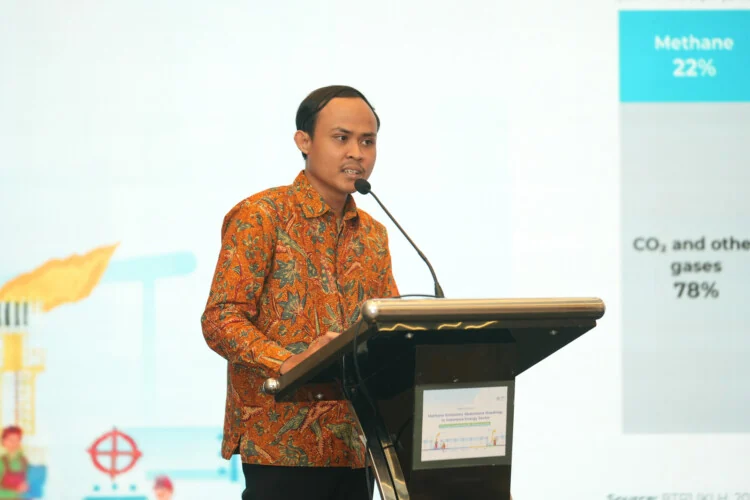
The new clinic and operational office at the Nyaru Menteng 2 Orangutan Rehabilitation Complex were inaugurated through a plaque-signing ceremony attended by Hashim Djojohadikusumo, chairman of the Task Force for Innovation in National Park Financing and Management; Deputy Forestry Minister Rohmat Marzuki; and Central Kalimantan Governor Agustiar Sabran.
Rohmat said improved rehabilitation facilities would strengthen wildlife healthcare, rescue and recovery services, while supporting coordination among central and regional governments and conservation partners.
He also praised the BOS Foundation for its 35-year contribution to orangutan conservation and acknowledged the efforts of organisations involved in rescue, rehabilitation, release and habitat protection.
Hashim likewise commended the foundation, noting that he had supported its work through cooperation spanning nearly two decades. He said he would continue working to support wildlife conservation.
The facility inauguration coincided with the release programme for seven orangutans from Nyaru Menteng into Bukit Baka Bukit Raya National Park. The operation marked the 48th release from the rehabilitation centre and was organised in two stages.
Four orangutans — Yutris, Meki, Langit and Inggrid — have already been released, while Josh, Beni and Dinda are scheduled for the next stage.
The seven animals have different backgrounds. Beni, Josh, Meki, Langit and Yutris were rescued from various locations across Central Kalimantan. Dinda and Inggrid were born and raised on a pre-release island, where they learned essential survival skills directly from their mothers.
During rehabilitation, the orangutans developed the abilities needed to survive independently in the wild, including navigating forest environments, identifying and finding natural food sources, and building nests. Their health, behaviour and readiness were assessed before release as part of a gradual and carefully managed process.
Rohmat stressed that releasing orangutans must go hand in hand with protecting their natural habitats. Conservation requires coordinated efforts covering rescue, healthcare, individual readiness assessments and the protection of forests where the animals will live.
He added that the ministry could not carry out the work alone. Central and regional governments, technical agencies, conservation partners and local communities all have roles in protecting forests and restoring degraded habitats. The released orangutans will also be monitored to assess their adaptation and progress in the wild.
Since 2012, the BOS Foundation, working with the government and other partners, has returned 564 orangutans to natural habitats at three release sites: Bukit Batikap Protection Forest and Bukit Baka Bukit Raya National Park in Central Kalimantan, and Kehje Sewen Forest in East Kalimantan.
With the latest seven releases, the total number of orangutans returned to the wild through the foundation’s programme has reached 571.
BOS Foundation chairman Jamartin Sihite said the organisation’s 35-year experience had demonstrated the importance of long-term commitment and collaboration in conservation.
He said conservation work did not end when orangutans were released, as continued monitoring was necessary to establish whether they could survive in their natural habitats.
The success of conservation, he added, should not be measured only by the number of animals released, but also by their ability to survive and reproduce in the wild, eventually establishing sustainable populations.
The Ministry of Forestry and the BOS Foundation said they would continue working with regional governments, national and international partners, businesses and local communities to protect orangutans and their forest habitats. (*)