
Enviro News Asia, Jakarta — Indonesia is seeking to turn green and blue economic activities into new engines of growth as it pursues an eight percent economic expansion target while maintaining environmental protection.
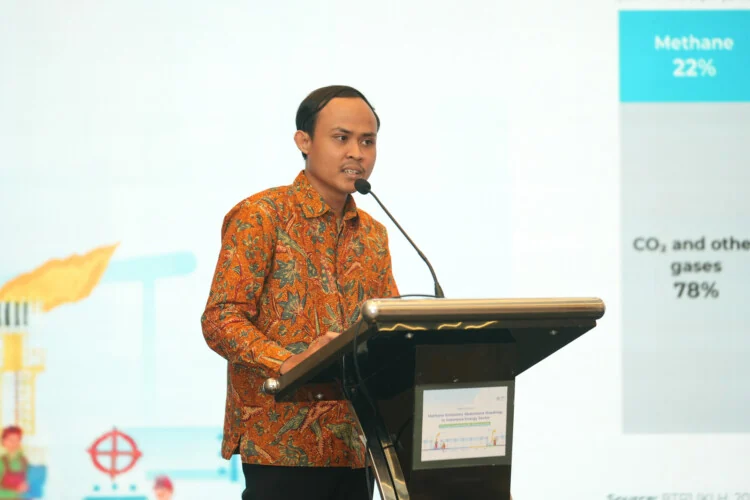
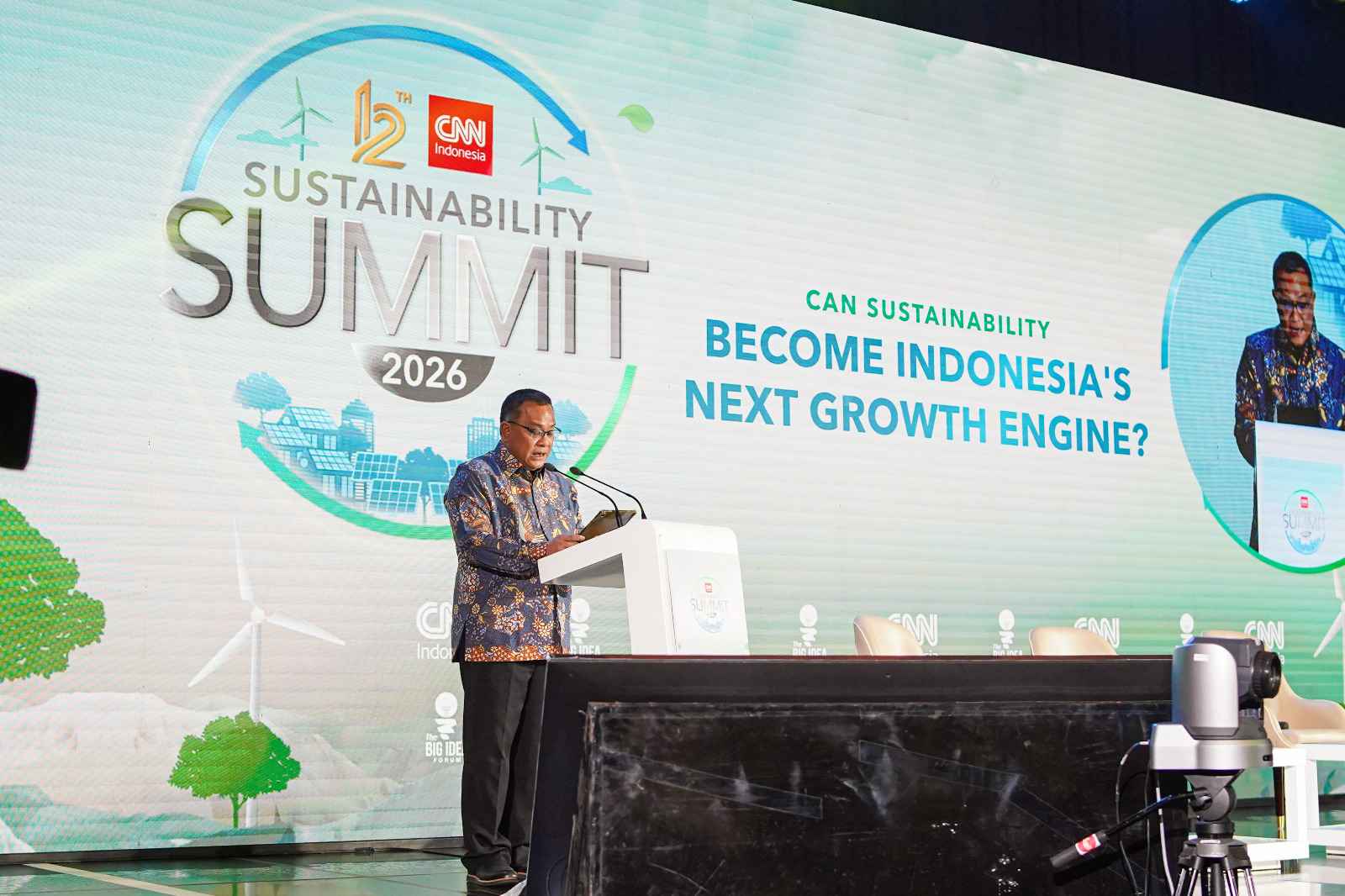
Environment Minister and head of the Environmental Control Agency Moh Jumhur Hidayat outlined six strategic opportunities during his keynote address at the CNN Indonesia Sustainability Summit 2026 in Jakarta on Nov. 25. Speaking under the theme “Can Sustainability Become Indonesia’s Next Growth Engine?”, he said economic development and climate action must advance together.
Jumhur said President Prabowo Subianto’s priorities, including food and energy security, job creation and industrial downstreaming, should be pursued alongside environmental safeguards. He rejected the view that economic growth must come at the expense of nature.
“The answer is simple: it can, and it must. We need to move beyond the assumption that the economy can only grow by sacrificing the environment,” Jumhur said.
He warned that the triple planetary crisis of climate change, biodiversity loss and pollution posed direct economic risks. Indonesia’s Fourth National Communication, drawing on data from 113 stations operated by the Meteorology, Climatology and Geophysics Agency (BMKG), recorded an increase of approximately 0.6 degrees Celsius in annual air temperatures over the past three decades.
The estimated economic losses from Tropical Cyclone Seroja in East Nusa Tenggara in 2021 reached around Rp7.3 trillion, highlighting the financial consequences of climate-related disasters.
“The costs of failing to take climate action are often far greater than the costs of taking action itself,” Jumhur said.
The six opportunities identified by the government are carbon markets, clean energy, circular economy and waste management, green industrialisation, the blue economy and climate adaptation investment.
Under the carbon economy agenda, Indonesia aims to strengthen carbon trading, results-based payments, emissions-reduction certification and credible registry systems to ensure that carbon units represent measurable environmental benefits.
The clean energy agenda includes developing up to 100 gigawatts of solar power capacity and improving energy efficiency. The government expects these measures to reduce production costs, attract manufacturing investment and create jobs while keeping energy accessible to the public.
For the circular economy, the government is promoting waste reduction at source, reuse, recycling and economically viable waste-to-energy initiatives. Green industrialisation will focus on cleaner, lower-emission production processes to strengthen the competitiveness of domestic industries in global markets.
The blue economy agenda seeks to increase the value of marine products through processing, fisheries technology and more efficient maritime supply chains, while protecting coastal ecosystems and supporting fishing communities. Climate adaptation investment will cover early warning systems, climate-resilient agriculture, water management and resilient infrastructure to reduce disaster risks.
The proposals are aligned with Indonesia’s Second Nationally Determined Contribution (Second NDC), which sets out the country’s climate commitments. The government estimates that Indonesia will need approximately US$472.6 billion in climate investment.
Jumhur said long-term regulatory certainty was essential to attract financing and develop bankable projects. Potential funding sources include the Environmental Fund Management Agency (BPDLH), public-private financing, carbon economic value mechanisms and international climate finance facilities, including the New Collective Quantified Goal (NCQG) and the Baku to Belém Roadmap.
The government and the House of Representatives are also advancing plans for a Fair Climate Change Control Bill, known as the RUU PPIB. Existing instruments include Presidential Regulation No. 110 of 2025, the National Registry System for Climate Change Control, the Carbon Unit Registry System and the Climate Village Programme.
Jumhur also called on businesses and other stakeholders to embrace what he described as “ecological repentance”, involving acknowledgement of past environmental mismanagement, commitments to prevent its recurrence and efforts to repair environmental damage, supported by firm law enforcement.
He said businesses that comply with environmental requirements and invest in cleaner technologies should not be placed at a disadvantage compared with those that disregard their obligations.
Concluding his address, Jumhur urged businesses, micro, small and medium enterprises, young people and the media to make sustainability part of their competitiveness strategies and help ensure an inclusive and equitable transition.
“Protecting the environment means protecting our economy, our people and Indonesia’s future,” he said. (*)