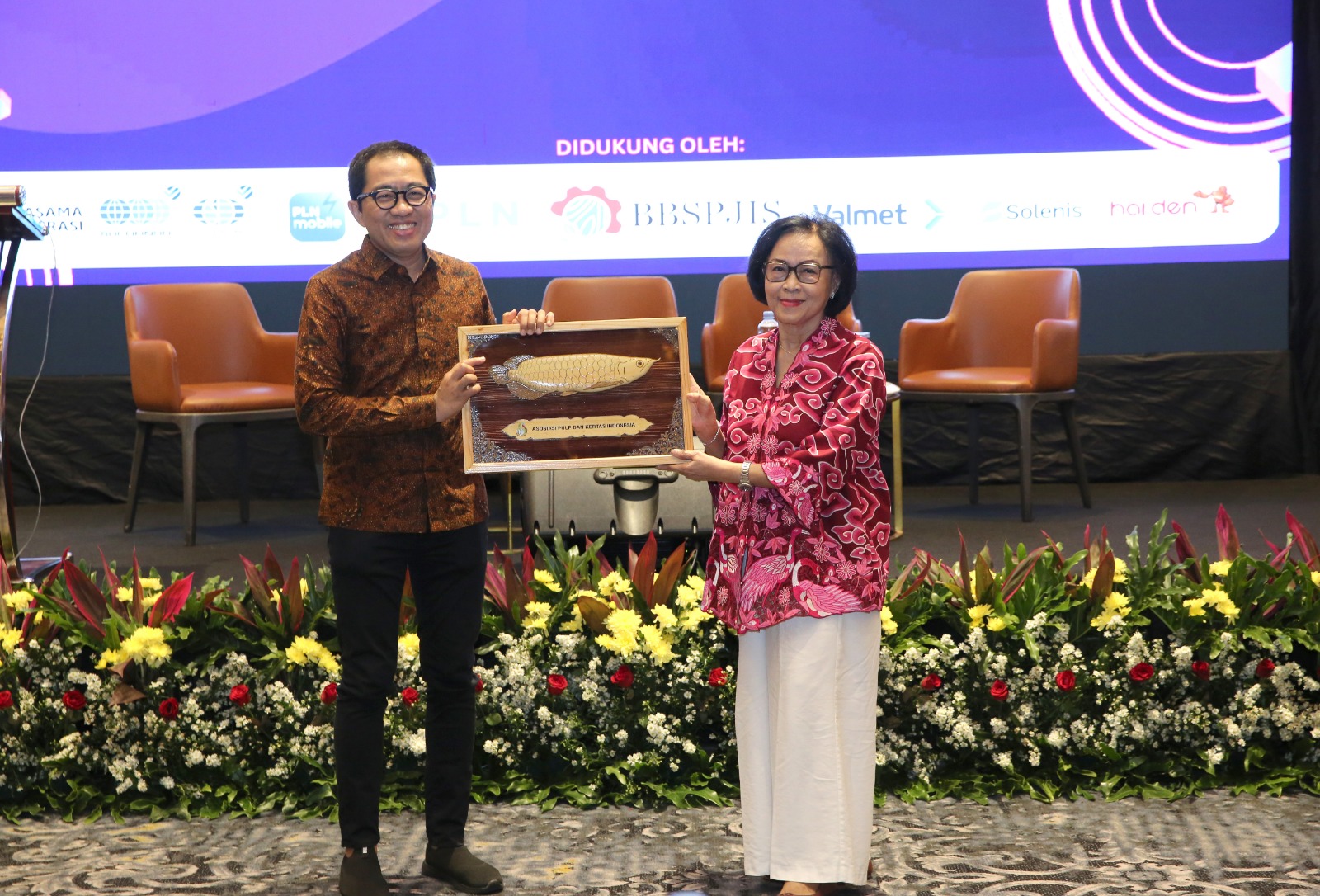
Enviro News Asia, Jakarta – The Indonesian Pulp and Paper Association (APKI) held its 2024 Annual Working Meeting at the Aryaduta Menteng Hotel, Jakarta. The event began with a seminar themed “Enhancing the Contribution of the Pulp and Paper Industry to Economic Growth through Policy Strategies, Circular Economy, and Expanding Global Market Access.” The seminar and working meeting were attended by Deputy Minister of Industry Faisol Reza, Director General of Agro Industry at the Ministry of Industry Putu Juli Ardika, Director of Forest and Plantation Product Industries at the Ministry of Industry Lila Harsya Bachtiar, APKI Advisory Board Member Saleh Husin, APKI Chairperson Liana Bratasida, members of the APKI Supervisory Board, Vice Chairpersons of APKI, representatives of associations under the Forestry Industry Communication Forum, representatives from the Indonesian Employers Association (APINDO), senior government officials, pulp and paper industry stakeholders, and other invited guests.
In her opening remarks, APKI Chairperson Liana Bratasida emphasized the strategic importance of the event in formulating policies to enhance the competitiveness of the Pulp and Paper Industry (PPI) amid global uncertainties. “This event is highly relevant, aligned with the theme ‘Enhancing the Contribution of the Pulp and Paper Industry to Economic Growth through Policy Strategies, Circular Economy, and Expanding Global Market Access,” she said. She added, “Global and domestic challenges must not only be viewed as threats but also as opportunities to formulate strategic and innovative steps.”
Liana also noted that 54 paper industries currently rely on recycled paper (KDU) as raw material, with a significant portion still needing to be imported. This reliance highlights the implementation of a circular economy within Indonesia’s pulp and paper industry. “We hope that government policies will ensure the availability of KDU raw materials so that the pulp and paper industry can maintain competitiveness and sustainability,” she added.
Deputy Minister of Industry Faisol Reza, in his speech, expressed his appreciation for APKI’s consistent partnership with the government in advancing the national pulp and paper industry. “The pulp and paper industry significantly contributes to the national economy, with total exports reaching USD 8.28 billion in 2023 and accounting for approximately 4.03% of the non-oil and gas manufacturing GDP,” said Faisol. He also highlighted several challenges faced by the pulp and paper industry, such as the availability of recycled paper (KDU), the EU Waste Shipment Regulation (EUWSR), the Regional Comprehensive Economic Partnership (RCEP), and the EU Carbon Border Adjustment Mechanism (CBAM). “Industrial resilience is a key focus under President Prabowo Subianto’s administration. With the right strategic steps, this industry can continue to grow and contribute to the national economy,” he added.
Hannah Zhao, Director of Fiber at Fastmarkets RISI, who was a keynote speaker at the seminar, provided in-depth insights into the global prospects of the pulp and paper industry. In her presentation, Hannah stated that Asia, particularly Southeast Asia and India, would drive global demand for pulp and paper through 2026. “With a growing population and relatively low per capita consumption, this region has immense growth potential. However, challenges such as oversupply and the quality of recycled fibers remain key issues to address,” said Hannah.
The event also featured panel discussions with key speakers addressing crucial topics. Panelists included Atong Soekirman, Deputy Assistant for the Metal, Machinery, Transportation Equipment, Electronics, and Miscellaneous Industries at the Coordinating Ministry for Economic Affairs of Indonesia; Fajarini Puntodewi, Head of the Trade Policy Agency, Ministry of Trade of Indonesia; Edi Iswanto Wiloso, Senior Researcher at the National Research and Innovation Agency (BRIN); and Mohammad Faisal, Executive Director of the Center of Reform on Economics (CORE) Indonesia.
APKI remains optimistic about overcoming challenges and enhancing the competitiveness of the pulp and paper industry through synergy between the government, private sector, and academia. With strategic and innovative measures, APKI supports Indonesia’s economic growth targets, aiming to increase the competitiveness of the pulp and paper industry, drive 8% economic growth, and support the aspirations of the President of the Republic of Indonesia.