Enviro News Asia, Bali – Strengthening governance and law enforcement is a critical element in supporting Indonesia’s goal to achieve a net carbon sink condition in the forestry and other land use (FOLU) sectors by 2030.
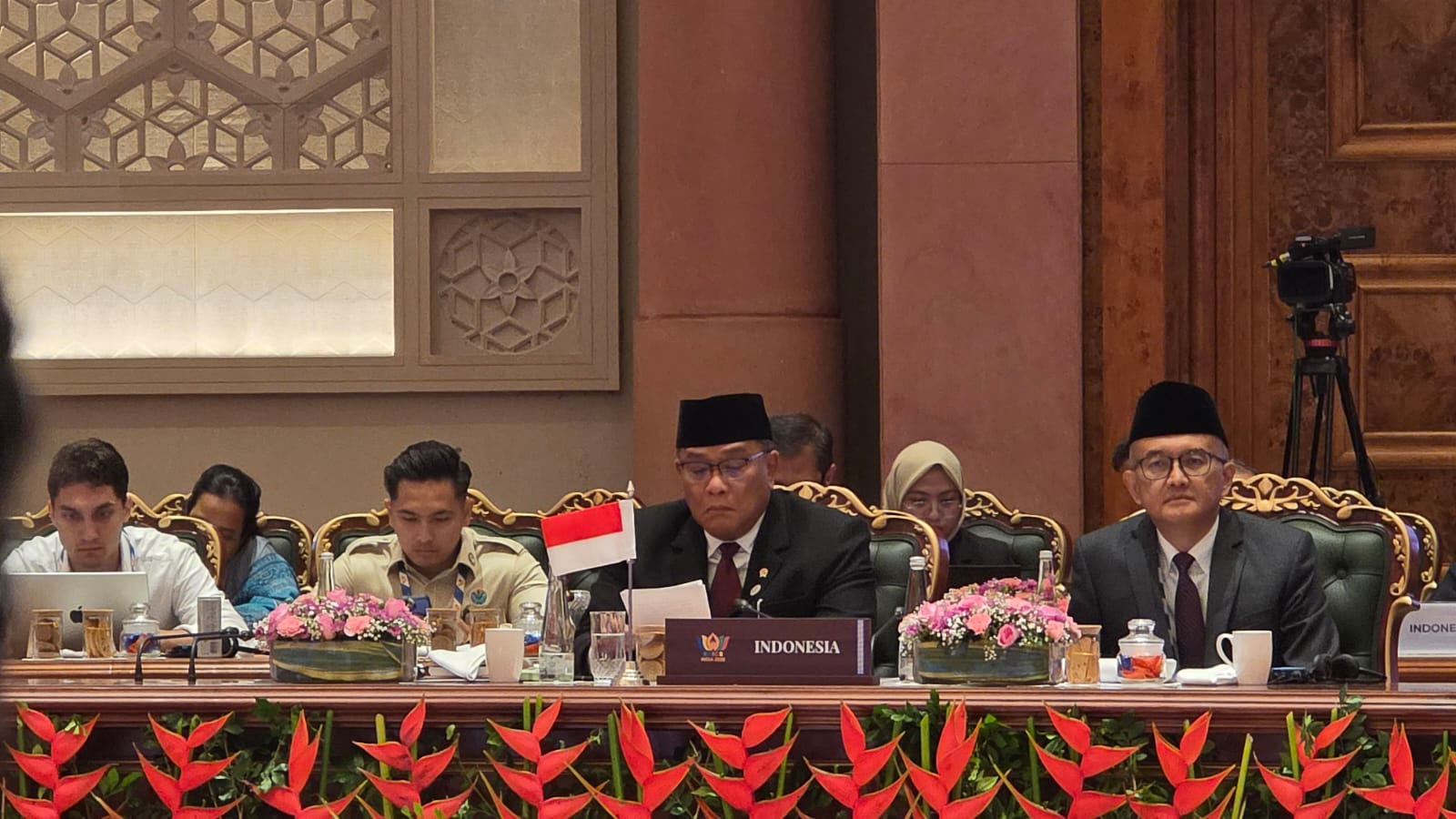
“Our work is not just about planting trees. It’s about restoring legal certainty and ensuring good governance,” said Agus Justianto, Senior Advisor to the FOLU Net Sink 2030 Task Force at the Ministry of Environment and Forestry, during the 5th ASEAN Environmental Law Conference held in Bali on Monday (7/7/2025).
Agus emphasized that strengthening the legal framework involves more than just licensing reforms and tenure security.
It also includes the development of data-driven monitoring systems and spatially targeted ecosystem restoration.
A key instrument in this effort is the establishment of a Law Enforcement Division within the FOLU Net Sink Task Force, which is responsible for developing legal instruments and field-based monitoring tools to prevent deforestation and forest degradation.
“Law enforcement must be responsive, evidence-based, and community-inclusive. Because climate justice is social justice,” he asserted.
The FOLU NC-1 project—a collaboration between Indonesia and Norway—was highlighted by Agus as a legal innovation laboratory.
The initiative encompasses the development of carbon assessment mechanisms, legal support for social forestry, and multi-business forestry schemes that safeguard community rights and ensure long-term sustainability.
These efforts are reinforced by an operational roadmap outlined in Ministerial Regulation No. 168/2022, which sets spatial priorities, targeted mitigation actions, and protection for peatlands and forests from illegal activities.
On the same occasion, Agus reiterated Indonesia’s readiness to take on a regional leadership role ahead of the upcoming UN Climate Conference (COP30) in Brazil.
“Let us be the legal backbone of this movement—so that the law does not merely follow climate change, but actively shapes a fair and sustainable future,” he stated.
The conference was organized by the Indonesian Center for Environmental Law (ICEL) as part of the FOLU NC-1 project.
It brought together environmental law experts from across ASEAN to promote legal approaches to climate justice and environmental protection. (*)