Enviro News Asia, Jambi — UIN Sulthan Thaha Saifuddin Jambi has introduced the use of eco enzyme solutions to support environmentally friendly waste management during this year’s qurban animal slaughter activities, reinforcing the university’s commitment to sustainable campus practices and environmental protection.
The initiative is coordinated through the university’s Environmental and SDGs Corps, which prepared eco enzyme supplies for slaughtering locations across the campus to help maintain cleanliness and reduce organic waste pollution during Eid al-Adha activities.
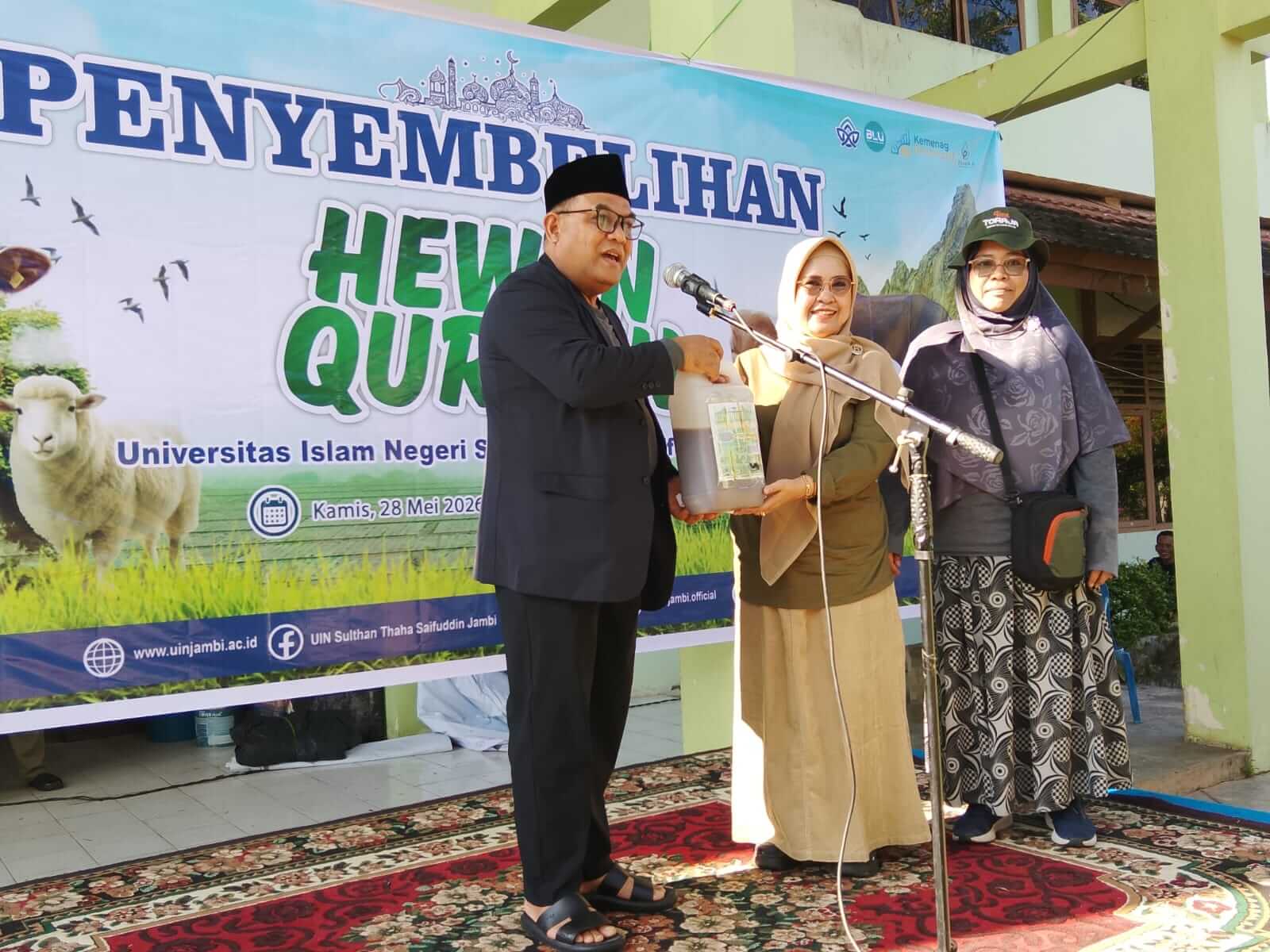
Coordinator of the Environmental and SDGs Center, Irmawati, explained that each qurban committee unit would receive one container of eco enzyme during the opening of the slaughtering activities.
According to Irmawati, eco enzyme is a multipurpose liquid produced through the fermentation of organic waste materials, including fruit and vegetable scraps, molasses or palm sugar, and water. The mixture follows a ratio of one part molasses, three parts fruit waste, and ten parts water.
She said the natural solution is considered safe, economical, and environmentally friendly, making it effective for handling organic waste generated during animal slaughtering.
Irmawati noted that eco enzyme can significantly reduce unpleasant odors caused by blood, offal, and meat waste during the qurban process.
“The odor from blood, internal organs, and meat residue can be minimized through eco enzyme spraying. In addition to reducing smells, it can also help inhibit bacterial growth,” she explained.
The university stated that the initiative is important for maintaining sanitation around slaughtering sites while also preventing liquid waste from directly contaminating the campus environment.
Eco enzyme is also used to clean drainage systems and reduce blockages caused by animal fat. Residual byproducts from the fermentation process can later be processed into liquid compost to fertilize plants around the campus.
Through the program, UIN STS Jambi aims to strengthen sustainable waste management practices and encourage greater environmental awareness among students, staff, and the wider community.
The university also provided practical guidelines for using eco enzyme solutions. For odor control, the liquid is diluted using a one-to-ten ratio before being sprayed directly onto slaughtering areas. For floor cleaning, a one-to-twenty mixture is used, while drainage treatment uses a one-to-ten solution poured regularly into wastewater channels.
Beyond qurban waste management, eco enzyme can also be used for broader organic waste treatment applications.
To encourage wider adoption, the Environmental and SDGs Corps has opened eco enzyme sales to both campus residents and the public at an affordable price of Rp25,000 per liter.
Irmawati said the initiative also serves as an educational effort to promote environmentally based waste management and foster long-term public awareness about sustainable living practices. (*)