Enviro News Asia, Jakarta – Indonesia possesses vast geothermal energy potential, reaching 23,742 Megawatts (MW). This indicates significant opportunities for further geothermal development across the country. Currently, Indonesia ranks second globally in geothermal power production. With an installed capacity of 2,744 MW, Indonesia is just behind the United States, which produces 3,937 MW of geothermal electricity.
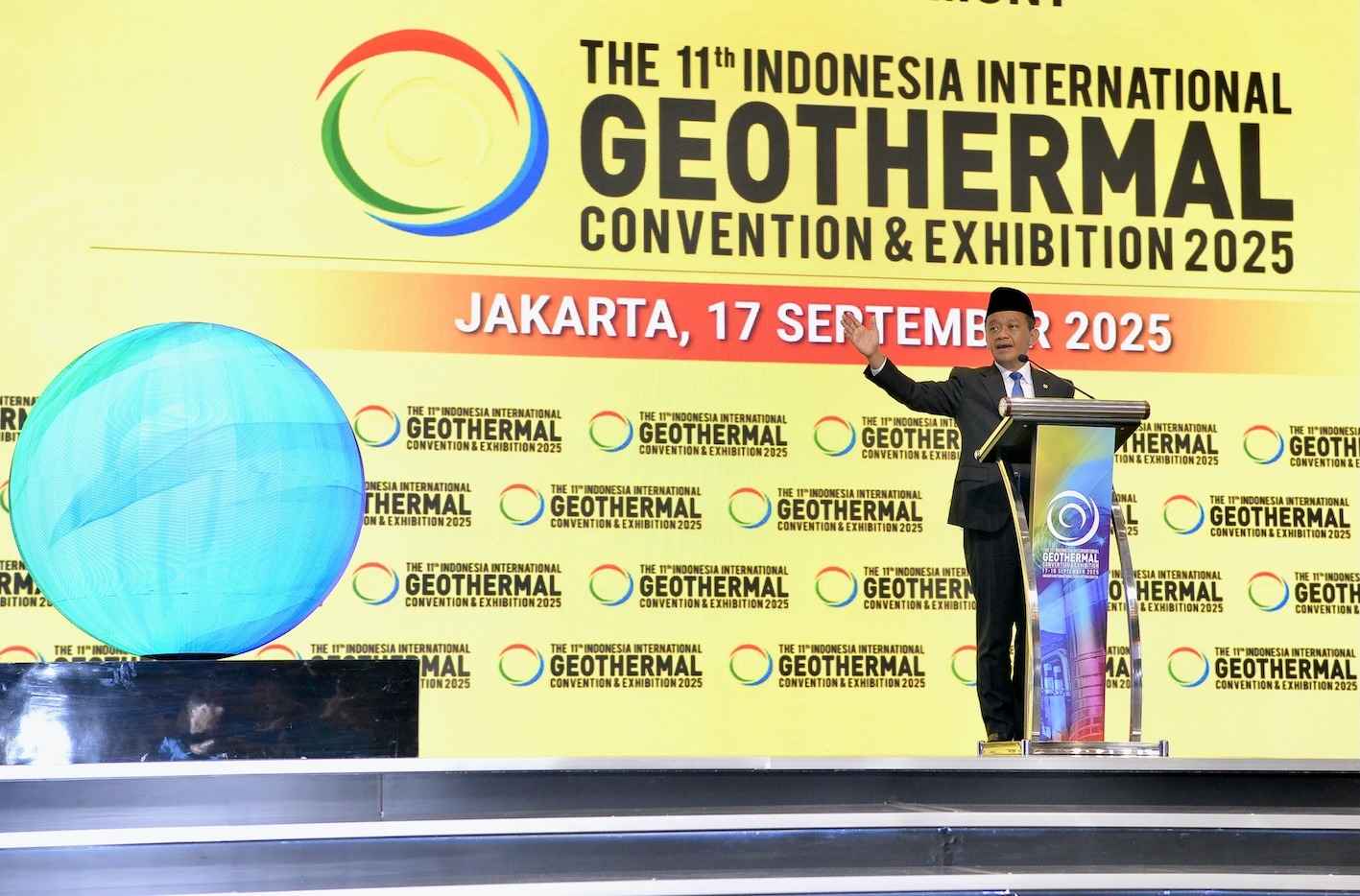
“We know that geothermal is one of the renewable energy sources, and Indonesia has very large reserves—the largest in the world. Of this, we have only managed around 10 percent, meaning that 90 percent of this potential is still untapped,” said Minister of Energy and Mineral Resources (ESDM) Bahlil Lahadalia during the opening of the Indonesia International Geothermal Convention & Exhibition (IIGCE) 2025 in Jakarta on Wednesday (Sept 17).
Given Indonesia’s vast geothermal potential, Bahlil called for an immediate tender of Geothermal Working Areas (WKP). This follows President Prabowo Subianto’s directive to implement reforms and accelerate regulations to provide certainty and speed for geothermal developers.
As a follow-up, the Ministry of Energy and Mineral Resources has streamlined permits and regulations that were previously seen as barriers to investment, aiming to accelerate geothermal utilization. In 2024, the ministry launched a digital platform for geothermal management called Genesis, and starting this year, WKP tenders are being conducted through this platform.
“One thing investors dislike is complicated regulations. The more complex the rules, the less attractive it becomes for them. So, over the past year, our program has been to cut various regulatory steps that hinder acceleration in the geothermal sector. We’ve simplified everything,” Bahlil emphasized.
In addition, through the 2025–2034 Electricity Supply Business Plan (RUPTL), the government plans to build 48,000 circuit kilometers (ckm) of transmission lines as part of its commitment to advancing renewable energy development. According to Bahlil, current transmission networks linking energy sources and power grids remain insufficient.
“This year, as part of the Government of Indonesia’s commitment to driving renewable energy development, we have prepared an RUPTL for 2025–2035 covering 48,000 ckm of transmission lines. This reflects our responsibility to accelerate progress,” he stated.
During the IIGCE 2025 event, Bahlil witnessed the signing of seven memorandums of understanding in the education/capacity-building sector and commercial cooperation among state-owned enterprises, national private firms, and international partners. These agreements cover 265 MW in technology investment and financing commitments, with a total investment value of USD 1.5 billion (IDR 25 trillion). (*)