


Enviro News Asia, Jakarta — PT PLN Energi Primer Indonesia (PLN EPI) has initiated a strategic partnership with PT Sorbu Agro Energi to develop sorghum-based bioenergy in Gorontalo as part of Indonesia’s efforts to accelerate the energy transition and achieve its Net Zero Emission (NZE) target.
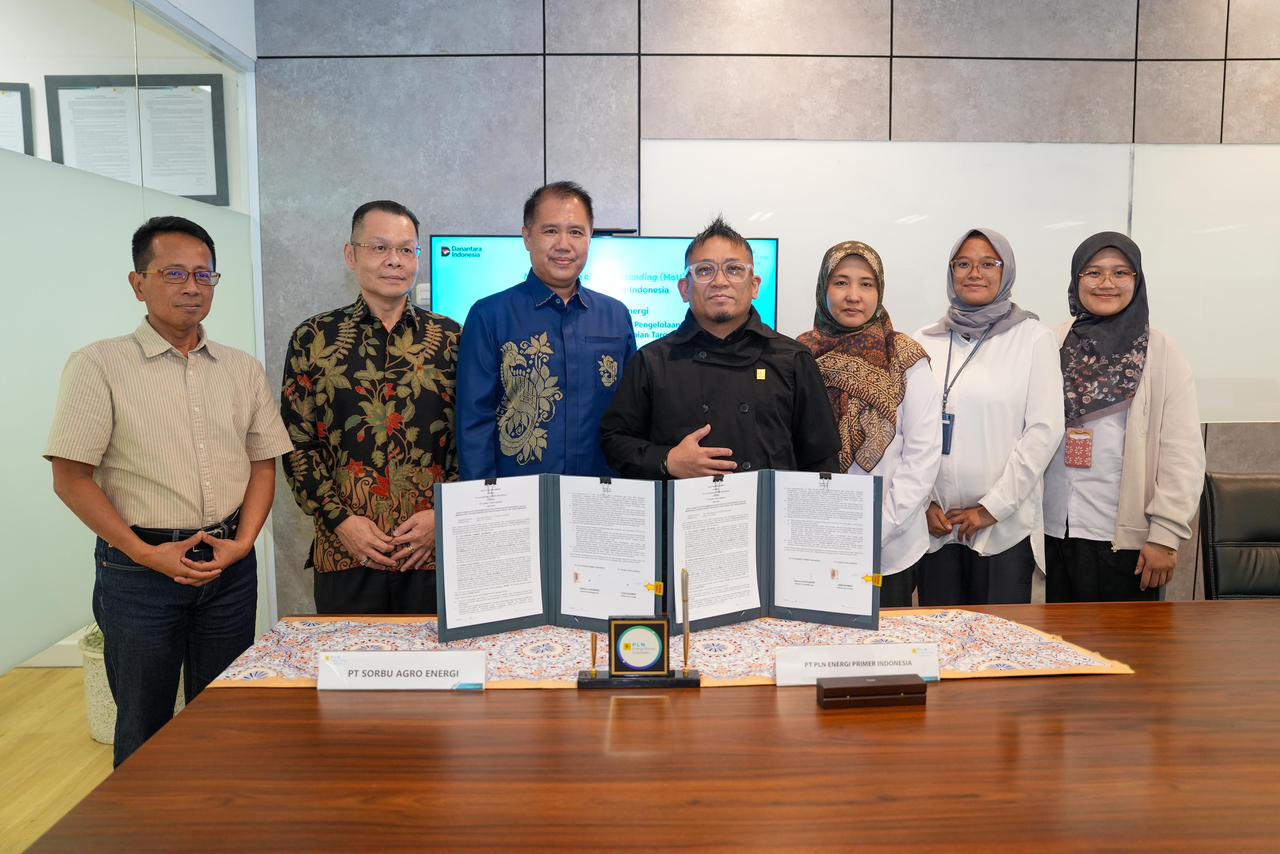
The collaboration was formalized through the signing of a Memorandum of Understanding (MoU) in Jakarta on Monday, 18 May 2026.
PLN EPI Biomass Director Hokkop Situngkir stated that biomass plays a significant role in directly reducing carbon emissions through coal substitution at coal-fired power plants.
“Unlike other renewable energy sources that replace existing systems, biomass can directly reduce emissions through partial substitution of coal usage at power plants,” Hokkop explained.
He added that the development of sorghum-based bioenergy aligns not only with Indonesia’s energy transition agenda but also with the government’s broader Asta Cita priorities, particularly in strengthening national energy and food security.
According to Hokkop, countries such as Japan and South Korea are continuing to increase biomass utilization while actively seeking new biomass supply sources. PLN EPI itself has developed nearly 14 biomass varieties to support cofiring operations at coal-fired power plants.
To date, the company has secured approximately one million tons of biomass supply contracts through nearly 100 partnerships with various stakeholders.
Under the partnership framework, PLN EPI will act as the biomass offtaker and primary energy ecosystem developer, while cultivation activities will be carried out by partner institutions and local communities.
“We are focused on ensuring biomass supply and absorption for power generation. Meanwhile, cultivation activities will be developed together with partners to create a sustainable ecosystem,” Hokkop stated.
Meanwhile, PT Sorbu Agro Energi Director Verdi Budiman revealed that the company currently manages around 10,000 hectares of concession land in Gorontalo, with expansion potential reaching up to 40,000 hectares through Indonesia’s social forestry program.
The initial development phase will take place in Totopo Village, Gorontalo, covering an area of 218 hectares located approximately 56 kilometers from the Anggrek Coal-Fired Power Plant in North Gorontalo.
Verdi explained that the project will adopt a pentahelix approach involving government institutions and state-owned enterprises, local communities, private sector actors, academics, and the media.
“We are expected to become a locomotive for integrated ecosystem-based social forestry programs covering biomass energy, livestock, biogas, and various derivative products. This collaboration will involve multiple stakeholders, including PLN EPI and the Faculty of Agriculture at Gorontalo State University,” Verdi said.
The scope of cooperation between PLN EPI and Sorbu Agro Energi includes bioenergy development studies, biomass hub development in Sulawesi, technology assessments, and exploration of wood biomass and other biological resources to support Indonesia’s national energy transition.
The sorghum bioenergy initiative is expected to strengthen community-based clean energy ecosystems by transforming local resources into sustainable energy solutions capable of reducing emissions, enhancing national energy resilience, and improving local economic welfare. (*)