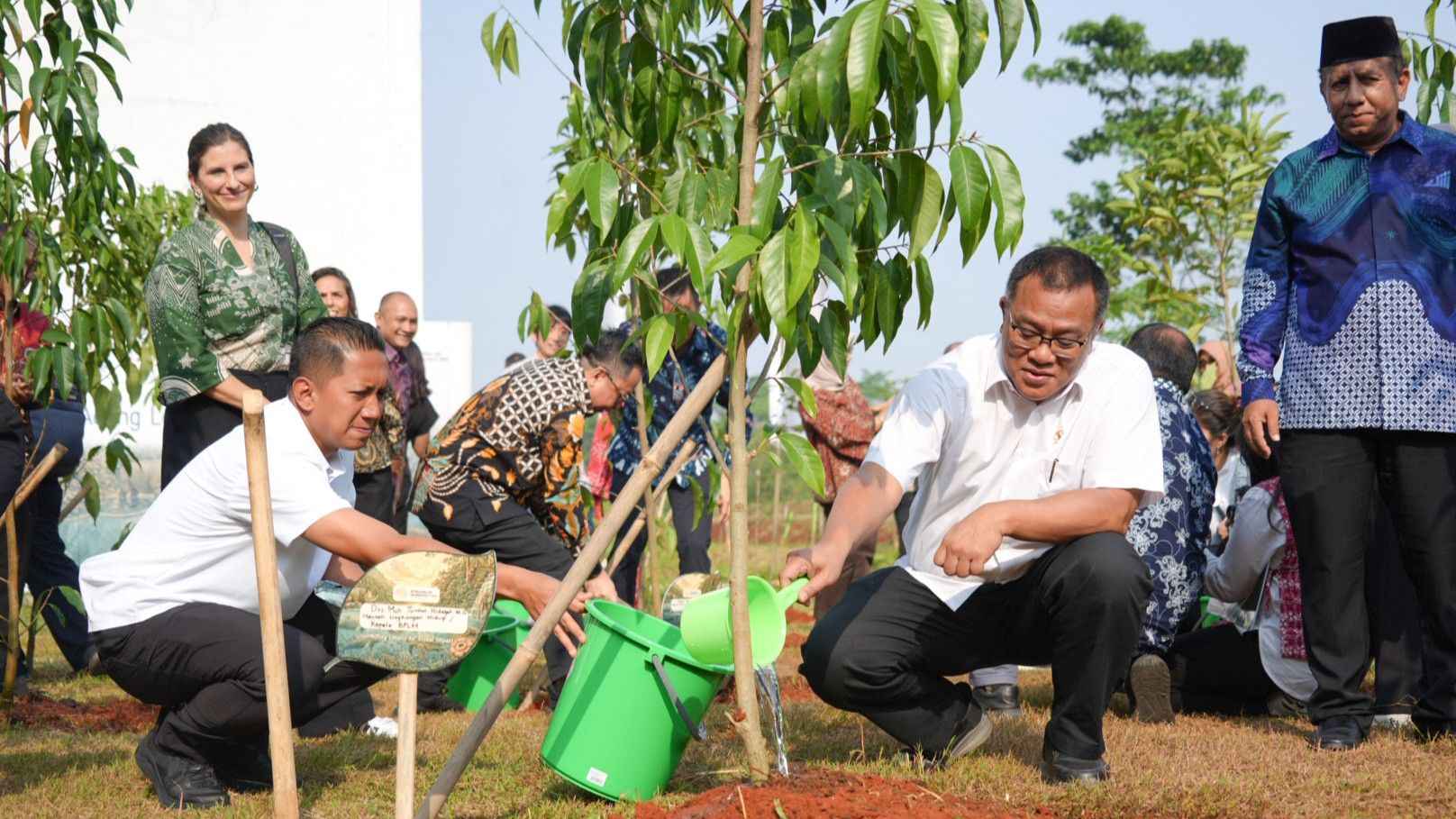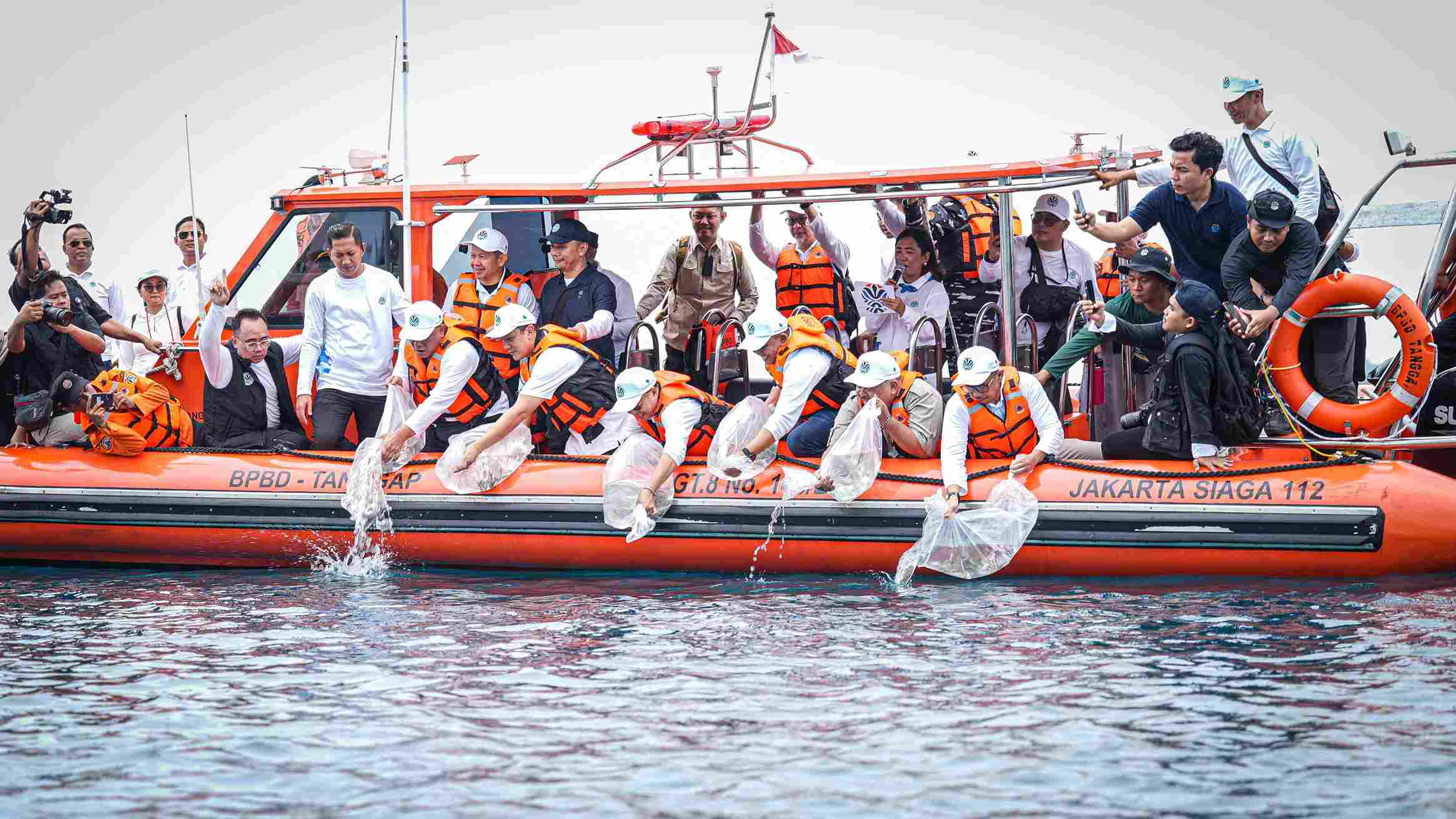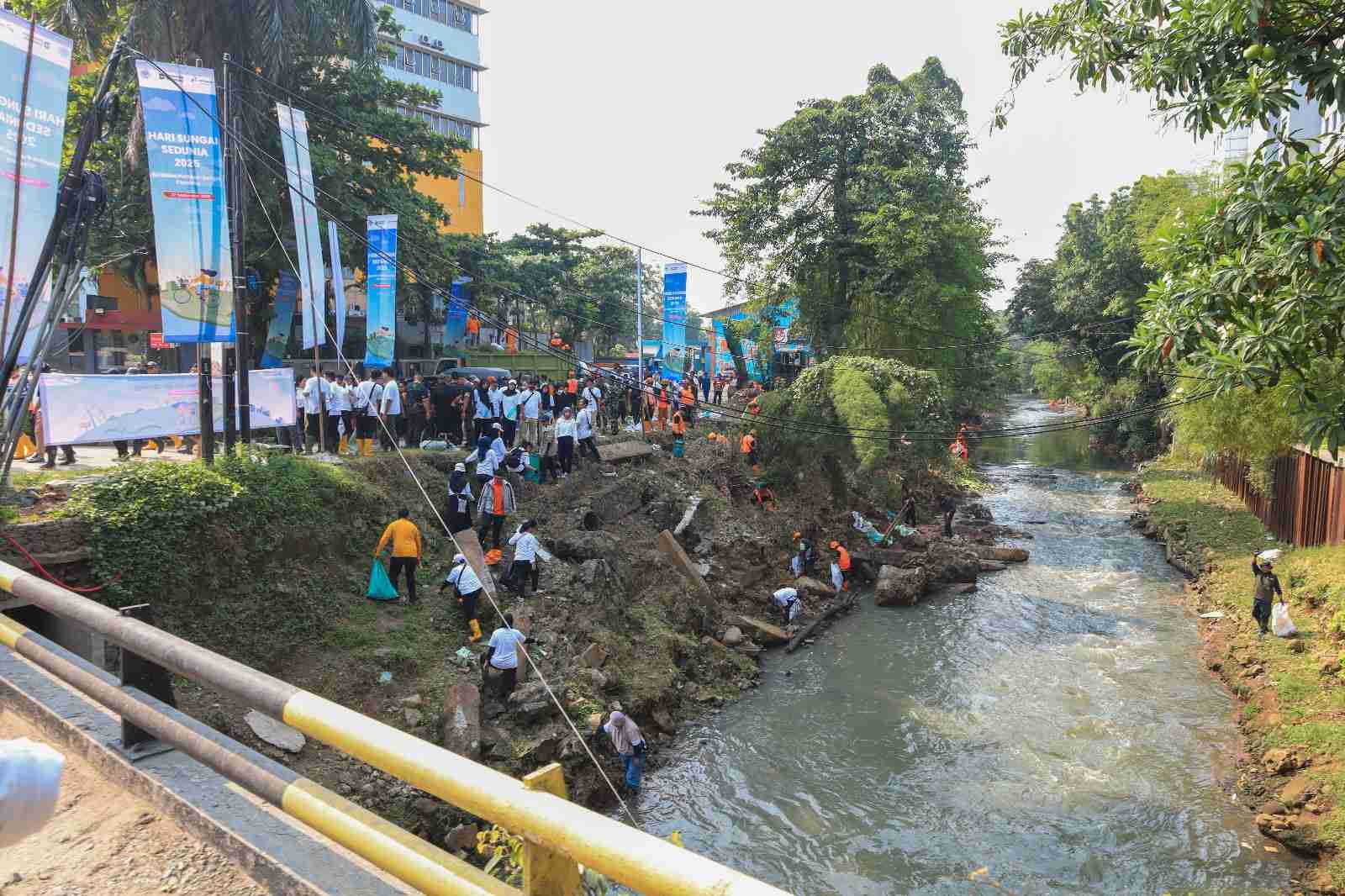
Enviro News Asia, Jakarta — Rivers are not just streams of water, but the lifelines of life. This message was reaffirmed by Minister of Environment Hanif Faisol Nurofiq during the commemoration of World Rivers Day 2025 at the Cipinang River, East Jakarta, on Saturday (Sept 27, 2025).
With the theme “Our Rivers, Our Future”, Hanif emphasized the importance of cross-sector collaboration to clean and restore rivers. “We do not inherit the earth from our ancestors, but borrow it from our children. It is our duty to ensure this loan remains intact, clean, and beneficial,” he stated.
Recent data show that river conditions in Indonesia remain alarming. Of the 4,482 water quality monitoring points across 1,482 rivers, more than 70 percent are polluted. In fact, three provinces — Jakarta, Riau Islands, and South Papua — recorded 100 percent of monitoring points in a polluted state.
To address this challenge, the government is expediting the preparation of Water Quality Protection and Management Plans (RPPMA). Three priority documents have been established for the Ciliwung, Citarum, and Cipinang watersheds, while four more are about to be ratified. An additional 15 documents are also being accelerated. “RPPMA will serve as a technical guideline for integrated river quality restoration,” Hanif explained.
The commemoration was marked by a clean-up action along the Cipinang River. Local governments, communities, students, and the public joined forces to collect waste from the river body. Hanif stressed that protecting rivers is not only the government’s responsibility but everyone’s. “Businesses must reduce their waste, academics must provide solutions, media must raise awareness, communities must maintain care, and society must act wisely. Rivers belong to us all,” he said.
He concluded his message with a quote from environmentalist Baba Dioum: “In the end, we will conserve only what we love; we will love only what we understand; and we will understand only what we are taught.” According to him, river clean-up actions are not just ceremonial events but also educational efforts to foster greater love and care for rivers as sources of life. (*)