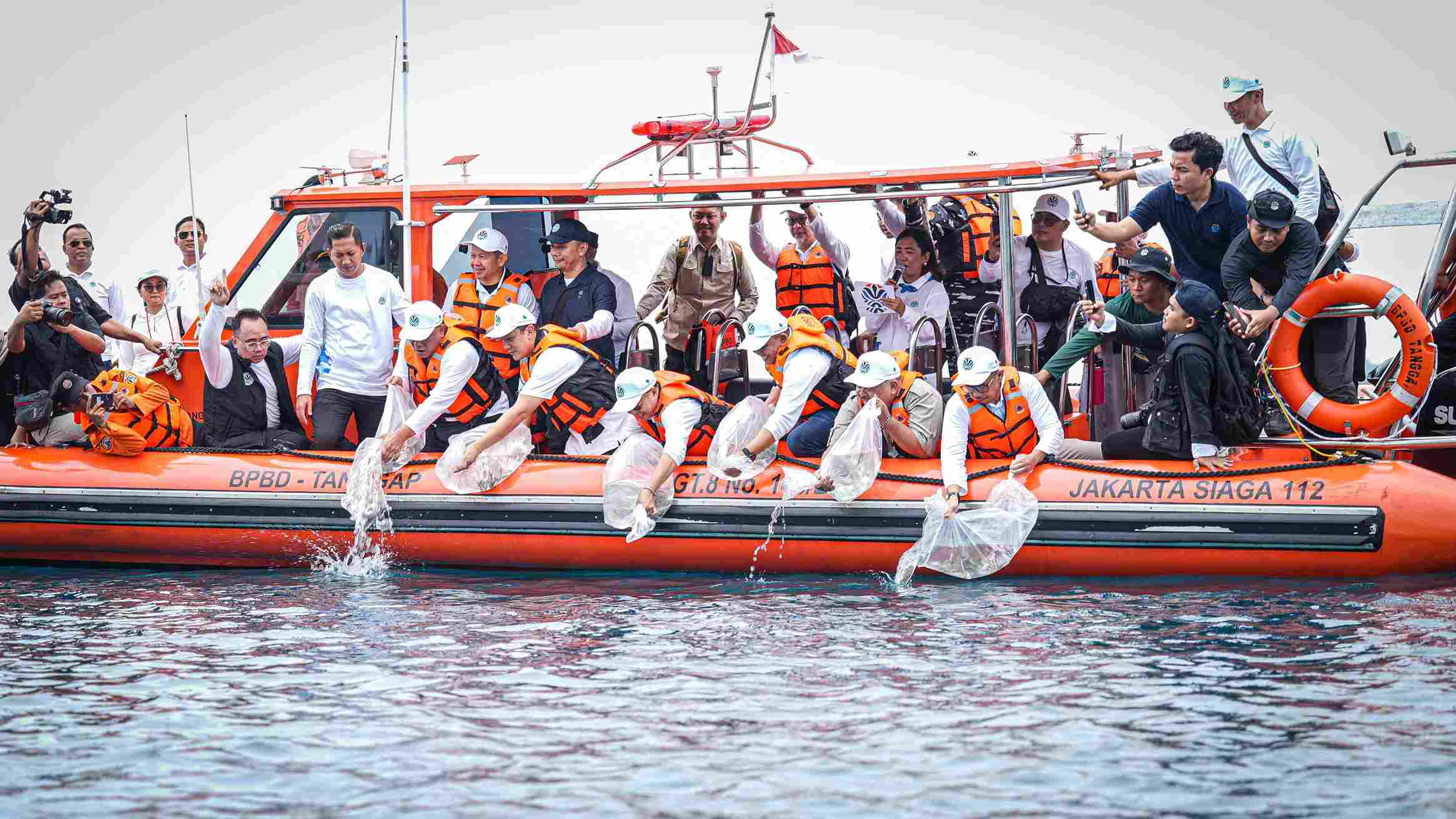
Enviro News Asia, Thousand Islands — Indonesia’s Ministry of Environment/Environmental Control Agency (KLH/BPLH) strengthened coastal and marine ecosystem restoration efforts during the commemoration of International Sea Day 2026 at Pramuka Island, Thousand Islands, on Friday.
Carrying the theme “Collective Action for Sustainable Coasts,” the event brought together government institutions, environmental communities, academics, international organizations, students, private sector representatives, and coastal residents to support marine conservation and pollution control initiatives.
Minister of Environment and Head of BPLH, Moh Jumhur Hidayat, emphasized that marine protection requires comprehensive and collaborative action extending beyond coastal areas into underwater ecosystems.
He stated that protecting the ocean cannot stop at the shoreline and must include direct intervention to restore marine ecosystems beneath the sea surface.
Indonesia, the world’s largest archipelagic nation with more than 17,000 islands and over 6.4 million square kilometers of marine territory, plays a vital role in global marine biodiversity conservation. The country lies within the Coral Triangle, home to some of the richest coral reef, mangrove, seagrass, and marine biodiversity ecosystems in the world.
Indonesia’s oceans also function as a major source of food security, livelihoods for coastal communities, blue carbon storage, climate regulation, international trade routes, and economic resilience.
However, marine ecosystems across Indonesia continue facing mounting threats from plastic waste, coastal pollution, coral reef degradation, mangrove destruction, seagrass loss, and abandoned fishing gear known as ghost gear. These conditions contribute to ghost fishing, habitat destruction, and microplastic contamination within marine food chains.
To address these challenges, the International Sea Day 2026 commemoration featured a series of environmental restoration activities, including island clean-up operations, diving and snorkeling clean-up actions to remove marine debris and ghost nets, coral transplantation efforts, fish seed releases, and sea turtle conservation initiatives.
As part of the restoration program, participants planted 50 coral transplantation media, released 1,000 grouper fish seeds, and released hawksbill sea turtles along with 100 hatchlings as symbols of coastal and marine ecosystem recovery.
Assistant Territorial Commander of the Indonesian Fleet Command, Budi Mulyadi, stated that the large-scale participation reflected strong public concern for the future of marine ecosystems and environmental sustainability.
He noted that oceans serve as oxygen providers, sources of livelihood, and habitats for millions of marine species worldwide.
KLH/BPLH also reiterated its commitment to strengthening marine waste control through policy development, pollution monitoring, coastal ecosystem restoration, marine debris monitoring systems, and public participation programs such as the Waste Sorting Movement and the Indonesia Safe, Healthy, Clean, and Beautiful Movement (ASRI).
More than 1,000 participants attended the event, including representatives from the Jakarta Provincial Government, the Thousand Islands administration, the Indonesian Fleet Command, United Nations Environment Programme Coordinating Body on the Seas of East Asia, the Ministry of Marine Affairs and Fisheries, environmental communities, diving groups, and youth organizations. (*)