Enviro News Asia, Namibia — The Sustainable Wildlife Management (SWM) Programme, led by the Food and Agriculture Organization of the United Nations (FAO) and funded by the European Union and the French Development Agency, is strengthening sustainable devil’s claw harvesting in Namibia to protect biodiversity and improve Indigenous livelihoods. The initiative operates primarily in Bwabwata National Park and surrounding communal conservancies, where the Khwe Indigenous Peoples and other rural communities depend on the plant as a major source of income.
The programme involves FAO, the Government of Namibia, the Kyaramacan Association, communal conservancies such as George Mukoya and Muduva Nyangana, and conservation partners including World Wildlife Fund Namibia. Together, they regulate and promote the sustainable harvesting of devil’s claw (Harpagophytum procumbens and Harpagophytum zeyheri), a protected medicinal plant widely recognized for its anti-inflammatory properties and commonly used to relieve joint pain and support digestion.
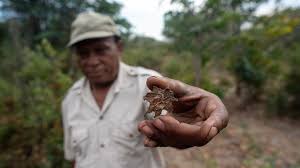
Harvesting takes place annually during the dry season, when between 5,000 and 10,000 registered harvesters search arid savannah landscapes for the plant’s secondary tubers hidden deep in sandy soils. Namibia supplies approximately 90 percent of the global devil’s claw market, exporting mainly to Europe, with Germany among the leading buyers. For many rural families, income from devil’s claw supports school fees, food security, and health care.
However, overharvesting and illegal trade pose risks to the species and the fragile ecosystems it inhabits. To address these challenges, the SWM Programme requires harvesters to complete mandatory training before entering the field. Authorities issue permits only to registered collectors. Harvesters must follow strict ecological guidelines, including leaving the mother root intact to ensure regeneration, refilling all excavation holes to protect wildlife, and recording collection volumes.
In parallel, the FAO-led Dryland Sustainable Landscapes Impact Program (DSL-IP), funded by the Global Environment Facility and implemented by the Namibian government, trains communities in Good Agricultural and Collection Practices (GACP+). The programme supports sustainable quota setting, resource surveys, fair buyer contracts, certification processes such as Fair for Life and FairWild, and measures to reduce cross-border illegal harvesting. Management fees from harvesting also help finance communal conservancies and wildlife protection.
Through coordinated conservation, regulation, and market-based support, FAO and its partners aim to secure devil’s claw as both a globally traded herbal remedy and a sustainable livelihood resource for Namibia’s Indigenous Peoples, ensuring that the species continues to thrive for generations to come. (*)