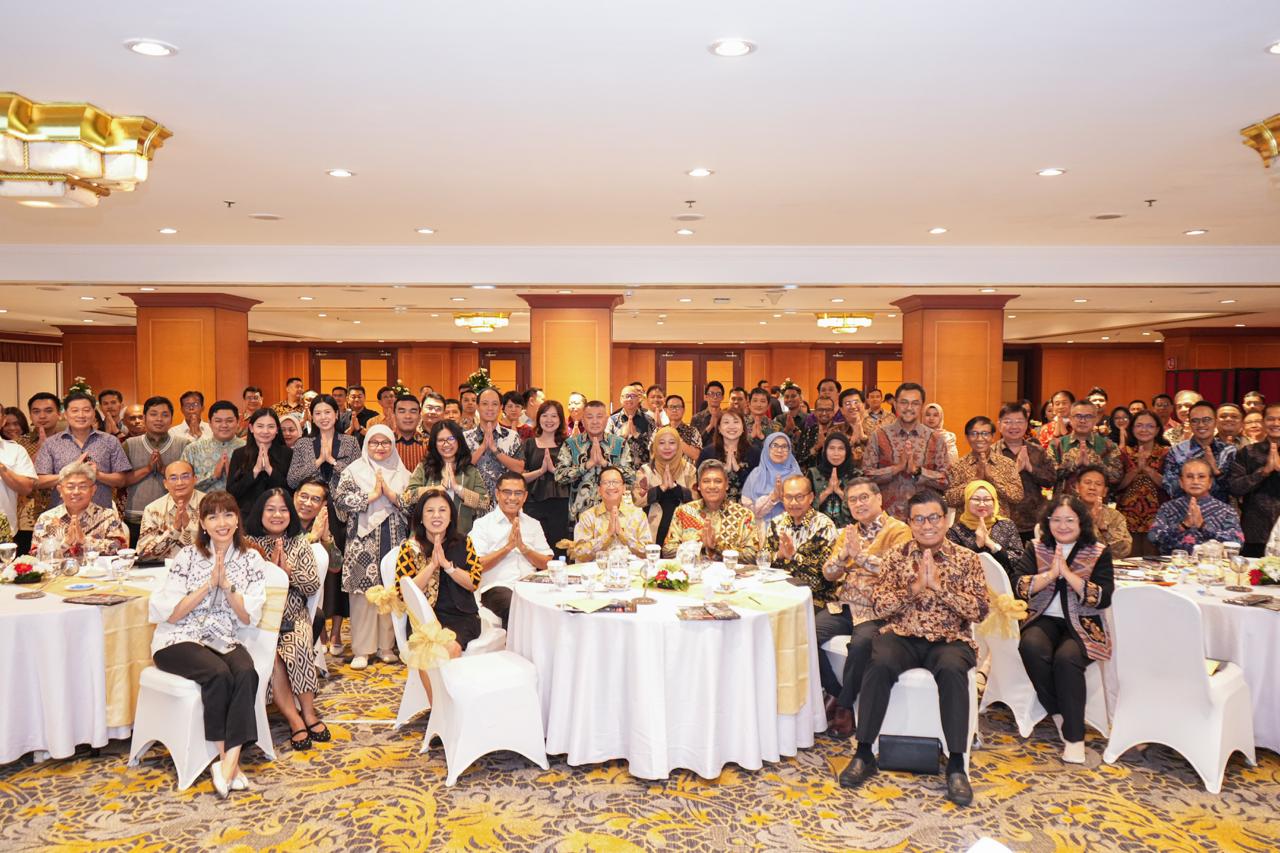
Enviro News Asia, Jakarta — Asosiasi Pulp dan Kertas Indonesia emphasized the importance of strategic consolidation among stakeholders to strengthen the competitiveness of Indonesia’s pulp and paper industry amid global pressures and evolving international trade policies. The statement was delivered in Jakarta on April 6, 2026, during a Halal Bihalal 1447 H gathering that also served as a platform for industry-government coordination.
Suhendra Wiriadinata stated that the pulp and paper sector is currently at a critical stage requiring collective and coordinated responses. He highlighted that geopolitical uncertainty, global supply chain disruptions, and shifting trade policies demand greater adaptability and stronger cross-sector collaboration.
He stressed that industry players cannot operate independently and must work closely with the government and other stakeholders to respond effectively to global dynamics while maintaining national competitiveness.
At the domestic level, APKI underlined the need to strengthen industry fundamentals through increased investment, improved production efficiency, and supportive trade governance policies. The development of globally competitive human resources was also identified as essential to ensuring long-term industry sustainability.
The association views the transition toward green industry practices and the adoption of a circular economy as strategic opportunities to meet global demands while enhancing Indonesia’s position in the sustainable global value chain.
Meanwhile, Putu Juli Ardika, Acting Director General of Agro Industry at the Ministry of Industry, stated that the pulp and paper sector remains a key downstream industry with high added value and significant contributions to the national economy.
He reported that in 2025, the paper and printing industry contributed 3.73 percent to the non-oil and gas manufacturing GDP. Pulp exports reached USD 3.6 billion, while paper exports totaled USD 4.57 billion. The industry employs more than 280,000 direct workers and supports approximately 1.2 million indirect jobs.
He added that the sector’s outlook remains strong, driven by rising demand for packaging—particularly from the food and beverage and e-commerce sectors—as well as a global shift from plastic to more environmentally friendly paper-based materials.
Despite positive prospects, stakeholders acknowledged several structural challenges, including limited domestic raw material supply, evolving global trade policies, and compliance with regulatory requirements such as halal certification and non-tariff measures.
In response, the government and industry players are strengthening the industrial ecosystem through cross-sector policy consolidation, improvements in domestic supply chains, innovation in alternative raw materials, and the provision of fiscal and non-fiscal incentives to sustain growth momentum.
The event was attended by representatives from multiple industry associations, including INA-TAPPI, APINDO, KSO SCISI, APKIDA, APKINDO, FSI International, APHI, ADMINDO, WAPINDO, FIPGB, and AIPF, reflecting broad stakeholder engagement in advancing the sector.
APKI reaffirmed that strong collaboration between industry, government, and stakeholders is essential to ensuring resilience while accelerating the transformation toward a more competitive and sustainable pulp and paper industry. (*)