

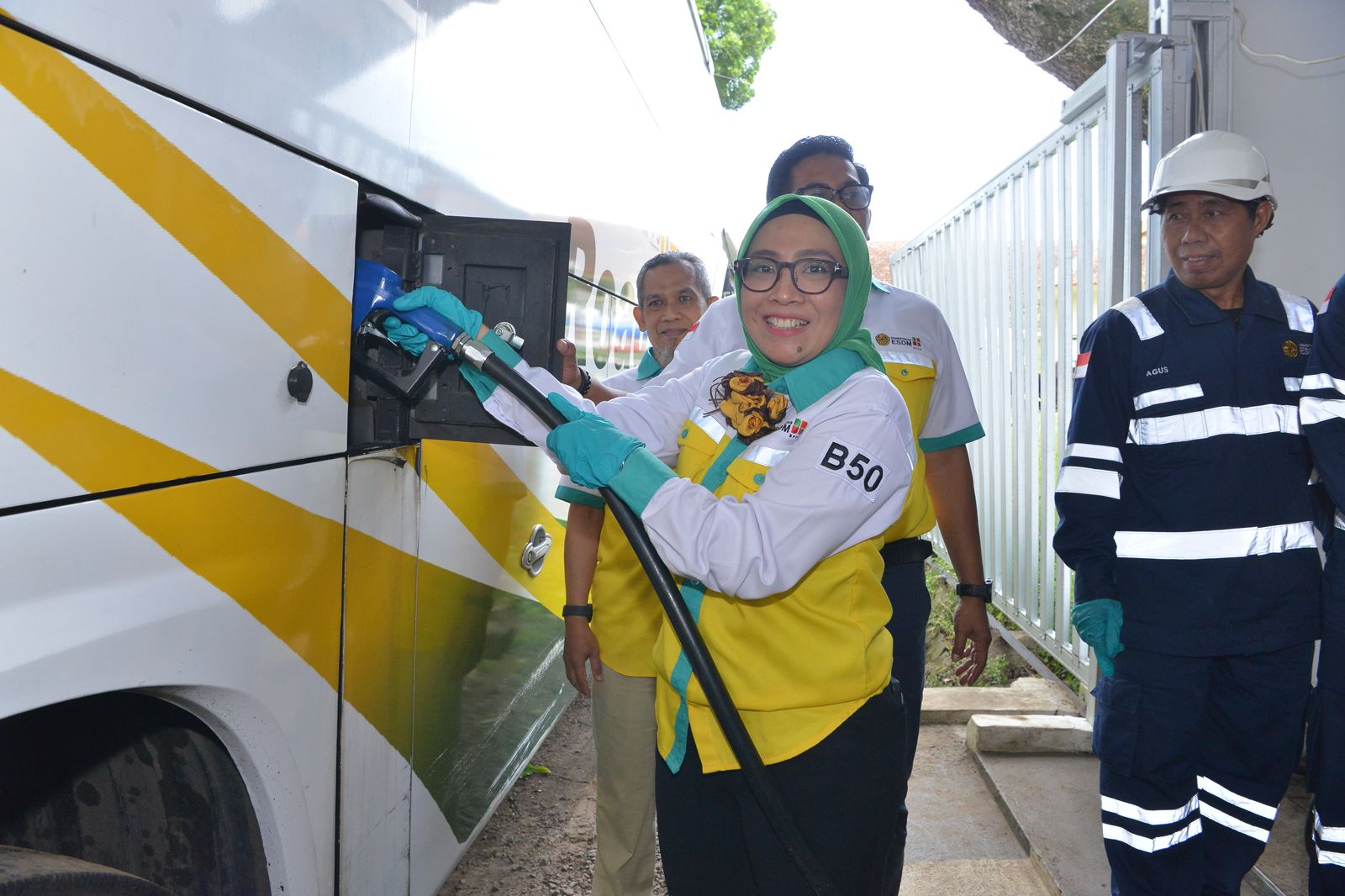
Enviro News Asia, Bandung — The Government of Indonesia has confirmed that the ongoing road test of B50 biodiesel in the automotive sector has shown safe and reliable performance, reinforcing readiness for its nationwide implementation scheduled for July 1, 2026.
The Ministry of Energy and Mineral Resources, through its Directorate General of New, Renewable Energy and Energy Conservation (EBTKE), continues to accelerate testing across multiple sectors to ensure the smooth adoption of B50 as part of the country’s energy transition and efforts to strengthen energy security.
Director General of EBTKE, Eniya Listiani Dewi, stated that the testing process began with laboratory trials in early 2025, followed by simultaneous field testing starting December 9, 2025, across six sectors, including automotive, marine, agriculture, mining, railways, and power generation.
The automotive sector remains a key focus, with road tests conducted under real operating conditions to evaluate technical standards, engine performance, and safety. Vehicles weighing over 3.5 tons have completed the 40,000-kilometer test target, while lighter vehicles are approaching 50,000 kilometers, with no significant technical issues reported.
Preliminary results as of April 2026 indicate that B50 use in diesel vehicles remains within manufacturer-recommended standards. Engine components, lubricants, and fuel systems have performed well, while fuel filters and overall engine conditions remain stable.
Fuel quality testing also confirmed that B100, used as a 50 percent blend in B50, meets required specifications, including improved parameters for water content, monoglyceride levels, and oxidation stability compared to previous B40 standards.
Performance and fuel consumption tests show no significant decline, with consumption levels remaining within normal manufacturer ranges. Emission testing further indicates that carbon monoxide (CO) levels and opacity remain below regulatory limits.
The results have been positively received by the Gabungan Industri Kendaraan Bermotor Indonesia, which expressed support for maintaining the same fuel specifications used during testing for future implementation.
The government emphasized that the development of B50 is part of a long-term strategy to reduce dependence on imported fossil fuels while promoting the use of domestically sourced renewable energy. Authorities also reaffirmed that all policies will be based on comprehensive, science-based testing to ensure safety, efficiency, and economic benefits. (*)