Enviro News Asia, Bogor — Indonesia ranked second globally in energy resilience, driven by strong domestic resource utilization, according to a report cited by the government on 29 April 2026 in Bogor.
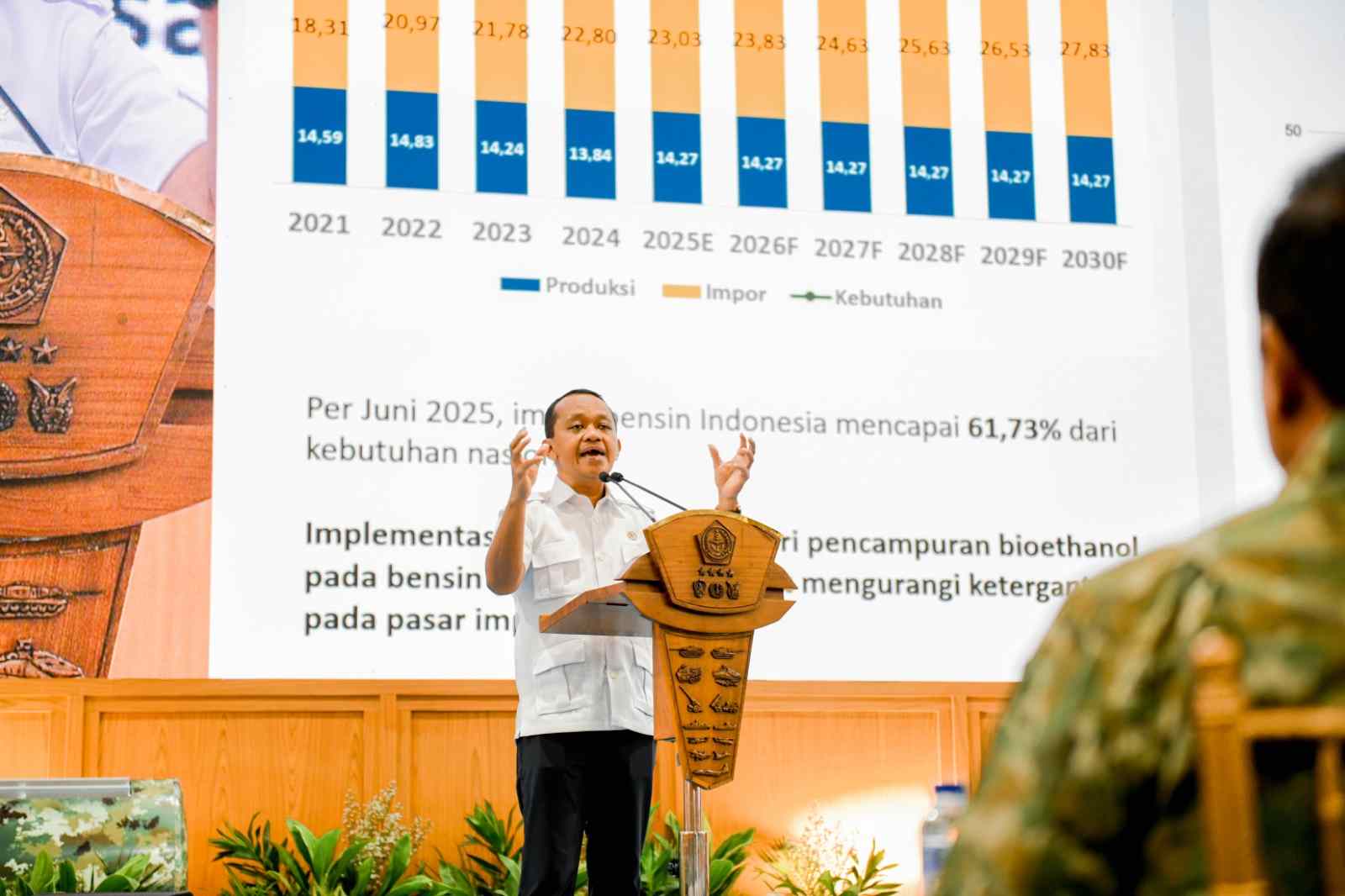
Minister of Energy and Mineral Resources Bahlil Lahadalia announced the achievement during the 2026 Indonesian National Armed Forces Commanders’ Assembly. He stated that the ranking reflects Indonesia’s ability to withstand global energy supply disruptions amid ongoing geopolitical uncertainty.
The ranking is based on a report by JP Morgan Asset Management, which analyzed 52 of the world’s largest energy-consuming countries representing around 82 percent of global energy demand. Indonesia placed second after South Africa and ahead of China.
Bahlil explained that Indonesia’s resilience is supported by its significant domestic production of oil and gas, as well as abundant coal reserves that continue to meet national demand. In addition, the country’s vast potential for renewable energy contributes to long-term energy independence.
He added that oil production reached the 2025 state budget target of 605,000 barrels per day and is set to increase to 610,000 barrels per day in 2026. The government plans to boost output through advanced technology, reactivation of idle wells, and expanded exploration, particularly in eastern Indonesia.
One of the latest discoveries includes the Geliga-1 well in the Ganal Block offshore East Kalimantan, which holds an estimated 5 trillion cubic feet of gas and 300 million barrels of condensate. The site is expected to begin production between 2028 and 2029.
The government is also intensifying efforts to reduce fuel imports. The planned nationwide implementation of the B50 biodiesel program starting 1 July 2026 is expected to significantly cut diesel imports. Bahlil stated that Indonesia could eliminate diesel imports entirely for the first time through the expansion of biodiesel usage.
In addition, the government is exploring alternatives to liquefied petroleum gas imports, including Dimethyl Ether (DME) and Compressed Natural Gas (CNG), both sourced from domestic energy resources.
Through these measures, Indonesia aims to strengthen energy security, reduce reliance on imports, and support economic stability amid global energy challenges. (*)