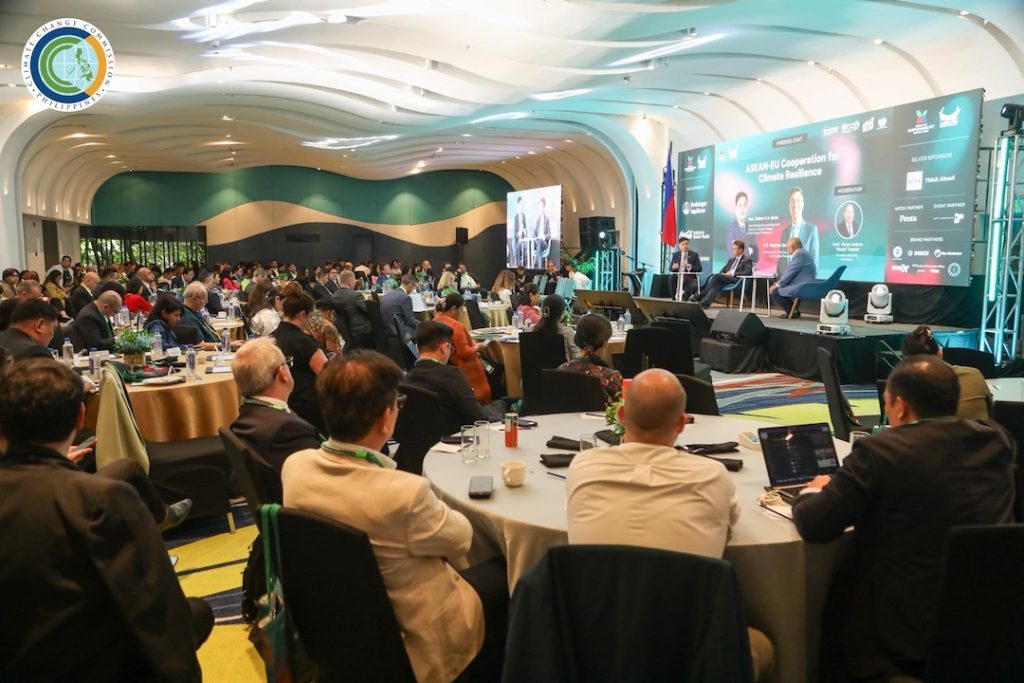
Enviro News Asia, Cebu City — The Climate Change Commission called for stronger implementation systems and more results-oriented climate action during the ASEAN–EU Sustainability Summit 2026 in Cebu, emphasizing that regional cooperation must move beyond policy discussions toward tangible outcomes for vulnerable communities.
Speaking at the summit, Robert E. A. Borje, Vice Chairperson and Executive Director of the Climate Change Commission, highlighted the continuing challenges in translating climate commitments into effective action on the ground.
“Now is a time for us to take a few steps back and to look at what the gaps and challenges are. Because truthfully, the challenge for us is really delivering on the ground and implementation,” Borje said during the forum.
The inaugural ASEAN–EU Sustainability Summit was held on 7 May 2026 as an official side event of the 48th ASEAN Leaders’ Summit under the Philippines’ ASEAN Chairship. The event brought together government leaders, businesses, and development institutions to strengthen regional sustainability and resilience cooperation.
Borje explained that ASEAN member states have continued to enhance climate ambition through Nationally Determined Contributions (NDCs), National Adaptation Plans (NAPs), and regional policy frameworks. However, he stressed that implementation and delivery remain the primary challenge.
According to the Climate Change Commission, three major gaps continue to hinder effective climate action across the region: weak institutional coordination among sectors and government levels, limited implementation capacity at the subnational level, and inadequate readiness for climate resilience investments and project execution.
“Climate resilience cuts across sectors, ministries, and levels of government, and our delivery systems are still catching up to that reality,” Borje stated.
The commission also emphasized the importance of stronger collaboration between ASEAN, the European Union, development partners, and the private sector to accelerate scalable climate solutions.
Borje noted that governments should view the private sector as a strategic partner capable of mobilizing climate finance, technology, innovation, and investments necessary to support resilience and green growth.
The forum additionally highlighted the need for science-based policymaking and integrated climate resilience strategies amid ongoing energy and economic uncertainties in the region. Borje described the global energy crisis as a “systemic shock” for countries still heavily dependent on fossil fuels and stressed the importance of balancing energy security with long-term green transition goals.
The Climate Change Commission reaffirmed its commitment to strengthening ASEAN–EU cooperation in areas such as climate governance, innovation, risk-informed planning, and the use of Earth observation technologies including the Copernicus programme. (*)