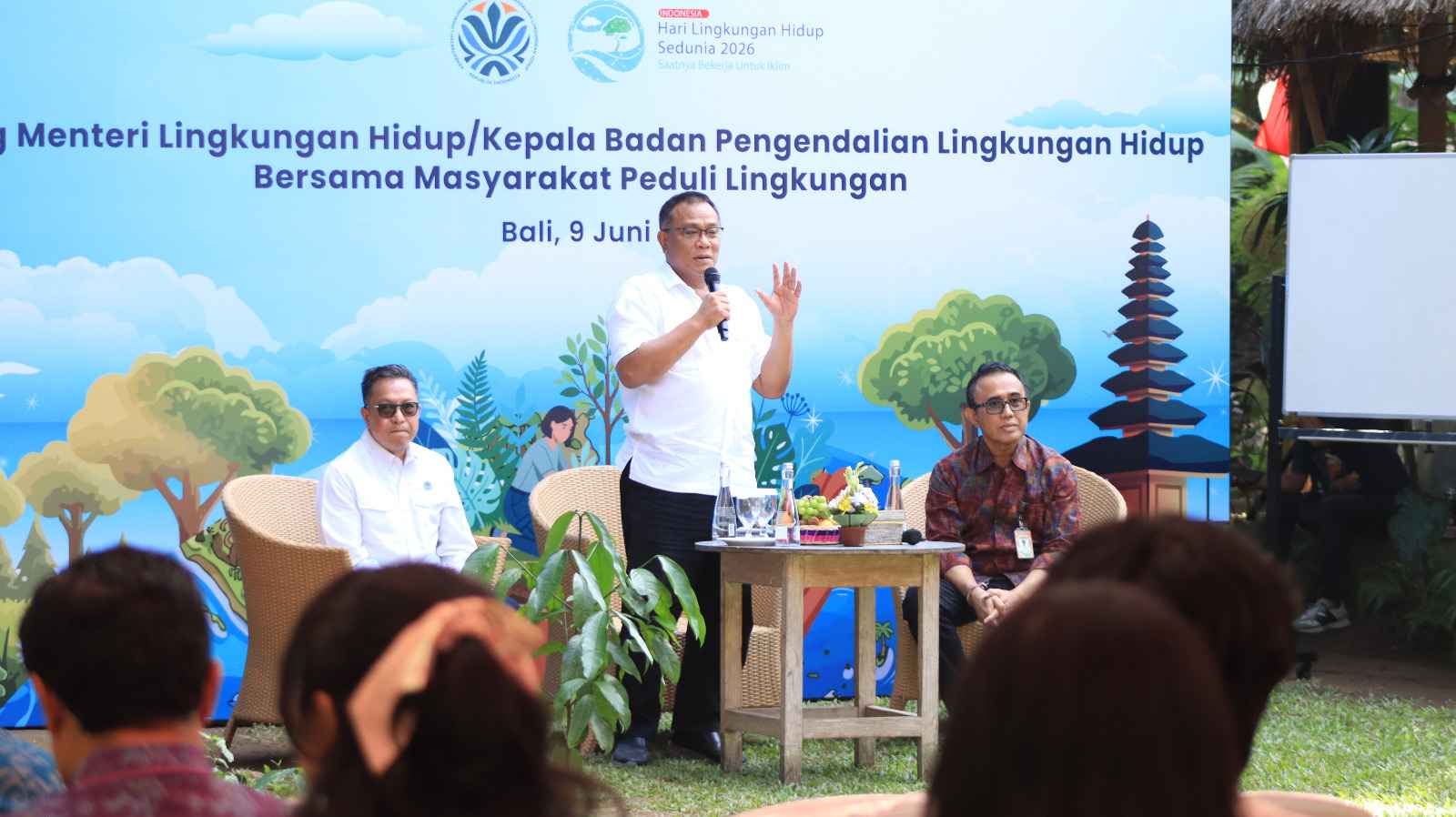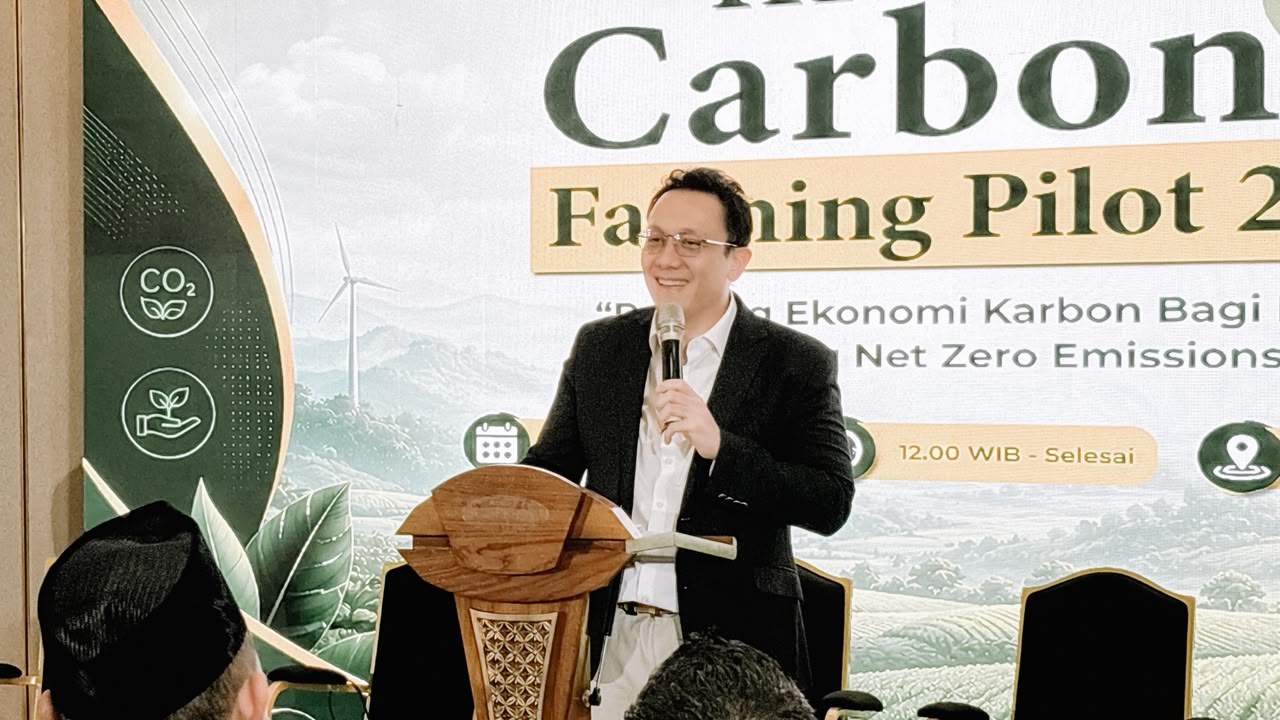
Enviro News Asia, Jakarta — Indonesia’s Deputy Minister of Environment and Vice Head of the Environmental Control Agency (KLH/BPLH), Diaz Hendropriyono, has encouraged farmers across various sectors to collaborate in developing carbon credit projects as a means of reducing greenhouse gas emissions while creating new sources of income.
Speaking at the opening of the HKTI Carbon Farming Pilot 2026 seminar in Jakarta, Diaz said farmer organizations could play a key role in consolidating agricultural land and implementing emission-reduction methodologies that generate carbon credits.
“HKTI can initiate and organize farmers into collective groups, combine their lands, and apply specific methodologies to reduce emissions. Those reductions can then be claimed as carbon credits and provide additional income for farmers,” Diaz said.
The seminar, organized jointly by the Ministry of Environment and the Indonesian Farmers Harmony Association (HKTI), formed part of the 2026 World Environment Day commemorations and was held at the Jakarta International Convention Center (JICC).
Diaz emphasized that innovations aimed at strengthening food security should also support environmental sustainability. He noted that Indonesia currently enjoys a rice surplus of more than five million tons, but stressed that higher production should not come at the expense of ecosystems.
“Regarding food security, we have a rice reserve surplus of more than five million tons, but we must ensure that this achievement does not come at the cost of environmental degradation. Through innovation, food security can be achieved in ways that do not harm the environment. The two must go hand in hand,” he said.
The deputy minister highlighted the Alternate Wetting and Drying (AWD) method as an example of climate-friendly agricultural innovation. The technique regulates water levels in rice fields to prevent excessive flooding and drying, thereby reducing methane emissions and minimizing fertilizer losses.
“With AWD, rice fields are neither excessively flooded nor continuously dry because water levels are monitored and maintained. If paddy fields remain too wet, they release larger amounts of methane and require more fertilizer. Without proper management, nitrogen and methane continue to escape into the atmosphere, contributing to global warming,” Diaz explained.
He also shared an example from his recent visit to the Halim Nutrition Fulfillment Service Unit (SPPG II Halim), where treated wastewater from a sewage treatment facility is being reused for irrigation.
“At SPPG Halim, the Ministry of Environment provided wastewater treatment facilities and technical assistance. Today, treated water from the system is used to irrigate nearby rice fields, which are now able to harvest rice three times a year,” he said.
According to Diaz, integrating climate-smart technologies with agricultural development offers opportunities to strengthen food production while supporting Indonesia’s broader environmental and emissions reduction goals. (*)