

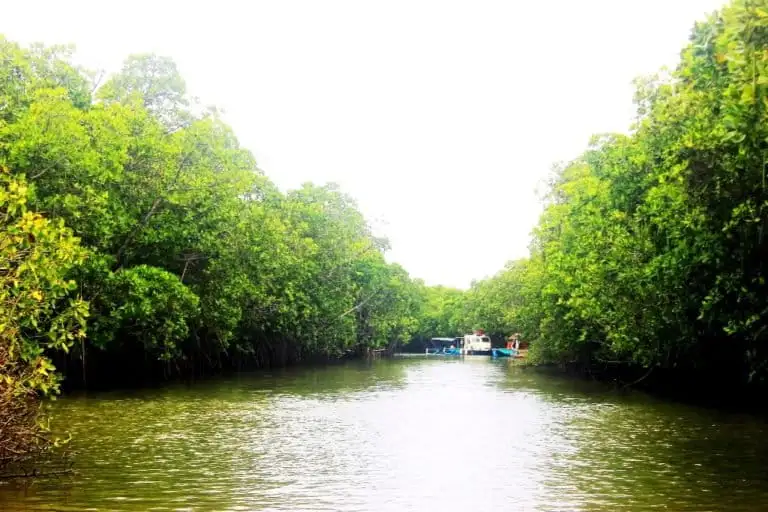
Enviro News Asia, Yogyakarta — A restored mangrove ecosystem in Kaliwlingi Village, Brebes Regency, Central Java, has demonstrated strong potential as a model for silvofishery, a sustainable aquaculture system that integrates environmental conservation with economic development for coastal communities.
Researchers from Indonesia’s National Research and Innovation Agency (BRIN) examined the condition of the Pandansari mangrove forest in Kaliwlingi, which has undergone restoration over the past decade. The area, once a shrimp pond, suffered severe degradation due to coastal abrasion in the early 2000s.
Following rehabilitation efforts, the mangrove ecosystem recovered and resumed its role as a critical habitat for various coastal species. These findings were published in the 2025 edition of the journal Heliyon under the title Innovative Silvofishery Model in Restored Mangrove Forests: A 10-Year Assessment.
Alin Fithor, a researcher at BRIN’s Research Center for Hydrodynamic Technology (PRTH) and member of the Port and Coastal Area Planning and Management Technology Research Group, said the success of mangrove rehabilitation is reflected not only in the regrowth of vegetation but also in the restoration of natural food chains that support sustainable fisheries.
“The study demonstrates that restored mangrove forests are capable of sustaining important organisms such as gastropods and mud crabs. Their presence indicates that the ecosystem has recovered and is suitable for silvofishery development while maintaining mangrove conservation,” Alin said on Friday (12/6).
The research focused on the relationship between mangrove conditions, gastropods (marine snails), and mud crabs (Scylla spp.) across three substrate types: mud, sand, and mixed mud-sand. Results showed that muddy substrates supported the highest density of gastropods, reaching 7.20 individuals per square meter, compared with only 2.36 individuals per square meter in sandy areas.
Researchers identified seven species of gastropods inhabiting the area. Two dominant species, Cassidula aurisfelis and Cassidula nucleus, play a crucial role in the food chain and support the presence of mud crabs, which possess significant economic value for coastal communities.
“Gastropods are an essential component of the mangrove food web. Maintaining healthy populations increases the prospects for successful mud crab cultivation through silvofishery systems. Their abundance indicates that healthy mangrove ecosystems provide sufficient natural food resources for mud crabs,” he explained.
The study also found that water quality in the restored mangrove area remains highly favorable for aquatic life. Water temperatures ranged from 26–29°C, salinity levels from 25–31 ppt, and pH values between 7.6 and 8.0, all within the optimal range for the growth of mangroves, gastropods, and mud crabs.
According to Alin, silvofishery offers a viable solution for maintaining ecological balance while enhancing the livelihoods of coastal communities. The system combines mangrove conservation with aquaculture activities, particularly mud crab cultivation, without damaging the ecosystem.
“Silvofishery can increase community income while ensuring the sustainability of mangrove forests,” he said.
Alin also emphasized the importance of involving local communities in the long-term management of mangrove ecosystems. The rehabilitation efforts in Kaliwlingi have not only reduced coastal erosion but also restored habitats for marine species and created new economic opportunities under the blue economy framework.
“Mangrove rehabilitation serves not only as coastal protection against abrasion, but also as a means of creating productive habitats for economically valuable species and promoting sustainable livelihoods for coastal communities,” he said.
With a decade of successful restoration, the Kaliwlingi mangrove ecosystem is considered a promising model for national silvofishery development, supporting coastal conservation and strengthening the economic resilience of communities living in Indonesia’s coastal regions. (*)