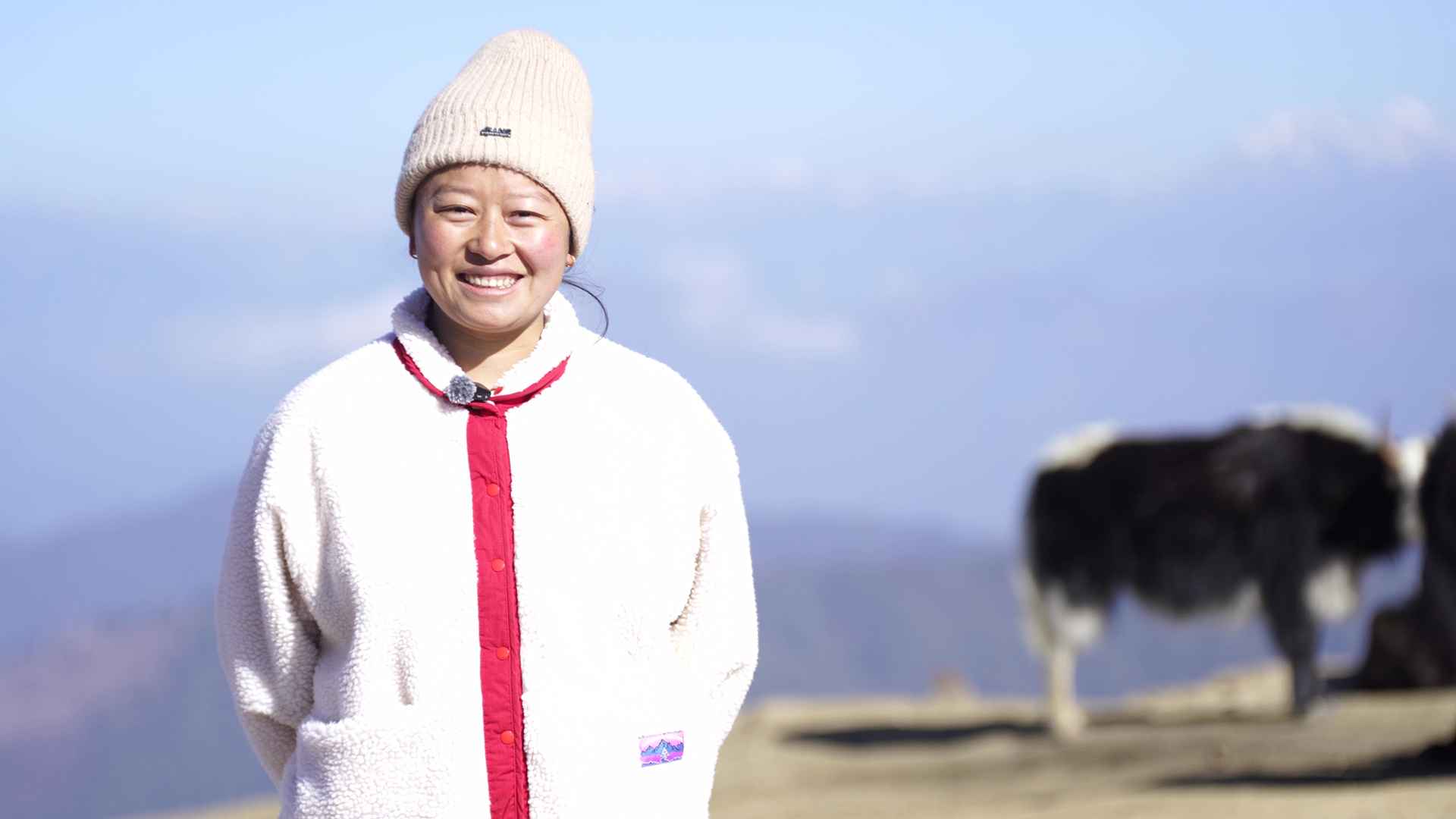
Enviro News Asia, Panchthar — While many young people in Nepal have left rural areas in search of opportunities abroad, a 28-year-old woman from the eastern highlands has chosen a different path, transforming traditional yak herding into a sustainable livelihood while challenging social norms and contributing to local economic resilience.Subita Rai, who lives in Phalelung Rural Municipality of Panchthar district, manages a herd of 20 yaks and chauris—crossbreeds between cows and yaks—with her husband. Rather than following her peers to urban centers or overseas, she returned to her mountain village after completing secondary school to continue the herding tradition practiced by her parents.
According to the Food and Agriculture Organization of the United Nations (FAO), Nepal loses between 600 and 2,000 people aged 18 to 39 every day to overseas migration. Subita, however, saw opportunities within her own community and entered a profession traditionally dominated by men.She said her decision required physical and emotional endurance, as herding livestock across steep alpine terrain and harsh weather conditions demands constant adaptation. Alongside managing livestock, she also cares for her household and her two-year-old child.
Climate change has added further challenges to life in the highlands. Seasonal weather patterns that once guided grazing practices have become increasingly unpredictable, with changing rainfall patterns and shifting grazing conditions complicating traditional knowledge passed down through generations.Despite these pressures, Subita remains focused on practical solutions rather than obstacles. She noted that women in mountain communities simultaneously manage livestock, households, and agricultural activities, a balance that sustains family livelihoods.
A major turning point came through support provided by the Mountain Partnership Secretariat hosted by FAO, in collaboration with the Kanchenjunga Yak Cheese Processing and Production Facility. With funding from the Italian Development Cooperation, the initiative supplied cheese-processing equipment, upgraded facilities, and delivered training in production, business management, commercialization, and value chain development.The support addressed one of the main constraints faced by yak-herding families: the highly perishable nature of raw yak milk and the difficulty of accessing reliable markets in remote mountainous regions.
Subita’s family now converts all their milk into artisanal cheese, a higher-value product with longer shelf life and more stable market demand. The shift has reduced post-harvest losses and improved household income.As a result of their growing involvement, Subita and her husband have become members of the board of the Kanchenjunga processing facility. The initiative was designed to help herding families view their traditional occupation as an enterprise capable of generating sustainable economic opportunities.
Subita described her work as more than a source of income, emphasizing that livestock herding represents both her identity and her future.She also called for greater recognition of women farmers as professionals, stressing the need for improved access to technology, mechanization, and resources to support women facing increasing climate risks and heavy workloads.Looking ahead, Subita hopes to continue raising healthy livestock and building a strong family while promoting respect for women engaged in agriculture and livestock production.
The FAO-supported project has strengthened the broader pastoral value chain by improving hygiene standards, processing capacity, and commercialization opportunities. Renovations and new infrastructure at cheese processing centers have enhanced consistency and quality, contributing to improved livelihoods for pastoralist communities in eastern Nepal. (*)